(This podcast was produced in French. For our readers who would like to find the podcast on video, it is available at this address)
It all started with an initial success in the city centre with Urban, before a clear acceleration: The group now has nine bars and restaurants, and an organisation that has become, in his view, that of a fully-fledged SME. The turning point came after a phase of rapid expansion. “We opened four establishments in two years”, he explains, and the traditional model reached its limits: at this scale, management could no longer be based on the reflexes of a restaurateur. Mamaboys therefore decided to take a break for 24 months to build a management structure: structured purchasing, harmonised tools, digitisation and strengthened support functions. The aim was to manage growth “properly”, with a clear sense of responsibility towards employees, shareholders and customers.
The manager also insists on his philosophy of experience. “People don’t come to eat and drink, they come for a moment.” Hence an obsession with detail--menu, lighting, materials, atmosphere--to create “total” places and differentiate themselves at a time when snacking is competing with establishments that limit themselves to the plate.
On the economic front, Gabriel Boisanté describes a sector under strain, dominated by labour costs. He recalls the evolution of ratios: the wage bill has risen from around 30% of sales to almost 40% in fifteen years. Faced with this pressure, Mamaboys is relying on a centralised purchasing policy and volume-based supplier negotiations, as well as a more flexible workforce organisation, without abandoning the logic of retaining key positions. Staff turnover is high, he says, but some managers and key functions have been with the company for many years.
Another fundamental trend is the decline in alcohol consumption. In the Group’s establishments, alcohol-free drinks now account for a significant proportion of sales. “It’s a trend that’s going to get stronger,” he says, and Mamaboys is expanding its range accordingly. The group has also developed a microbrewery, born of an initiative “somewhere between pragmatism and recklessness”, which has become an identity activity, driven by the idea that there is still room for consistent local products.
Finally, artificial intelligence is already making its way into the organisation, notably for e-reputation management (sorting and responding to online reviews) and, soon, for training modules translated into several languages, a concrete challenge in a group bringing together 27 nationalities.
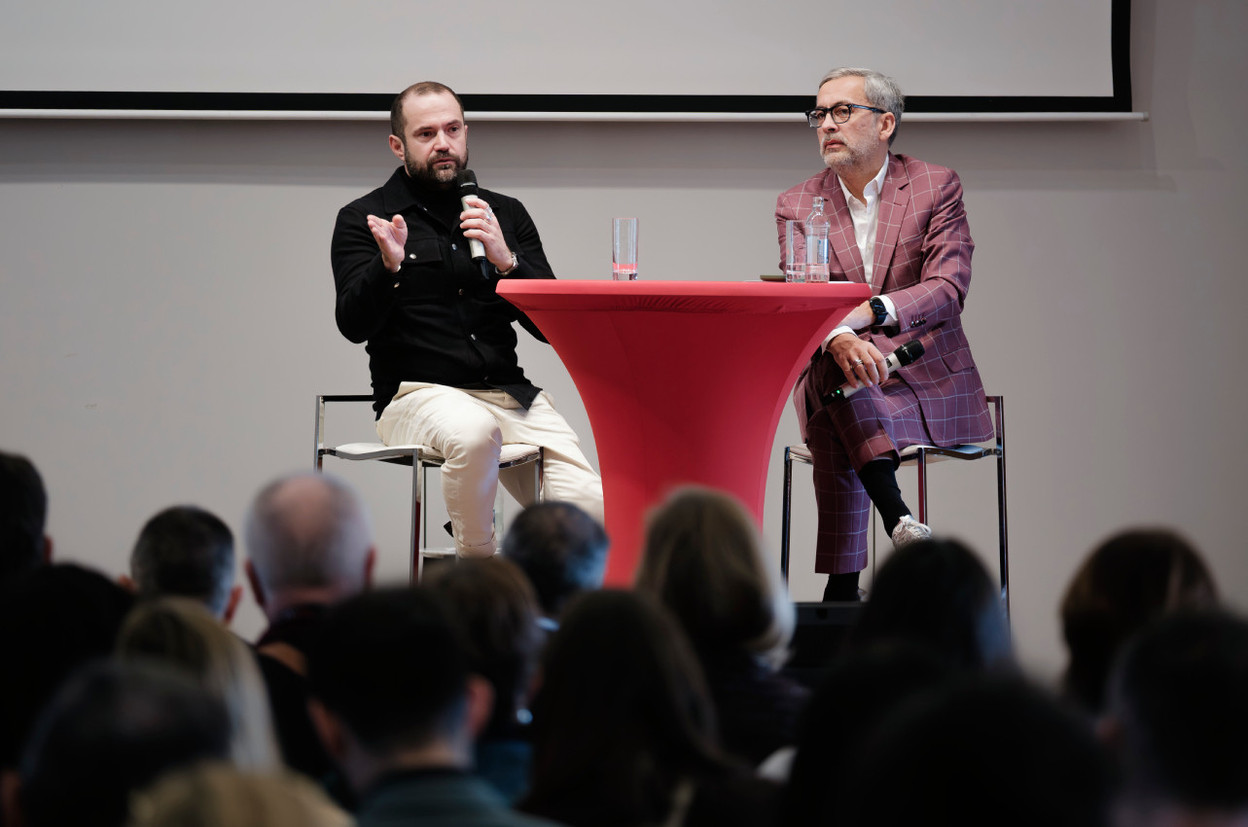
To hear Gabriel Boisante detail his method, his trade-offs and his vision of the sector, the full exchange with Mike Koedinger, founder and CEO of Paperjam, can be heard on the Paperjam podcast.