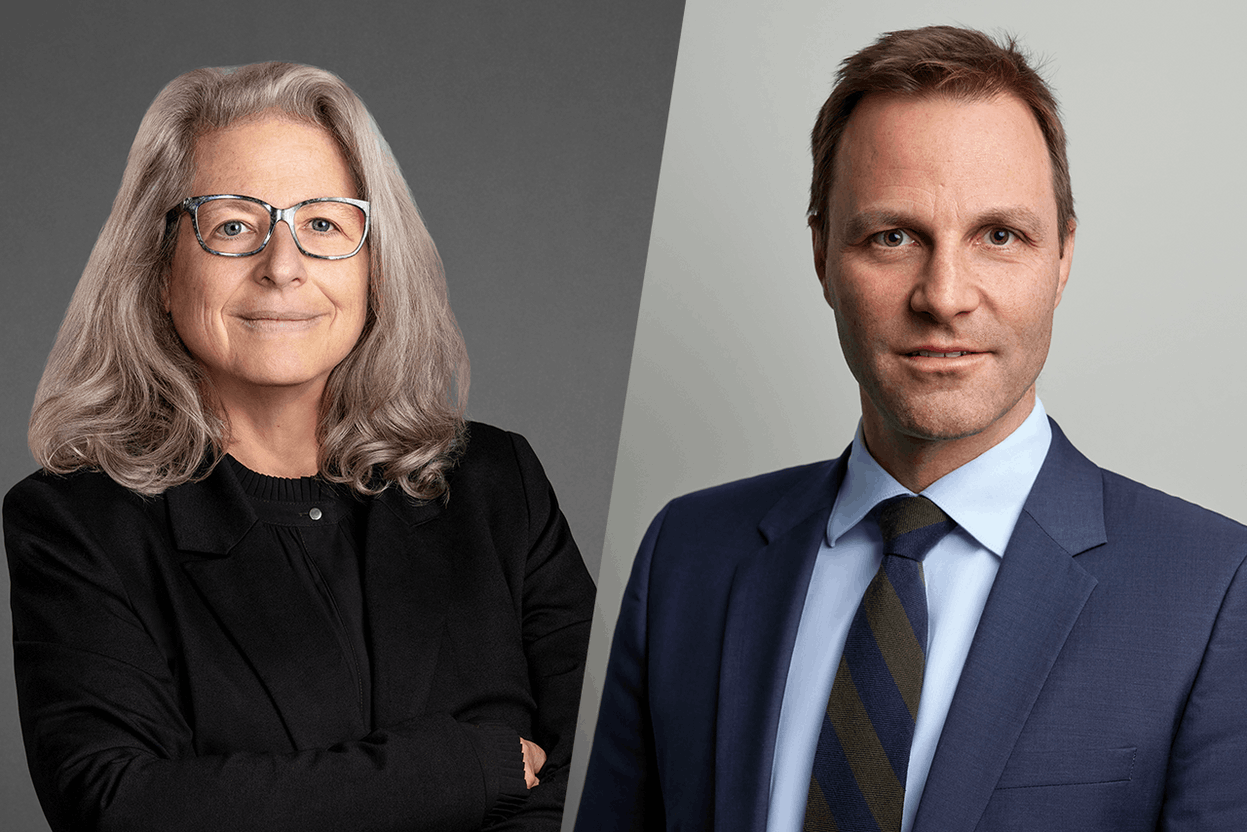
The Luxembourg law firm DLA Piper is holding its Funds World 2025 conference on Wednesday 18 June. On the programme? How innovation is reshaping investment fund models and strategies, the mega forces that are affecting businesses and how investment funds can address key issues in the future. Ahead of a panel discussion on the “disruptive innovations” shaping the future of funds, Emma Kendall, partner at DLA Piper in Australia, and 
New technologies like blockchain and tokenisation are “completely changing” how funds operate, said Niedercorn. “It’s a new paradigm.” Companies like the Luxembourg-based Tokeny, in which fund and asset servicing provider Apex Group acquired a majority stake in May, is one example of the rise of tokenisation in the funds industry. Founded in 2017 and operating in the grand duchy, Spain, France, Turkey, Greece and the US, Tokeny provides an institutional-grade platform for the compliant tokenisation of financial assets on blockchain networks. Tokenisation has a positive impact on general partners and fund managers, she added, “but for the middle- and back-office teams, it’s completely rewiring the system.” It’s also a “game-changer” for end clients and limited partners, because it “dramatically reduces the costs” and is “way more efficient. It’s amazing the impact it has on the speed and cost efficiency of the transactions.”
Tokenisation brings with it the possibility of fractionalisation of asset classes, thus expanding access to asset classes like art or real estate. This, for Kendall, is “really exciting.” “I think it has the potential to really expand the investible universe into things, for example, like carbon credits or tax credits.”
An “evangelisation exercise” is needed
It’s important to mention that people often mix up concepts, Niedercorn pointed out. “People mix crypto with everything else. And many people are afraid--risk managers amongst them--because they don’t know how it’s working precisely. There is a huge evangelisation exercise to perform in the entire industry, because the entire industry is being shaped--and potentially changed--by blockchain.” And this evangelisation effort needs to happen not just across different departments--legal, regulatory and tech teams--but also at every level of the industry, all the way to the people sitting on company boards. “We need to have--sitting on the boards of those institutions--more people from the realm of tech, with the tech savvy to be able to understand the positive aspects and not only the risk aspects.”
“I think the asset class generally needs to do more work on explaining itself,” said Kendall. “Blockchain has huge potential in high-fidelity provenance in low-trust environments. It’s really, really good at being safe, but it doesn’t have that reputation. And also, it’s not all the way through the stack. So you might have something that’s issued on the blockchain, but then it’s held by some legal entity, and then that thing issues issues rights to people that buy it. Or there’s several layers of credit risk between the ultimate investor and the actual cryptoasset. And that’s really hard to investigate and hard to understand. I think there’s definitely work there to be done, probably in compressing that stack, in--as Solenne [Niedercorn] said--making the technology actually pervasive throughout the layers of the industry.”
Still seems like “proof-of-concept”
Franklin Templeton recently launched a tokenised Uicts fund--the first public blockchain-based investment product in Luxembourg. Should similar products be expected in the future?
“Even though you have huge players like KKR, Franklin Templeton moving in that direction, for me, it remains a bit like a proof-of-concept,” replied Niedercorn. “We need some legal clarity, we need custodian readiness--which is not yet the case--and we need more pilots like this.” The regulator and the ecosystem in Luxembourg quite open, but it still remains a “very niche” topic.
It has to be seen as more than a “nifty” technology, said Kendall. “A lot of institutional-grade fund managers don’t want to look like they’re just avoiding regulation by tokenising something. There has to be a really good reason to do it.” There needs to be a pain point that’s being addressed or a marketable asset class that is being unlocked.
It’s more efficient from a purely operational perspective because you remove a lot of middlemen.

Other countries have moved forward with related initiatives, Niedercorn noted. In France, for instance, the fintech firm Spiko is known for its blockchain-based fund unit tokenisation solution. “Why does it seem to work? It’s more efficient from a purely operational perspective because you remove a lot of middlemen. But the main difference is on the fees--you can really cut fees, and on money market funds, you can see that there is an immediate impact.”
Concrete examples of how AI is used
AI is being touted as a solution to boost efficiency and allow people to focus on value-added tasks. How can it be used when it comes to investment fund operations?
The use of AI in the fund industry makes operations more efficient and less expensive, said Nidercorn. Firms like Comply Advantage, for instance, employ AI to detect fraud and conduct real-time AML monitoring. Another example is 73 Strings, which uses AI to extract data, monitor portfolios and provide valuation solutions; the firm secured a $55m series B round in February. “It’s a real scaleup,” she added. “They’re convincing a lot of fund managers to use their tool because it’s way more efficient.” And a third example, said Niedercorn, is the use of artificial intelligence to take board minutes.
AI has applications in front, middle and back-office situations, added Kendall. “On the investment, sourcing and diligence side, the ability to handle very large data sets--and to combine that with tools like web scraping and meta analysis of search terms and things like that, to get signals out of very big pieces of data--has really changed the diligence landscape in terms of identifying investment opportunities. We’re just at the foothills of that at the moment.”
Algorithmic trading is something that’s been around for a long time, but thanks to machine learning and AI, it’s going to get better, continued Kendall. Sentiment-sensitive signal analysis, for instance, can be used for spotting bribery and corruption, as well as analyse the strength of a team’s relationships. AI can also help with fund establishment negotiations, creating funds, the process of onboarding clients, obligation tracking, client reporting, portfolio interactions and other types of tracking.
It’s our insight and wisdom and relationships and judgement and imagination that differentiates us, not just our ability to add up real quick.

“It’s a massive revolution,” said Niedercorn. If used and adopted, AI will change thousands of jobs. “We need to also think of how we can help people to reinvent themselves,” she argued.
“I’m calling it the age of imagination and human relationships,” added Kendall. “Now it’s our insight and wisdom and relationships and judgement and imagination that differentiates us, not just our ability to add up real quick.” The challenge is for people to step back and “have a think about how AI can make their business more efficient and effective,” she said. “It’s a good challenge, but it’s definitely a challenge.”
Retail investors of the future
The EU is working on its “savings and investment union,” which aims to mobilise finance--from European household savings, for instance--to fund SMEs and other companies and address the climate challenge and defence needs.
Digital platforms can make it easier for these everyday investors to invest in companies. “It’s a very positive thing, because it gives the occasion for retail investors to bring something to the real economy,” said Niedercorn. But there are a few things to highlight, she added: investors need to be mindful of fees, liquidity and the risk of losing their investment. “Access is easier, but people don’t necessarily have the knowledge of those asset classes [like private equity or real estate] in terms of liquidity, in terms of risk-and-return.” Transparency and “proper evangelisation” are key.
“I think that any kind of platform that gives investors the opportunity to diversify their investment portfolio is, per se, a good thing,” added Kendall. “But it can’t be a way to avoid disclosure to investors. We need to do better in terms of being really frank and quite bold in the way that we tell retail investors what the risks are, how this investment compares with other things, other uses they might put their money to, or how other asset classes perform. We need to be less legalistic--which, I can’t believe I’m saying that as a lawyer--but we need to be more bold, more frank, more open, more conversational in the way we talk to people about what their investment risks are.”