In the December issue of its “Conjoncture Flash” publication, Statec reports GDP growth of 1.1% for the 3rd quarter of 2025 and 2.7% over the last four quarters. It is worth noting that four consecutive quarters of growth began in the 4th quarter of 2024, “a pattern not seen since 2019”, according to the statistical office. However, it notes that “the recovery observed remains unbalanced and highly irregular between the different branches”.
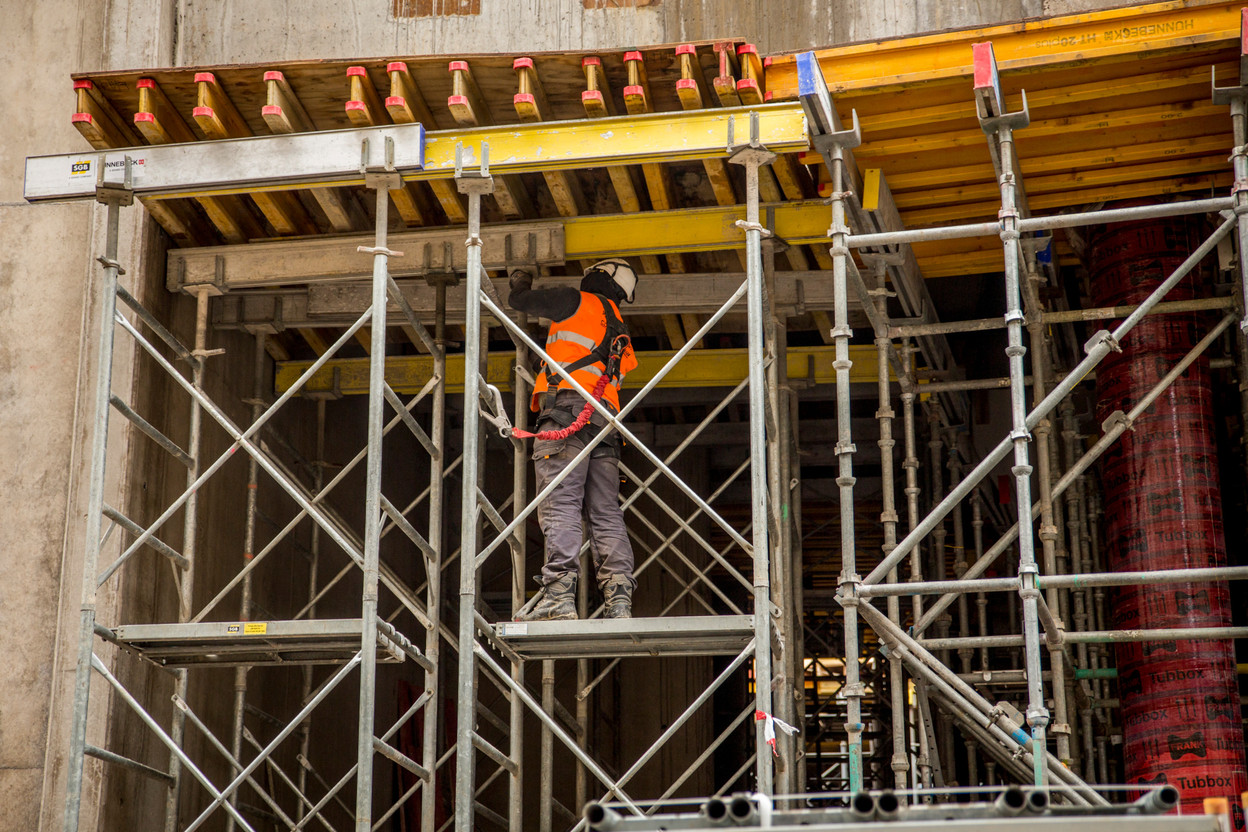
As a result, the increase in overall value added (+1.5% in the 3rd quarter) was mainly driven by financial and insurance activities (+2.4%), contributing 0.6 percentage points to the overall rise. Trade, transport, accommodation and food services, as well as predominantly non-market activities (public administration, education and health), also contributed to this positive dynamic. The most negative contributions came from business services and, in particular, construction (-1.4% over a quarter), the latter decline being mainly linked to property development companies.
Investment and consumption on the rise
Investment spending rose by 12% over the quarter, boosted by the acquisition of satellite capacity. By way of comparison, investment had fallen by 3% in the 2nd quarter.
At the same time, household consumption rebounded. “After a slight fall over the previous two quarters (-0.2% on each), household consumption recovered (+1.2% on a quarterly basis), driven in particular by spending on restaurant services, capital goods (furniture, domestic appliances), transport services and clothing. Public consumption expenditure, mirroring the trend seen in previous quarters, remained buoyant (+1.3% over one quarter)”, Statec details.
Labour costs still on the rise
Statec has examined trends in average labour costs (ALC) in the Grand Duchy and its neighbours. They rose by 4% in the eurozone in the 3rd quarter. “Wage inflation is proving more persistent than anticipated, particularly by the ECB, which was forecasting a fairly substantial slowdown for the summer,” notes Statec. “This persistence is linked to contrasting trends between the zone's heavyweights. For example, ALC is slowing in France (2.1% year-on-year, after 2.5% in Q2), while it is still accelerating in Germany (to 5.4%, after 5%).”
In Luxembourg, ALC rose by 4.9% year-on-year in the 3rd quarter. This is a higher increase than that seen in the second half of the year (+4.4%) as well as in the first (+2.8%). "This further acceleration is mainly due to the growth of the sliding scale,” analyses Statec, which puts its impact at 2.5 percentage points for the 3rd quarter.