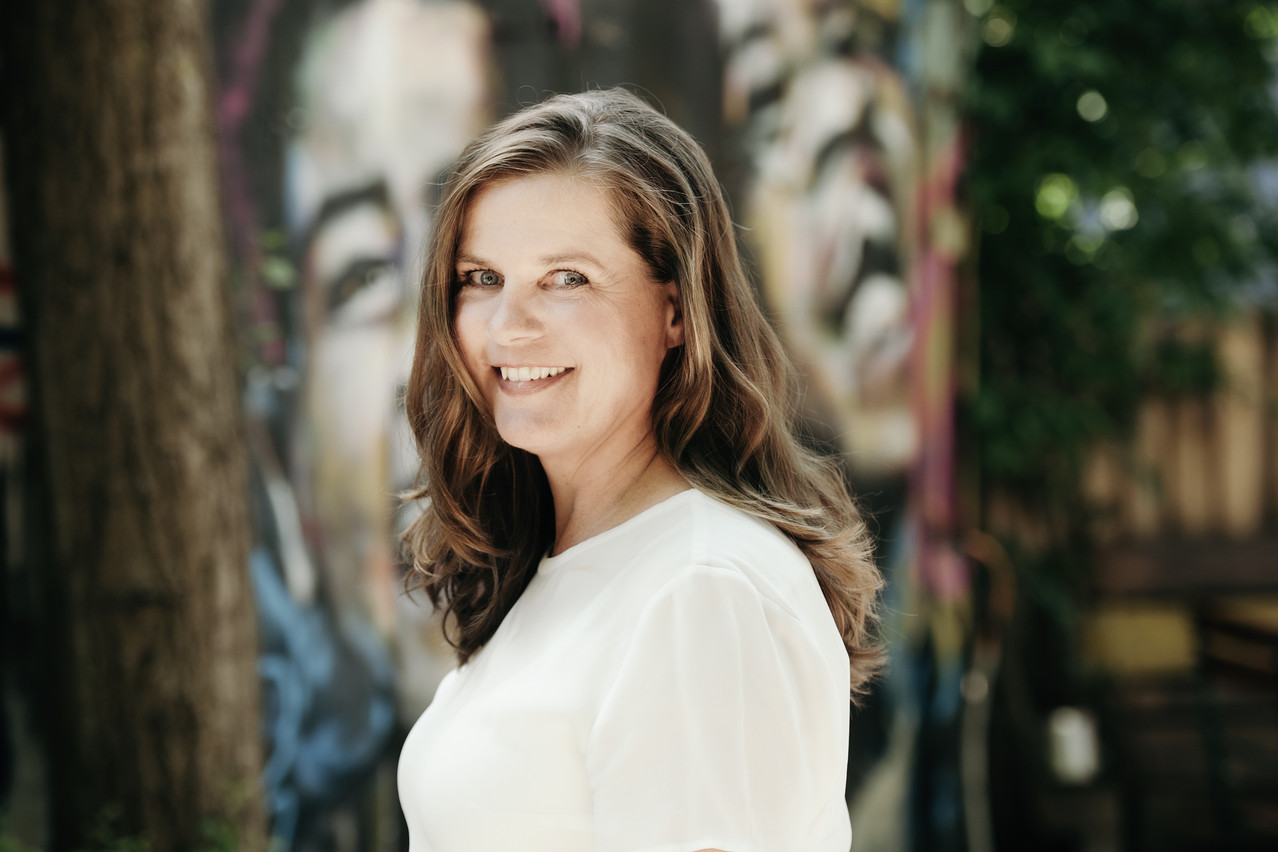
Duncan Roberts: You arrived at Maison Moderne in the midst of the covid crisis. You took time to get to know the teams in different departments. What was your view of the company at the time?
Geraldine Knudson: Well, there were a couple of things that really fascinated me. For one, the teams managed the crisis really well. There’s a very professional approach…being agile, fast decision-making for example, the transformation of all of the Club events from physical to digital within a few weeks. Indeed, there was the whole process of rethinking the Club, in terms of the New Deal for membership, continuous training, allowing people to network digitally after events…These are things that are that are really very valuable.
People that work here are very committed, motivated to producing quality, and they’re genuinely interested in what they’re doing. There’s a high level of identification with the company, its products and services.
DR: Of course, you were aware of the company before from your time as City Manager at the City of Luxembourg…
GK: Yes, I knew it from being involved with the creation of City Magazine in 2009 [the monthly magazine that Maison Moderne publishes on behalf of the City of Luxembourg]. And I have always been fascinated with what Mike [Koedinger, founder and chairman] was doing. And I’m still fascinated by the concept, you know, the ecosystem that he created with all these different departments nourishing each other. And with this independence, which allows for the publications to be constructively critical, I mean, not in a bashing kind of way. They can follow developments, be it in business, be it political or social matters, and take a position without being tied to any political party, a religion or anybody else other than our own conscience. It is very unusual, without being part of a big media company, to be taking decisions quite independently. And to have a system that is financially independent is fantastic. So that’s the reason why I’m back.
DR: You have talked about increasing the value proposition of the company. Can you explain what that involves and what immediate changes you think are required at Maison Moderne?
GK: I saw a lot of silos and I think the way that you lead companies today is much more transversal. People need to really be agile and fast and respond to changing circumstances. You want to have teams that are dependent on each other, that trust one another and know what each other are doing. We want to put together task forces or sprint teams that work on a very defined objective together, and then maybe go their own way and continue with other objectives with another set of people. I think in silos we become terribly clumsy; decision making is very difficult because you have to have a very strict hierarchy and that slows you down. But if you don’t have the strict hierarchy it goes all over the place, and people ask everybody for an opinion or for a solution, except for the person who could actually take the decision.
The other really big change that we’re putting into place right now is to unify and to integrate everything that has to do with clients. So then, together with publishing, which is our core, and the Club, we will have three pillars.
Nowadays, clients don’t want to be sold stuff. They want to be listened to, they want you to analyse their needs and their problems and to then propose solutions and the appropriate channels. And we need to have one face for the customer that can build a very personal relationship based on trust and concern. That is the goal behind creating the Brand Studio.
DR: And what impact will those changes have on readers, clients and employees?
GK: For the employees, I think the goal is to have a much higher level of satisfaction. Work is where you spend most of your day, so you should have more of a warm dynamic where there’s more understanding of your role, more respect between colleagues and recognition for what you produce.
The value proposition for the readers and for the clients is to further increase the quality. So that clients find a perfect environment for their communication needs, our members find high value in their own development, but also a platform for what they have to say.
DR: One of the changes Maison Moderne has announced is that the Paperjam and Delano teams are going integrate into one newsroom as part of this bilingual, French and English strategy. Why is this shift in languages happening now?
GK: I think it’s the right time. It could have happened before. Multiculturalism is something I have lived personally. I wasn’t born in the country that I grew up in, I have lived in several other countries, speak several languages…I think it’s important for Luxembourg to understand that more and more people are English speaking. Yes, 98% of the population speaks French, but 80% speaks English. These people who are coming need orientation, they need to understand how to enter society.
But our publications also have a certain amount of reach beyond the borders. And I really think the publications that we produce are there to fire social dialogue, to not only inform people but also get them involved. And I think we need to use the media to shed a light on all the positives and the really innovative and creative side of Luxembourg.
DR: Obviously the company, like media businesses everywhere, faces a set of immediate challenges. But where do you see Maison Moderne 5 years down the road?
GK: I think the company culture will be completely changed. It will be an international company, it will be a highly effective and agile company with a workforce that has much higher levels of satisfaction than today. I think that we will probably reach beyond the borders. We will have diversified the Club into being fully bilingual. Delano will be a stronger brand and force in the market than today. And we will we will continue to create innovative content formats for clients.