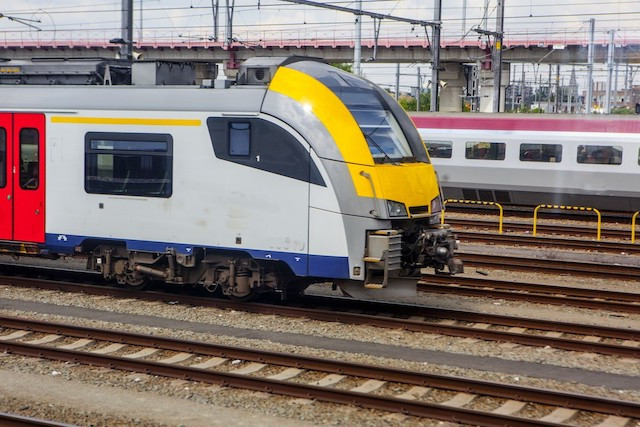
The journey takes upwards of three hours, on regional trains without wifi or other amenities, and is a bugbear for EU workers who travel back and forth between the cities, both seats of the EU’s institutions.
François Bausch (Déi Gréng) and Belgium’s Georges Gilkinet (Ecolo) have now written to European Commission vice president Frans Timmermans--in charge of the European Green Deal--to raise funds to upgrade the line.
“The works, affecting a 175-kilometer section in Belgium, are highly technical and concern all types of works (civil engineering, catenary tracks, signalling and voltage changes),” said Gilkinet in a statement published on 18 January.
Belgian foreign minister Philippe Goffin during a visit to Luxembourg in June last year said planned refurbishment works would shave one hour off the trip but would take at least five years to complete.
2021 marks the European Year of Rail, an initiative to highlight the benefits of rail as a sustainable, smart and safe means of transport.
“This is a project which fits perfectly into the logic of cross-border investments financed by the Commission,” said Bausch. “On both sides of the border, the works carried out on the Brussels-Luxembourg rail axis bear witness to this ambition shared by the European Commission: to invest in rail for sustainable and efficient mobility, at the service of its users but also of our economy, our jobs and our environment.”
Luxembourg and Belgium in 2016 signed a letter of intent, pledging to reduce travel time between the two capitals to 2 hours and 7 minutes by 2023, but this target was quietly abandoned.
The line picks up cross-border workers on its path to Luxembourg, but an upgrade would also benefit freight transport. “It forms part of the North Sea-Mediterranean rail freight corridor and is therefore well situated to contribute to the European priority of moving a substantial share of 75% of freight currently moved by road to rail,” said Gilkinet.
The European Green Deal forms part of an EU commitment to becoming climate neutral by 2050. It supports projects in nine policy areas, including agriculture, biodiversity, climate action, construction, energy, food systems, industry, mobility, and pollution.
The deal aims to mobilise €1trn over the next decade, with around half sourced from the EU’s budget and the rest made up of national co-financing, public private partnerships and financial institutions.