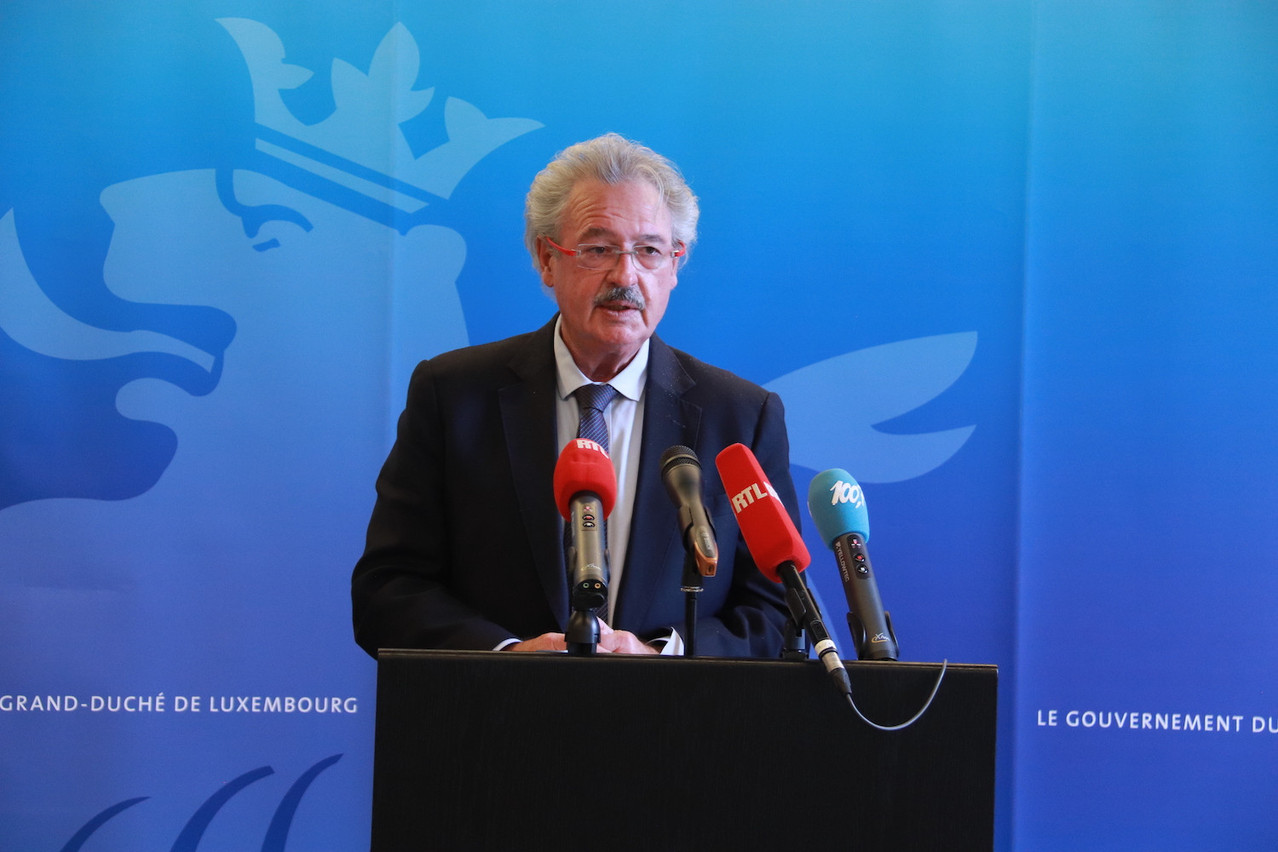
The European Commission in September 2020 proposed a new Pact on Migration and Asylum, intended to mark a fresh start for EU policy. But negotiations have remained largely deadlocked ever since. France has become the latest country to vow progress while holding the presidency of the Council of the EU after efforts by Germany and Portugal failed.
“The French are entering the presidency with a lot of enthusiasm, which is good,” Asselborn (LSAP) said. “The climate is a little less frosty than usual but not much more,” he said of talks on asylum and migration.
“The problem is that even if Germany and France take in a large number of relocations, that means people who are saved at sea, it’s not enough with Finland, Portugal, Ireland and Luxembourg managing all the rest. We would need a critical mass. We would need a dozen countries to lend a hand,” he said.
“It’s not enough to patrol borders. I don’t understand this border fetishism,” Asselborn said. There should be an efficient screening process at the external borders to quickly assess whether people arriving have a claim to seek asylum. Arrivals should then be relocated as quickly as possible across the EU. “Those who enter should not be left to the countries on the border, especially the sea border.”
The foreign minister’s comments come as the EU’s border agency Frontex aims to reach a standing corps of 10,000 personnel amid allegations of illegal pushbacks. The EU’s migration office meanwhile has been renamed and reinforced with a new mandate as the European Union Asylum Support Office.
Hungary and Poland have been at the core of a dispute among EU countries on the distribution of asylum seekers. The European Court of Justice in April 2020 said both countries together with the Czech Republic had violated EU law for failing to take in refugees as part of a 2015 mechanism in response to the Syrian refugee crisis.
Asselborn has repeatedly called on the European Commission to impose sanctions against the countries following the verdict. He previously, in 2016, called for Hungary to be expelled from the EU over its treatment of refugees.
Need for more facilities
In Luxembourg, the minister is trying to lobby communes to create more shelters for asylum seekers as the country’s facilities are quickly running out of space. Infrastructure housing for asylum seekers while they are waiting for their applications to be processed are at 95.3% capacity, Asselborn said on Monday.
Part of the problem is that more than half of the people living there have already been granted international protection but are struggling to find housing on Luxembourg’s expensive private real estate market with the need for affordable housing far outstripping the offer.
With local elections on the horizon in 2023, Asselborn said the context to get communes to cooperate is “not easy” but that municipalities opening shelters had reported positive feedback.
“I cannot imagine in the medium and long-term that the number of people coming to Luxembourg asking for the status will decrease,” the minister said. Last year, the ministry granted 754 requests for the status of refugee under the Geneva Convention as well as 144 requests for subsidiary protection.
Refugee status applies to fear of persecution for reasons of race, religion, nationality, political opinion or belonging to a particular social group while subsidiary protection offers protection to persons who don’t qualify for refugee status but are at risk of suffering serious harm, such as the death penalty or torture.
“Doing everything we can” for Afghans
Syria, Eritrea and Afghanistan led the 1,249 applications for international protection received last year.
“It is unbearable after everything that happened that the Taliban regime chokes its people,” Asselborn said, warning of a curb on freedoms but also looming famine in the country.
Currently, 125 Afghan nationals are still in the asylum procedure, the minister said. Out of 160 decisions in 2021, more than three quarters resulted in refugee status being granted.
In 2020 and 2021, 40 requests for international protection--affecting 83 people--were refused before the government halted decisions in the wake of the Taliban takeover. Refusals have already been withdrawn for 36 people after the government allowed applicants to provide additional information on their risk.
“We’ve told everyone who has been refused international protection that we are actively helping them to be regularised,” Asselborn said, for example by finding jobs or authorising their stay for humanitarian reasons. “Since 2015, we haven’t sent any Afghan citizens back to Afghanistan,” the minister said, with one exception involving a criminal case.
Afghan nationality doesn’t, however, automatically lead to being granted refugee status, the minister said, for example as some citizens didn’t live in Afghanistan before coming to Luxembourg. “We’re doing everything we can here in Luxembourg to help at least the people who are here, to give them an opportunity to start a new life,” Asselborn said.