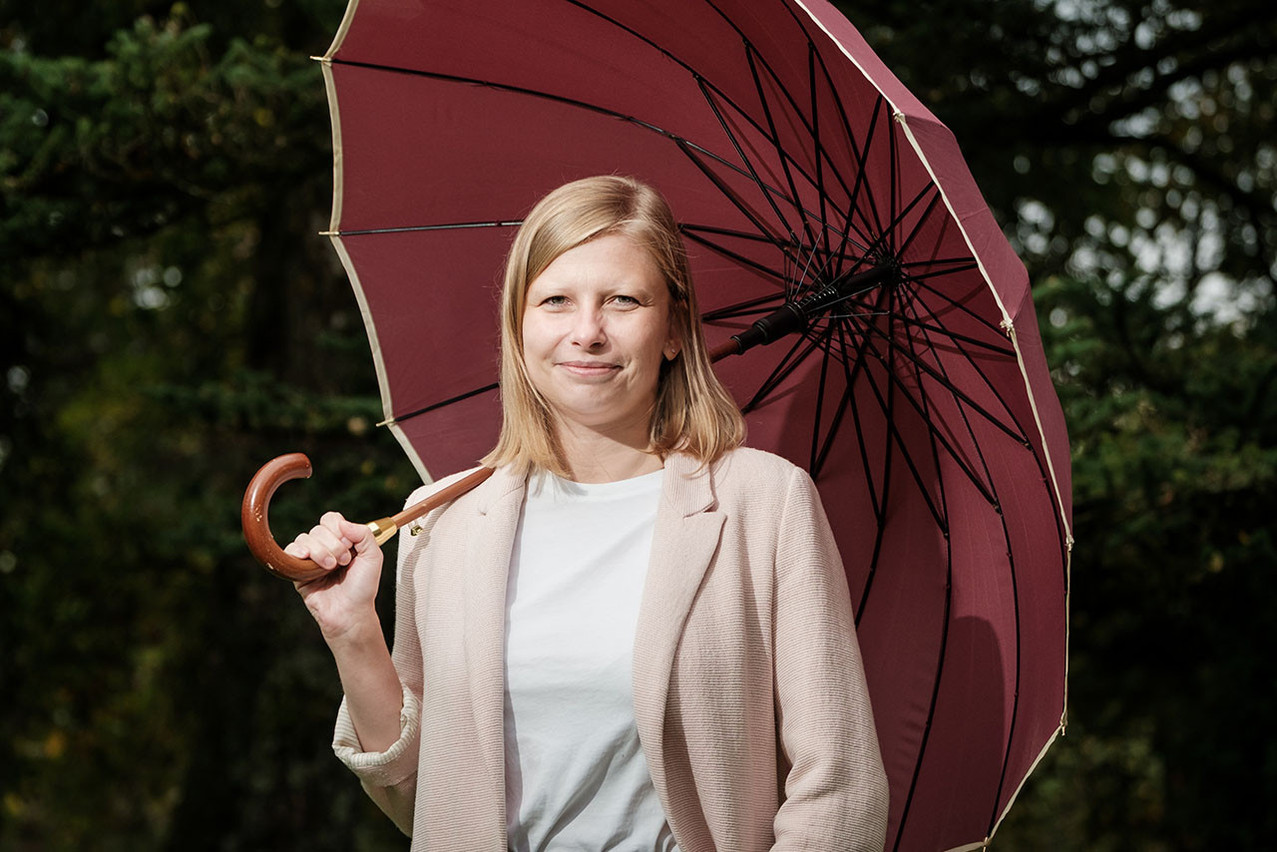
Diane Pierret is an assistant professor in the Department of Finance at the University of Luxembourg. Her research in the field of banking has led her to focus on banks' responses to regulatory stress testing practices, the consequences of unconventional central bank interventions, the links between sovereign debt and banks, bank profitability and monetary policy.
Why is it essential to better integrate climate impacts into financial risk management?
Diane Pierret. - "Climate risks have a significant influence on the value of financial assets in many respects, to the point of posing a threat to the stability of the financial system if they are not sufficiently understood. Today, investors anticipate the impact of climate change, such as natural disasters or energy transition issues, on the future financial performance of their investments. Climate risks affect the stock market value of many companies. For insurers, the risks are even more tangible: natural disasters, floods or fires lead to immediate losses. For the European Central Bank (ECB), whose mandate includes financial stability, these risks must be integrated into the overall assessment of the system.
What does climate risk mean in concrete terms? What are its components?
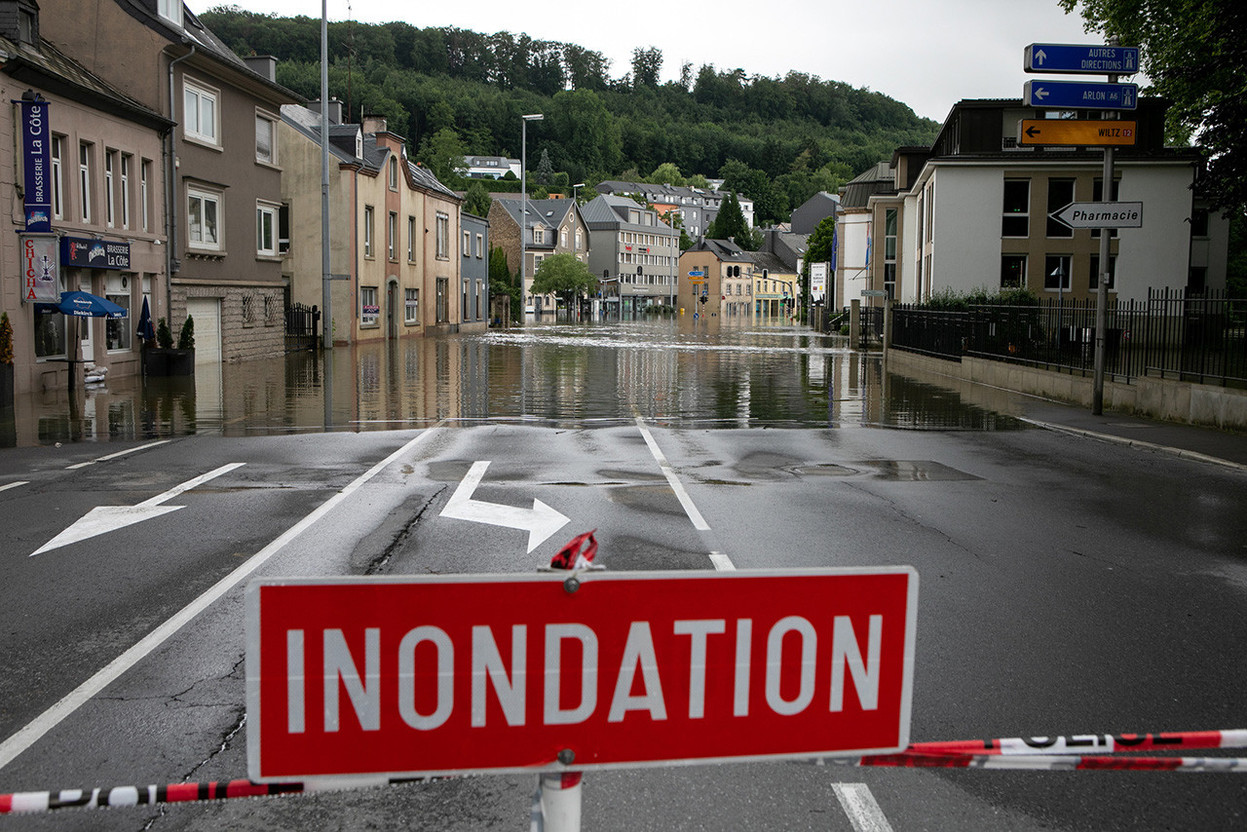
"There are two main types. Physical risk is linked to extreme climatic events (hurricanes, fires, floods, etc.) which lead to direct losses, particularly in property damage insurance. Transition risk is more of a market risk, affecting the value of asset portfolios. It is linked to regulatory, technological and economic developments aimed at decarbonising the economy. Companies that are heavily exposed to fossil fuels or unsustainable models will see their valuations weakened.
Banks will no longer be able to obtain the same level of financing against assets exposed to high climate risks.

How are central banks dealing with these issues?
"For some years now, the ECB and other supervisors have been conducting regular climate stress tests. These exercises involve projecting different scenarios onto the balance sheets of financial institutions: for example, climate-related disasters or a rapid transition to a low-carbon economy. The results are used to measure the resilience of the players involved. The ECB recently announced that, from mid-2026, climate risk would be incorporated into its collateral framework. In other words, banks will no longer be able to obtain the same level of financing against assets exposed to high climate risks.
The challenge for financial players remains to assess climate risks properly and integrate them more effectively. How complex is it to measure these risks?
"By definition, risk is a latent variable: it is never directly observable. Every measure is therefore imperfect. However, if several measures converge, confidence grows. Central banks use their own models, based on data that is often confidential. At the same time, academic institutes such as the Volatility and Risk Institute and its Volatility Laboratory, co-founded by Robert Engle, with whom I had the opportunity to work, publish indicators based on market prices, which reflect the perception of climate risk by thousands of investors. These complementary approaches enrich the analysis.
How does the Volatility Laboratory's methodological approach account for the impact of climate risks?
"The Volatility Laboratory team, of which I am still a member, has developed several methodologies. After measuring the systemic banking risk following the 2008 crisis, and then the energy transition risk, the researchers designed a tool targeting insurers' exposure to physical climate risks. In concrete terms, they constructed a climate factor, i.e. a portfolio representing property assets exposed to natural disasters. When an extreme climatic event occurs, the value of this portfolio falls. They then measure the sensitivity of insurance company share prices to this climatic factor, making it possible to assess insurers' losses in a stress scenario where the climatic factor is subjected to a sharp decline. The data and methodology are public, guaranteeing total transparency.
Publishing these results is a service to society: investors and citizens alike have a right to know.

Are institutions not worried about increased transparency?
"Yes. These measures, which are accessible to all, make it possible to compare the vulnerability of players. An insurer that appears to be highly exposed to climate impacts, or undercapitalised in relation to the risks, inevitably does not appreciate this transparent approach. But publishing these results is a service to society: investors and citizens alike have a right to know.
What lessons can we draw from the results of the Volatility Laboratory's work?
"Climate stress tests show that potential losses are not just theoretical. According to a study conducted with Robert Engle and his co-authors, the insurance sector's shortfall linked to physical climate risk reached 10 billion dollars in 2021, in a severe crisis scenario. These results do not automatically trigger recapitalisations - unlike bank stress tests - but they do send out clear warning signals.
Should we be worried about this situation? How should we react?
"Above all, we need to be prepared. Stress tests do not predict the future; they simulate extreme scenarios to test the resilience of the system. But their role is crucial: they are a reminder that climate risk is not abstract and that it can translate into massive financial losses."
The tutelary shadow of a Nobel Prize winner
Robert F. Engle, winner of the Nobel Prize in Economics in 2003, is an expert on climate-related financial risks. He proposes approaches for quantifying and managing these risks using financial volatility modelling methods. His work focuses on the construction of resilient investment portfolios, the stress testing of financial institutions and the pricing of environmental risks in order to protect finances and the planet.
This article was written for the November 2025 issue of Paperjam magazine, published on 22 October. The content is produced exclusively for the magazine. It is published on the site to contribute to the full Paperjam archive. Click this link to subscribe to the magazine.
Is your company a member of Paperjam Club? You can request a subscription in your name. Let us know via club@paperjam.lu.