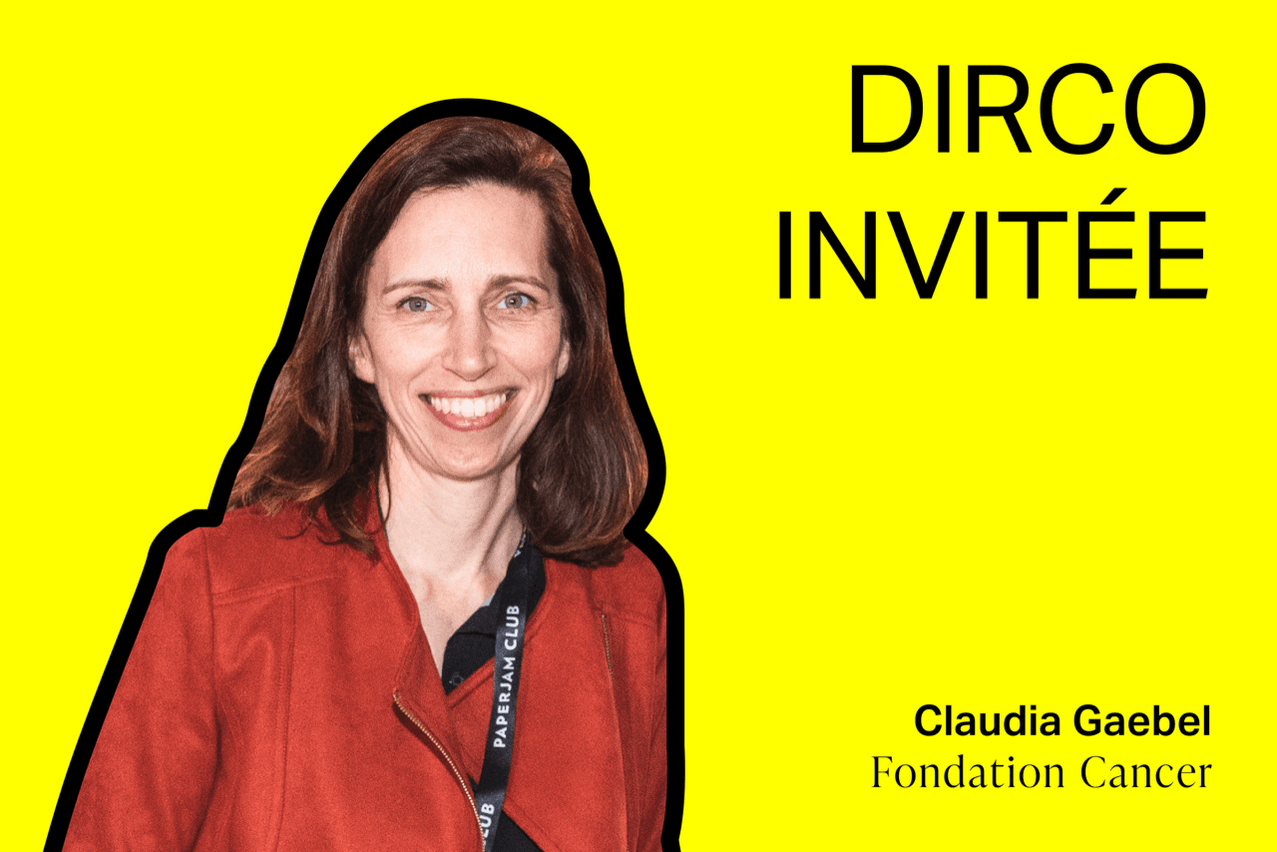
How do you define the role of brand management within a social-purpose organisation such as Fondation Cancer, where visibility, mobilisation and meaning must coexist?
Within a social-purpose organisation like Fondation Cancer, brand management means ensuring a strong, coherent and meaningful identity in service of a mission of public interest. Beyond image, it is primarily about building trust and engagement by translating complex human and scientific values into clear, accurate and accessible messages. In this sense, brand management becomes a strategic lever to amplify social impact while respecting the ethics and authenticity of the cause.
But can we truly speak of “brand management” in the context of a social-purpose organisation? In our case, it is less about managing a “brand” in the commercial sense than about carrying a responsible identity and voice. It is a tool in the service of meaning, enabling a fair, human and credible voice to emerge in the public sphere.
Relais pour la Vie brings together thousands of participants every year. What levers do you use to turn this event into a true brand of engagement and impact?
Relais pour la Vie is first and foremost a powerful collective experience, built over more than 20 years, far beyond the event itself. It is rooted in a unique, deeply unifying atmosphere where collective energy, solidarity and hope create a lasting experience for participants. This shared energy naturally encourages participants to share their experience and become the event’s strongest ambassadors, particularly on social media, helping to make cancer visible in the public space—without taboo.
The mobilisation of participants, volunteers and partners, combined with transparent communication about the tangible impact of Relais pour la Vie, creates genuine and lasting engagement in support of the fight against cancer.
In your view, what defines an “impact brand” today, and how does this vision translate into concrete actions at Fondation Cancer?
An “impact brand” stands out through its ability to clearly align its purpose, values and actions with a genuine commitment to generating positive, measurable long-term impact. At Fondation Cancer, this translates into authentic storytelling, meaningful campaigns and concrete initiatives designed to inform, mobilise and build an engaged community around the fight against cancer.
Our ambition is to inspire action and drive change, with the ultimate goal of influencing health policies and improving the quality of life of patients and their loved ones.
Which major trends do you believe will transform the role of the Brand Manager over the next five years?
Several trends will redefine our role in the years ahead. First, there will be a growing demand for transparency, authenticity and responsibility, as audiences become increasingly attentive to the consistency between words and actions. Secondly, data-driven strategies and artificial intelligence will play a central role in better understanding behaviours, personalising experiences and measuring impact beyond traditional awareness metrics.
Finally, the Brand Manager will evolve towards a more strategic and cross-functional role, integrating societal, cultural and environmental challenges, and acting as a guardian of meaning and credibility in an ever-changing environment.
As a DIRCO, what would be your three key communication recommendations for foundations and NGOs?
First, I would emphasise message coherence and clarity: effective communication must be aligned with the organisation’s mission, values and concrete actions. Second, transparency is essential to build trust with the public, donors and partners. Finally, it is crucial to place people at the heart of communication—giving a voice to those directly concerned as well as to experts—in order to create emotion, engagement and a committed community around the cause.
If you had to sum up your style as a Brand Manager in one word… or one emoji, which would you choose and why?
🎗️ Because it is associated with our cause, solidarity and awareness. At Fondation Cancer, commitment guides the way we communicate, build connections and convey sensitive messages with accuracy and respect.
On 22 January 2026, Paperjam brings together the Brand Manager community for the third edition of the “Paperjam Brand Manager of the Year” Awards, organised in collaboration with MarkCom. Register now!