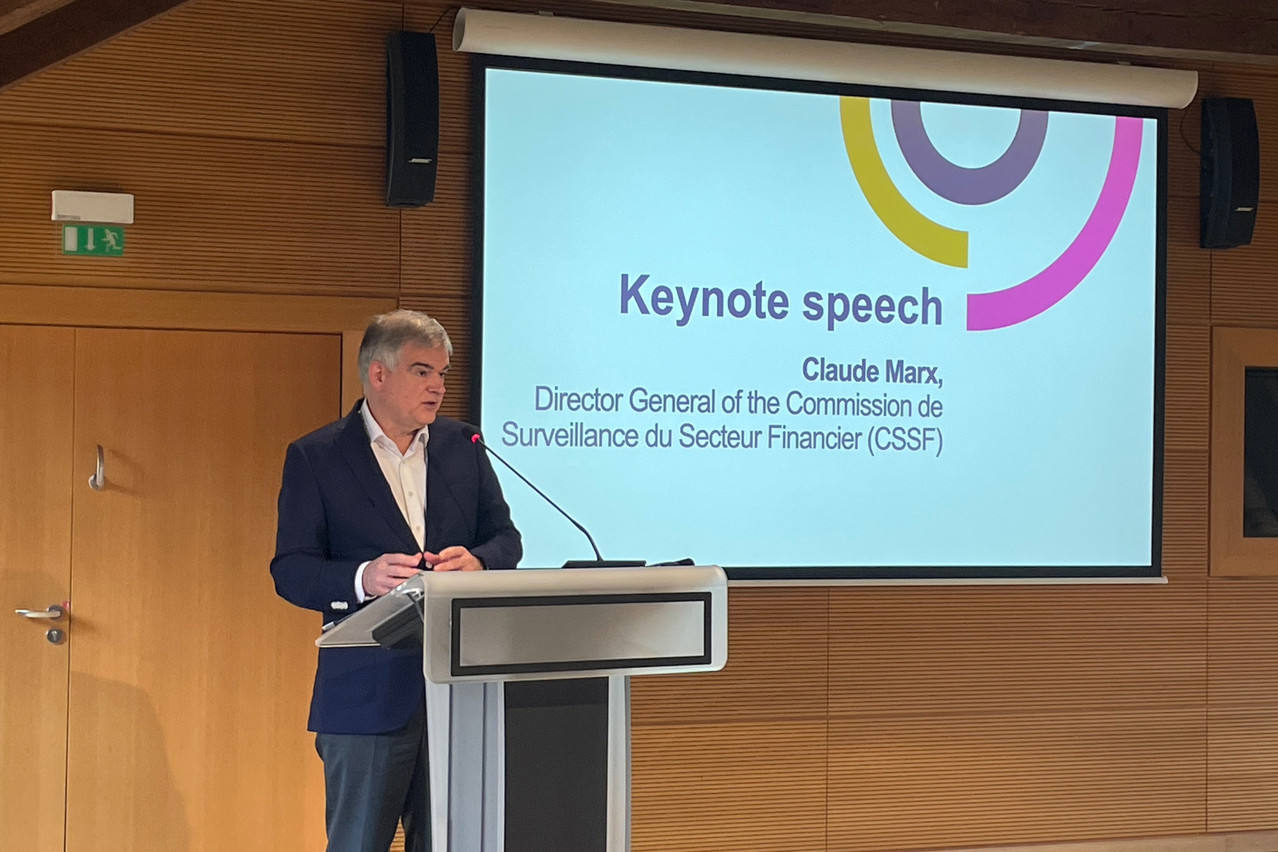
“ESG is not a passing trend but an evolving concept,” said Claude Marx, director general of Luxembourg’s Financial Sector Supervisory Commission (CSSF) at the 2025 LSFI Summit in Luxembourg on 17 September 2025. He observed that Morningstar reported net inflows of €4.9bn in 2Q25 in ESG (Environmental, Social, and Governance) funds, globally, versus redemptions of €11bn in 1Q2025.
Marx thinks that ESG has become an increasingly politicised issue, with some politicians viewing it as a "liberal, progressive agenda" that shouldn't interfere with market dynamics. Despite this ideological divide, the core message is that “ESG is not a trend. It is central to financial strategy, to risk management and to long term value creation.”
Reflecting on regulation
The European Union has been a leader in promoting sustainable finance, but its implementation has been flawed. Marx admitted that the “EU was bad at executing the 2020 green agenda, having issued in record time, vast amounts of regulation difficult to understand for both professionals and investors, and sometimes with unclear or conflicting definitions, and this, in turn, has led to a loss of trust.” He sees the current framework as overly complicated for retail investors to comprehend.
Sustainability risk is a real financial risk that affects the value of investments based on ESG factors
In response, European regulators, including the CSSF and ESMA (European Securities and Markets Authority), have advocated for streamlining the framework to make it more manageable and effective. A comprehensive review of the sustainable finance disclosure regulation (SFDR) is underway to simplify requirements and improve usability.
Ongoing transition
Marx explained that the CSSF's supervisory priorities for 2025 focus on “a risk-based rather than a one size fits all” approach to support the financial sector's transition to sustainability.
Key areas of focus include:
1. Transparency and disclosures: Scrutinising compliance with SFDR and ESMA's fund name guidelines to prevent greenwashing. Marx noted that since the corporate sustainability reporting directive (CSRD) is not yet transposed, and that the directive has postponed certain deadlines, we will focus for now on bilateral exchanges with the issuers concerned.”
2. Risk management and governance: The CSSF intends to ensure firms integrate sustainability risks into their actual decision-making processes, not just in disclosures. “The CSSF will therefore conduct thematic reviews on the integration of sustainability related provisions by investment fund managers in their organisations,” he said. While compliance is satisfactory, ESG integration into core functions remains uneven.
3. Sustainability preferences: Improving how firms integrate investors' sustainability preferences into suitability assessments, as current rules are overly complex for both firms and retail investors. He commented that this was revealed by ESMA when it conducted the “common supervising action” focused specifically on the integration of sustainability in the firms’ suitability assessments and product governance processes and procedures.
4. Fighting Greenwashing: Distinguishing between sustainability risk (a real financial risk) and greenwashing risk (misleading marketing). “Sustainability risk is a real financial risk that affects the value of investments based on ESG factors. It is an objective risk,” remarked Marx. He stressed that the CSSF is committed to combating misleading claims to maintain investor trust.
ESG supporting long term financial stability
Marx suggested that forward-thinking companies are advised to integrate clear, measurable ESG strategies into their business models rather than waiting for concerns to fade. He thinks that companies effectively managing ESG risks are likely to be more resilient and better positioned for long-term growth. Ultimately, Marx thinks that ESG should be viewed as a fundamental tool for creating more resilient, fair, and sustainable economic systems, rather than a polarising political stance.