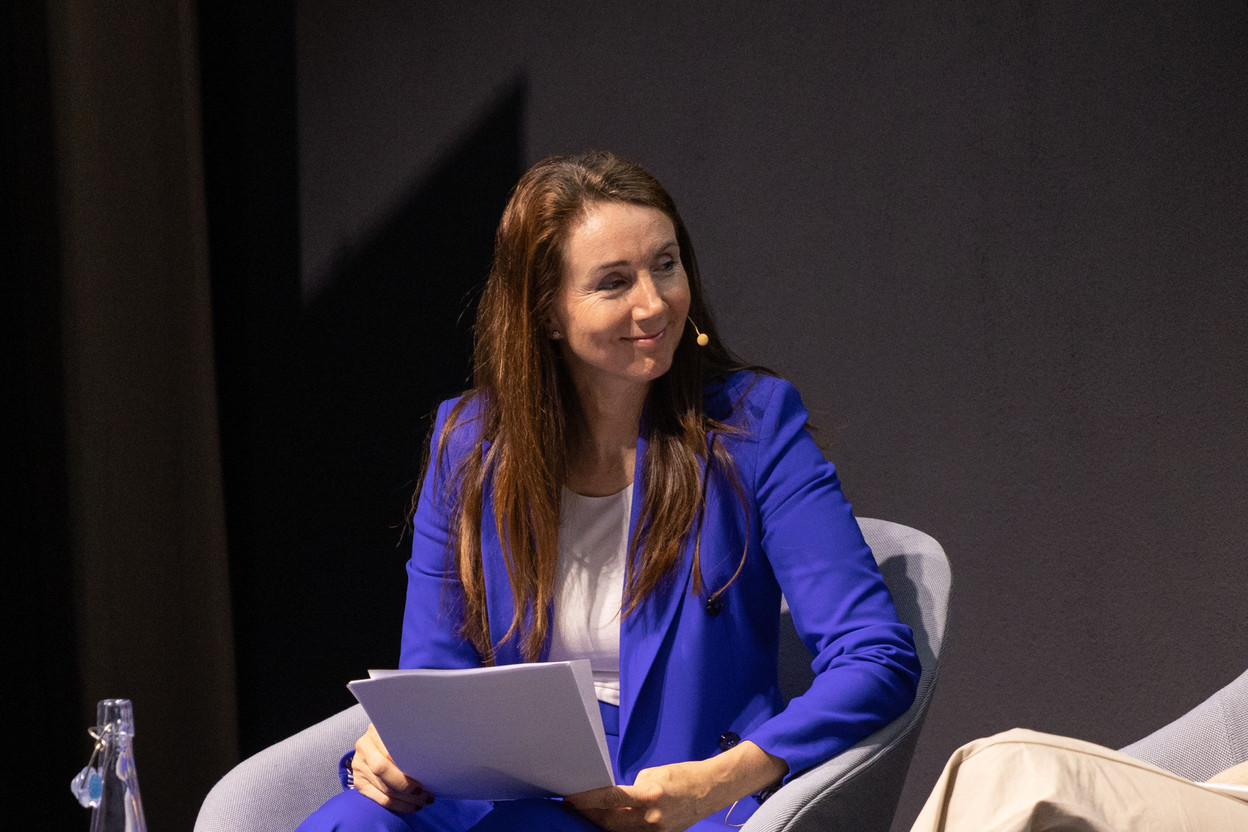
Hermann Beythan has been a lawyer in Luxembourg for more than 30 years. At the law firm Linklaters, he was partner and responsible for the investment funds department. Beythan’s scope covered Ucits, alternative funds, impact funds active in microfinance and reserved alternative investment funds (Raifs). He was appointed chairman for Luxflag on 25 June 2025 for a period of three years.
Sylvain Barrette: How do you think your previous role at Linklaters will help Luxflag?

Just to give you an idea on my motivations… I have vineyards spread over two acres in Luxembourg that are completely carbon-neutral and ecological. [My goal] is to give back to Luxembourg, to help it grow and to sustain the financial sector by fostering the components of sustainable finance.
I want first to express my gratitude to 


What is your long-term vision for Luxflag, and how do you see the organisation evolving over the next five years?
It’s important for the financial sector to not only be about profit but also about sustainability, to shape the world. Obviously, profit and sustainability are linked. Sustainability is stability in terms of ecology, society and governance. There is a convergence between profitability in the long-term and sustainability. You cannot really divide the two in this ever-more-changing and unstable world.
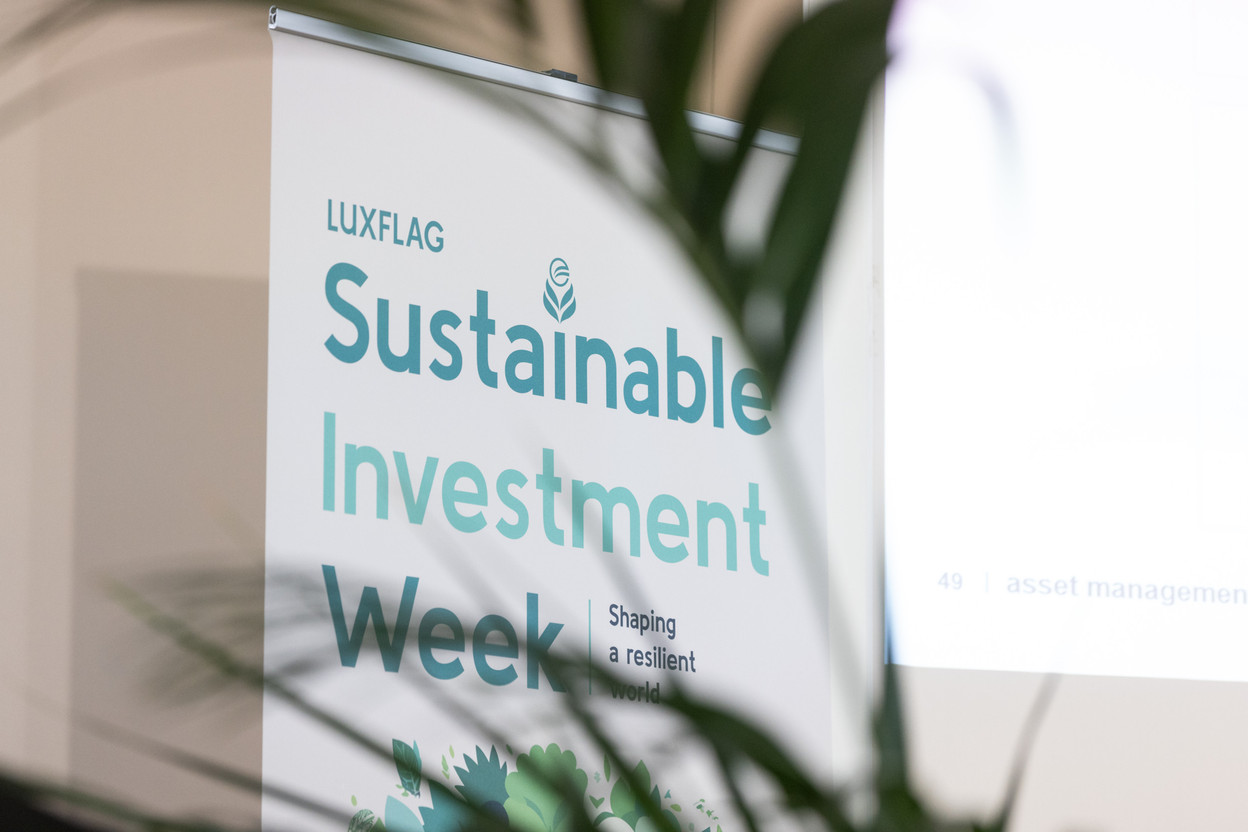
[Luxflag wants] to become the leading, globally recognised, independent, nonprofit financial sector labelling and verification agency. [Our] mission is to contribute to shaping a resilient and sustainable world by fostering trust, transparency, and impact.
On the verification part, we have physical people looking at 100% of the investments in financial products [to ensure] conformity with our various tests and exclusions in a continuous manner. This ongoing process creates trust in the product’s sustainability features.
We also need to make Luxflag more visible outside the European boundaries.

The goal is also to certify that a microfinance deal is really what it claims it is. The same goes with ESG funds or article 6, 8 or 9 funds, [which are] unknown concepts for the person on the street. We want to be recognised as a brand that promotes sustainable investment for ecology, for instance, by the public. We also need to make Luxflag more visible outside the European boundaries. Currently, there are 243 products with our label, which represent almost €90bn of assets under management in Belgium, Estonia, France, Germany, Ireland and Luxembourg.
We are obviously politically independent but also operationally independent. We do not outsource all this verification work. It is done in-house by our people, and that’s our added value. Our tests are universal. The tests are not set as per Luxembourg or European standards.
The label products are distributed in more than 70 countries worldwide. Our criteria are not linked only to the EU regulations. [Asset managers] from any jurisdiction can apply for any product. We work towards European Commission or CSSF equivalencies with some countries.
How do you cope with the newly stiff opposition coming from the US on ESG matters?
There has been considerable progress on sustainability and ESG, which has changed the mindset of many people. The pendulum is now swinging back, which is--to a certain extent--a normal development.
Sustainability is a universal necessity
I think that sustainability is a universal necessity. ESG is linked to stability, while stability is important for financial markets and investors. However, I would not overestimate the opposition coming out of certain parts of the US. It does not include all of the US.
When it comes to finance, the US is the centre of the world, whether we like it or not. Is it a market that you want to actively penetrate with your label?
We have a small team of 9 employees. First, the EU and we need to piggyback on the distribution of Luxembourg funds. Obviously, Luxembourg Ucits funds are not distributed proactively in the US. So, independently of all political or other questions, I think that there are many markets we should go to first.
We made some progress in some Asian countries and in Latin America. Besides, you would be surprised how many US funds continue to be labelled behind the scenes but don’t want to be officially known.
How does Luxflag balance rigour with accessibility, especially for smaller or emerging market fund managers seeking a sustainable finance label?
A label must display rigour. Nothing you can compromise on. Otherwise, you lose credibility and trust, So, that’s a non-negotiable point. Rigour does not mean the absence of flexibility. You need to engage, meaning you need to help the relevant industries to become more sustainable.
Second, if a criterion is not met anymore for passive breaches, then you need to divest. It cannot be with a snap of your fingers. We have a passive breach regime by which you can disengage gradually.
What happens in countries with lower or higher standards than Luxflag?
The Luxflag standards apply to [all] countries. The idea is not to show compliance with some official, legal, regulatory or God-knows-what standards. Luxembourg sets the standards and tests that the financial products are in compliance. That’s our business model.
Are there any new types of labels or product categories that Luxflag promotes given the reduced interest overall in--for instance--impact funds or article 9 funds?
We were born with a microfinance label 19 years ago. A fifth impact label--social--has been added in 1Q25 to our product range: microfinance (2006), environment (2011), climate finance (2016) and green bond (2017). The social impact label will be complementing the microfinance label.
How do you see Luxembourg role as a global hub for sustainable finance evolving, particularly in comparison to other financial centres?
Luxembourg already is the global hub for sustainable finance. I think it is number one in front of France. As Luxembourg grows, sustainability is an integral part of the Luxembourg investment or its financial industry identity.
I simply believe that long-term sustainability is good for profitability.
What are the biggest challenges that the sustainable finance industry must overcome to maintain credibility and drive real-world impact?
I do not see a conflict between profitability and sustainability. I simply believe that long-term sustainability is good for profitability.
On macroeconomics, have you ever seen a dictatorship that economically is really successful? There must be certain elements of democracy, of liberty, for an economy to be able to run a market economy. And whoever talks about freedom talks about governance because you need rules.
The second challenge is trust. People must trust that the product really does help to create a sustainable economy. I think that we deliver.