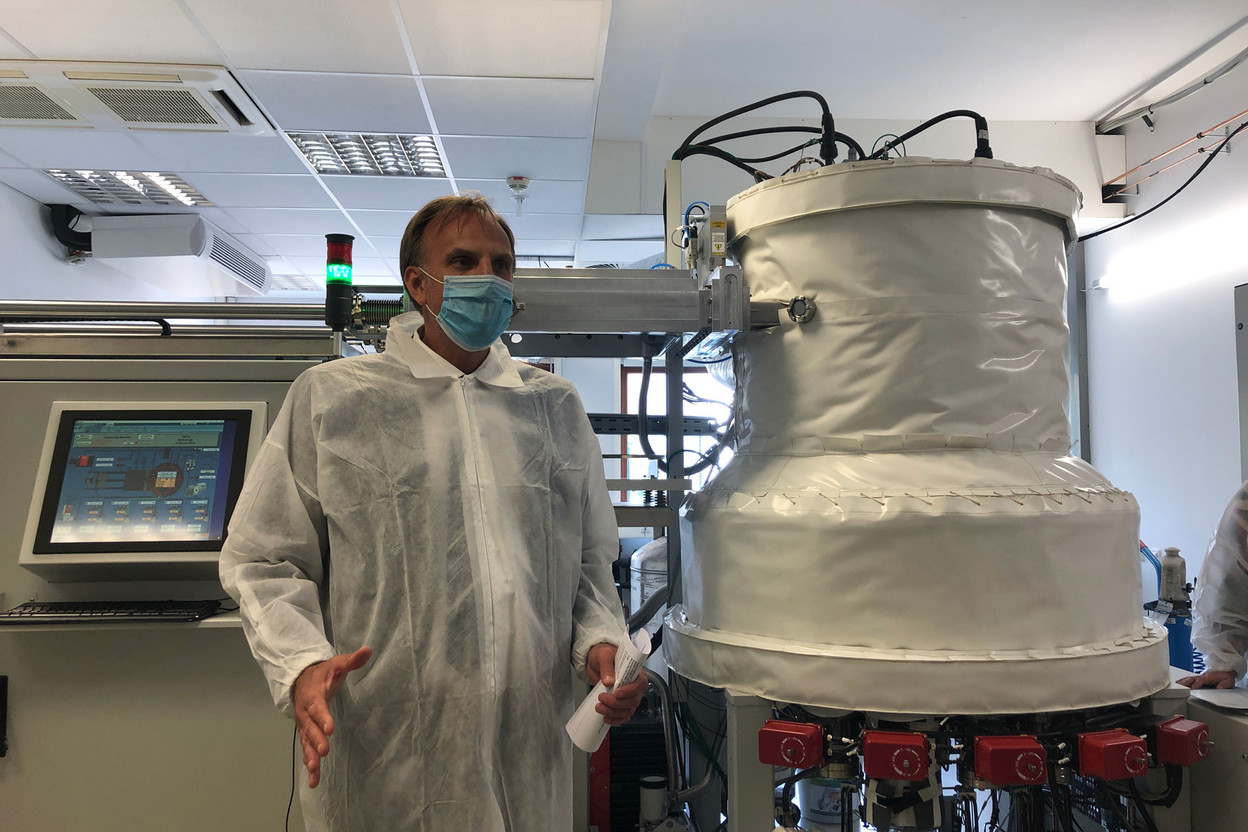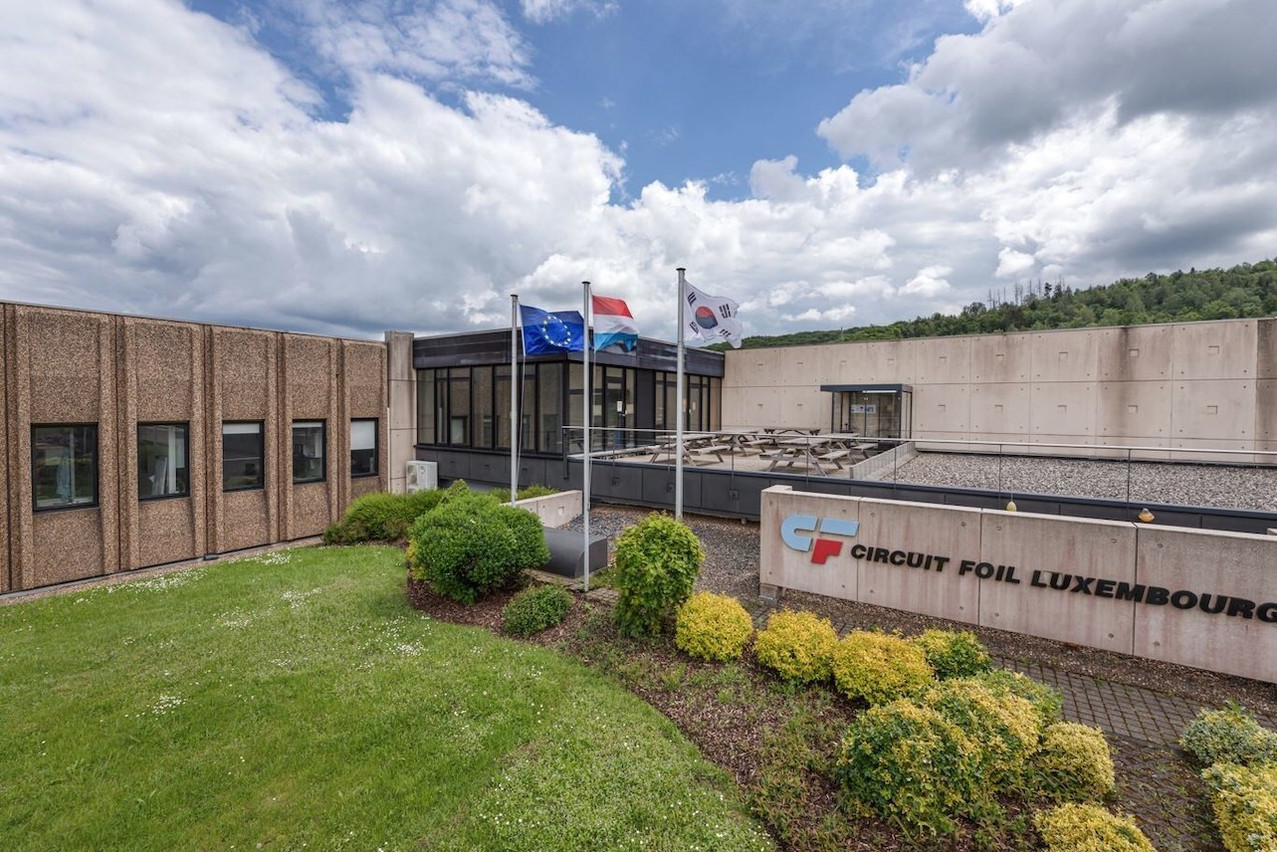
A historic Luxembourg company, Circuit Foil has specialised for decades in the manufacture of extremely thin copper foil, used for the most advanced printed circuits. This technology, long considered marginal, has taken on a strategic dimension with the explosion in the need for artificial intelligence accelerators, such as the GPUs produced by Nvidia--one of its major customers.
HVLP (hyper very low profile) copper foil, Circuit Foil’s flagship product for which it is currently developing generations 4 and 5, is now indispensable in the design of AI chips. This foil ensures ultra-fast electrical transmission in the inner layers of circuits, while minimising signal losses. Its surface roughness of less than 0.6 μm enables reliable operation at very high frequencies--a critical requirement for data centres and supercomputers.
A factory that still stands... and still going strong
At a time when the European electronics industry is relocating en masse to Asia, the Wiltz plant has been the exception. By 2025, Circuit Foil produced 60% of the world market for the HVLP foils used in AI accelerators. At a time when the world is chasing computing capacity, it provides discreet but highly strategic leadership,
But this independence comes at a price. In April 2025, in response to the slowdown in the European market, the Solus Advanced Materials group (a former subsidiary of Korea’s Doosan)--which owns Circuit Foil--sold its electric battery division (also based in Wiltz) to its parent company and repatriated it to Hungary and Canada. At the time, the AI division remained Wiltz’s only profitable business, and over the past year it has benefited from investment of nearly €5m to increase production to four cycles a year. To help the company get back on its feet, the Luxembourg government guaranteed two loans of €10m and €9m respectively, in the face of debts of more than €45m.
In the end, Defu Technology, a little-known Chinese industrial player, won the bid after months of negotiations led by the bank Jefferies. The price? €175m, confirmed by Circuit Foil executives to the media outlet Virgule. It’s a substantial sum, but still modest given the control it offers over a strategic technology. “The acquisition is described as being of major strategic importance by the Chinese group, which hopes to secure the national supply chains for key materials,” reports the media outlet, although one might also imagine that sales to the United States would be easier for a Luxembourg entity than a Chinese one... The agreement includes the obligation for Defu to maintain an entity registered in Luxembourg. Behind this takeover, one question is burning: will US and European regulators let a Chinese supplier control a critical link in the AI chain?
Deloitte expects the AI semiconductor market to grow tenfold, reaching $400bn by 2027. AI accelerators, at the heart of this dynamic, are now seen as a strategic national asset, just like energy infrastructure or satellites.
Circuit Foil products, integrated into laminated printed circuits (LPCs) for AI semiconductors, are seen as the “blood vessels” of these complex systems. Controlling their surface quality, conductivity and compatibility with ultra-high frequencies is ultra-specialised knowhow--and held by very few players in the world.
Unresolved issues
If regulators block exports to the US, the Wiltz plant could end up producing for the Chinese ecosystem, reinforcing Beijing’s growing power in semiconductors. If approved, it will become a strategic Chinese supplier to US groups, which could trigger a new salvo of trade restrictions.
Luxembourg, for its part, will find itself caught between industrial sovereignty, attractiveness to foreign investment and growing geopolitical pressure.
This article was originally published in French.