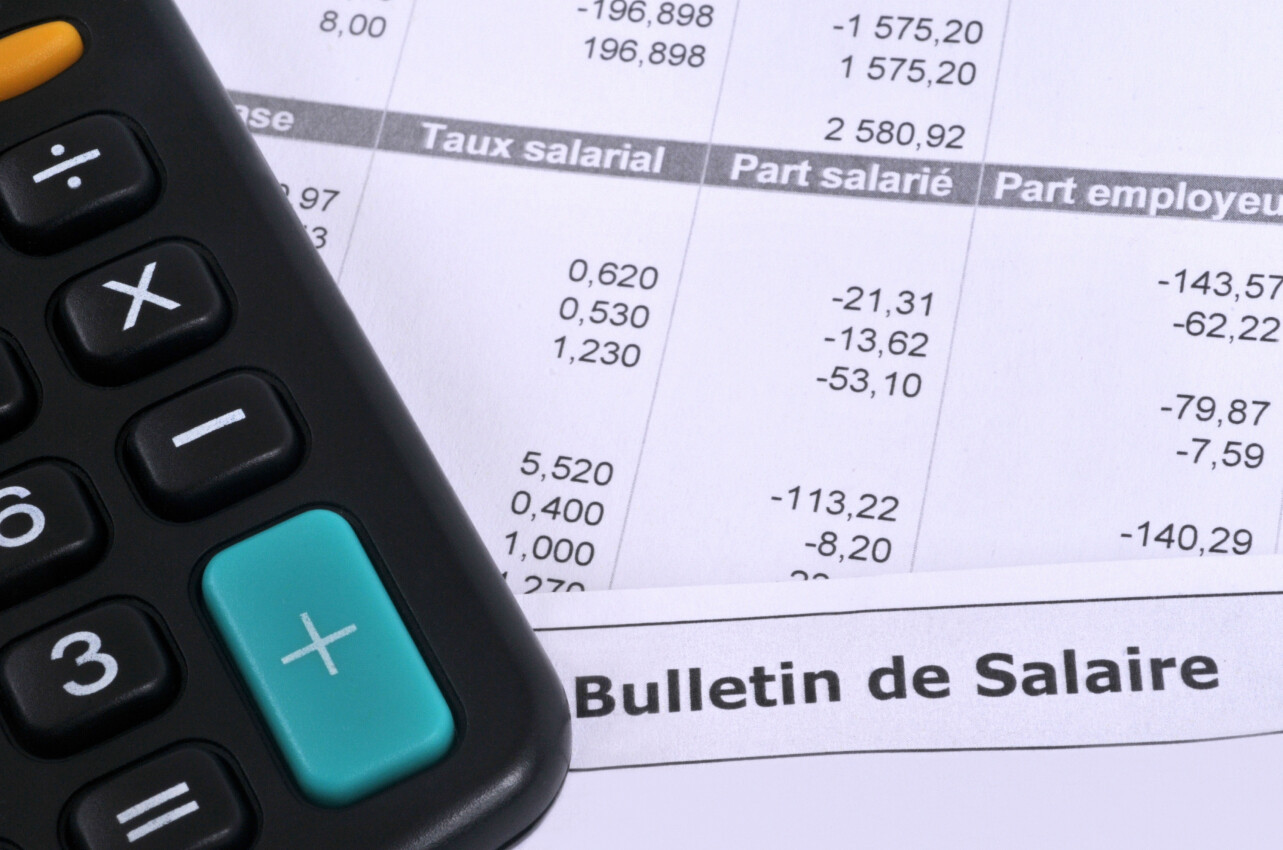
A line that is currently blank could soon be worth up to €189.91. It will then disappear from the next payslip. The economic tax credit, or CIC, has not yet come into force definitively. Bill 8775, which is set to introduce it retroactively from 1 June 2026, was still going through parliamentary procedure as at 13 October. This explains why a payslip may currently show a CIC of €0, or contain no corresponding entry.
Once the law has been passed, employers will have to settle the arrears for the past months. Employees will be able to receive, in a single payment, the CIC payments due since June, followed by the amount corresponding to the remaining months up to December.
How much will the employee receive?
The CIC will depend on the gross salary actually paid each month. It is not a fixed percentage of the salary.
Assuming gross earnings remain unchanged from June to December, the amounts will be as follows:
Less than €1,125: no CIC.
€1,250: €2 a month, or €14 over seven months.
€1,500: €2.45 per month, or €17.15.
€2,100: €3.50 per month, or €24.50.
€2,500: €6.46 per month, or €45.22.
€3,000: €10.16 per month, or €71.12.
€3,600: €14.60 per month, or €102.20.
From €4,600 to €9,500: €22 a month, or €154.
From €9,925 to €14,175: €24 a month, or €168.
More than €14,916: €27.13 per month, or €189.91.
Exactly €1,125 gross, the formula gives zero. The credit only becomes positive above this threshold.
The calculation must be carried out separately for each month. A person whose salary varies depending on the number of hours worked, benefits or other elements of remuneration will therefore not necessarily receive seven times the same amount.
How will the regularisation process take place?
The draft bill allows employers to pay the CICs for months already elapsed in a single payment. If the law comes into force after several months’ delay, an unusually large sum may therefore appear on a single payslip.
To be eligible for the CIC for employees:
- the right to tax wages should lie with Luxembourg;
- the employee must be personally registered with a compulsory Luxembourg scheme or with a foreign scheme covered by a social security agreement;
- the tax deduction form must bear the inscription ‘CIS’;
- The CIC can only be paid once in respect of all the employee’s jobs.
An employee with more than one employer will therefore not receive the tax credit on each of their payslips. The CIC must be granted in relation to the employment to which the corresponding tax form relates.
Do bonuses count?
The gross salary used to calculate the CIC includes the remuneration and benefits made available to the employee during the month. However, the draft generally excludes:
- bonuses;
- the thirteenth month;
- one-off bonuses;
- other non-recurring or exceptional payments.
An exception is made where such remuneration compensates for a reduction in the normal salary.
This distinction normally prevents a one-off bonus from artificially moving an employee into a higher CIC bracket. It also explains why two people who have earned the same amount over the course of the year may receive different credits.
What will happen in January 2027?
The CIC will cease to apply on 31 December 2026. The government then intends to raise the tax band thresholds by 2.5%. Salaries will need to increase further before reaching the next tax band.
In practical terms:
- the CIC line will be discontinued;
- the employer will automatically apply the new pay scale;
- tax deductions will decrease;
- no application will be required for an employee with a standard tax form;
- gross pay will not change simply as a result of this regulation;
- The tax relief will depend on your tax bracket and taxable income.
A 2.5% adjustment to the tax scale does not mean that take-home pay will increase by 2.5%. It merely reduces the tax calculated on income.
Will the CIC be replaced with an identical version?
No. The parliamentary document acknowledges that the CIC only ‘approximately’ replicates the effect of the new scale.
The two systems do not use the same basis:
- the CIC is based on gross monthly pay;
- the scale is based on taxable income after certain contributions and deductions;
- the CIC does not distinguish between tax classes;
- the new scale produces a different result in classes 1, 1a and 2;
- the CIC may be refunded to a person who pays no tax;
- a more favourable tax scale cannot reduce a tax that is already zero.
This final difference is crucial for those on low incomes and certain part-time workers. A person may receive a CIC in 2026 even though they already pay no tax. In 2027, the abolition of this credit will not be offset by the new tax scale, as the tax deduction cannot fall below zero.
Some real-life examples
Our simulations focus solely on the replacement of the CIC with the scale. They are based on an unchanged gross salary, an ordinary private-sector employee, 11.55% in deductible social security contributions and no specific tax deductions.
At €2,500 gross:
- CIC reached €6.46;
- in tax band 1, the new scale reduces the deduction by €5.40;
- the net tax amount therefore decreases by €1.06;
- in classes 1a and 2, the deduction is already zero in the simulated profile;
- The delisting of CIC then led to a fall of €6.46.
At €3,000 gross:
- CIC reached €10.16;
- the loss amounts to €2.36 in Class 1;
- it is €2.56 in class 1a;
- it amounts to €5.36 in Class 2.
At €4,600 gross:
- CIC reaches €22;
- Class 1 is down by €0.80;
- Class 1a earns €3.90;
- Class 2 shares are down by €13.70.
At €5,000 gross:
- Class 1 earns €3.10;
- Class 1a earns €9.90;
- Class 2 shares have fallen by a further €11.40.
At €10,000 gross:
- CIC reaches €24;
- the new scale provides an additional €4.40 in Class 1;
- an additional €9.40 in 1a class;
- an additional €28.30 in Class 2.
At €20,000 gross:
- the CIC is capped at €27.13;
- the additional pay amounts to €7.97 in Grade 1;
- €12.97 in 1a class;
- €29.77 in second class.
These figures do not reflect the full change in net pay between December and January. Further changes will take place in 2027, notably a 3.8% increase in the minimum social wage and an increase in the minimum social wage tax credit. The simulation measures only the effect of the transition from the CIC to the new scale.
Who is likely to receive less?
Assuming that salaries and circumstances remain the same, four profiles deserve particular attention:
- people who receive a CIC when their deduction is already zero;
- certain part-time workers earning more than €1,125;
- certain taxpayers in classes 1a and 2 on low or middle incomes;
- employees whose deductions already significantly reduce their taxable income.
Conversely, those on higher incomes may benefit more from the new tax scale. The CIC is capped at €27.13, whilst the savings resulting from the reorganisation of the tax bands may continue to increase.
What will an employee with several jobs see?
The result may be spread out over time.
The CIC 2026 is granted only once. In 2027, earnings from a second job may be taxed at a flat rate and may not benefit directly from the new tax scale shown on the payslip.
In this situation:
- the benefit will mainly apply to the main job;
- the second payslip is unlikely to change much;
- the annual tax assessment will take all income into account;
- An adjustment may be made via an annual statement or a tax return.
A comparison between December and January will therefore not always be sufficient to determine the final tax liability.
Will bonuses be treated more fairly in 2027?
Potentially, yes. The CIC 2026 excludes non-recurring remuneration. However, the draft regulation also adjusts the rates applicable to such income in 2027.
A bonus or thirteenth month’s salary will therefore be subject to the new scale, even though it does not increase the CIC. A specific calculation will apply where:
- the standard annual remuneration exceeds €60,000;
- or where the non-recurring remuneration amounts to at least €5,600.
How much will the measure cost?
The government estimates the cost of the CIC at €70m for the seven months from June to December 2026. This amounts to €10m per month.
Extrapolated over twelve months, this figure amounts to approximately €120m. However, the report does not specify either the total number of beneficiaries or the breakdown of the benefit by tax band and income bracket. The reform is therefore not merely a matter of replacing a single line on the payslip. The CIC distributes an amount based on gross pay, including to certain employees who are not liable for tax. The new scale reduces the tax actually due. By switching from one system to the other, the government is making the budgetary measure permanent, but is changing who benefits from it.