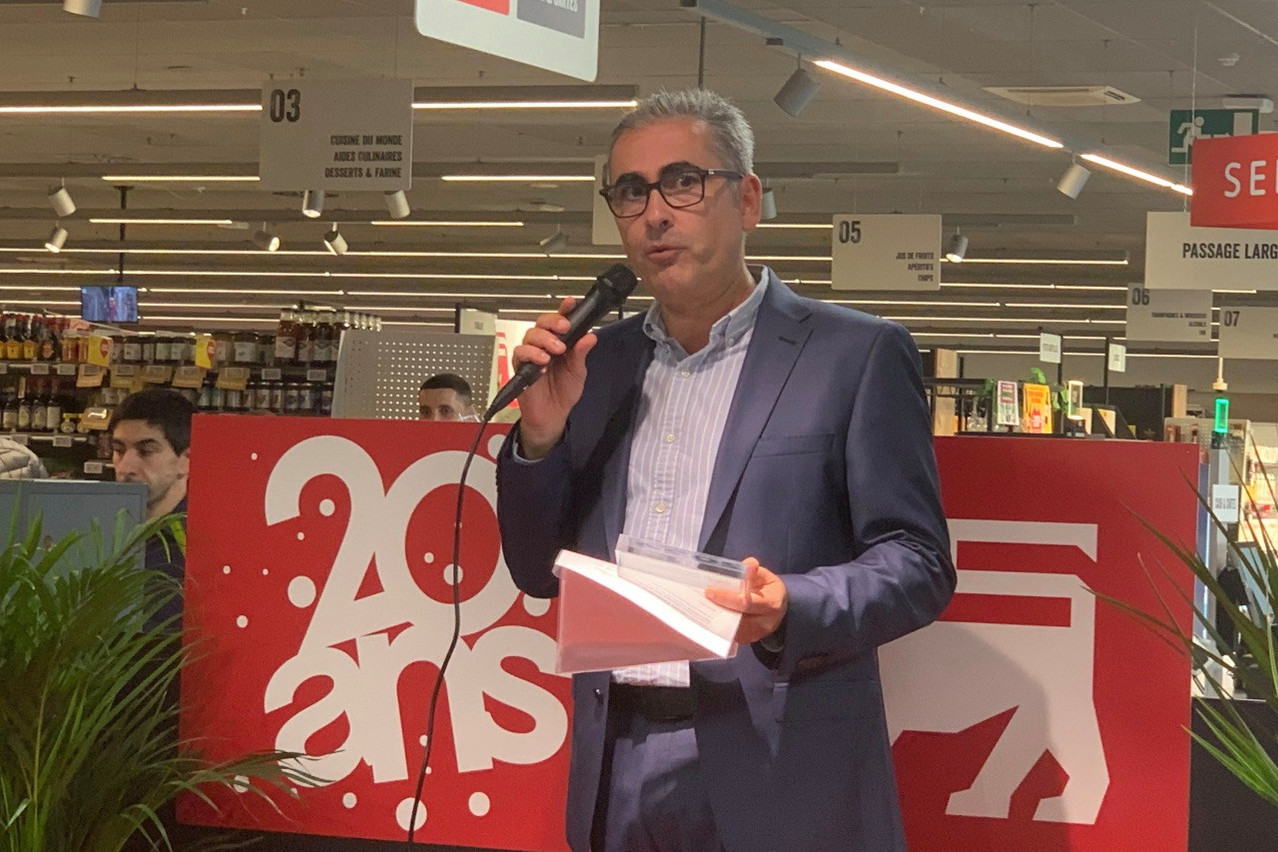
How do you feel about celebrating 20 years of Delhaize Bertrange?

What is the current state of your network, and what are your prospects for expansion over the next few years?
We currently have 60 shops, and fortunately no closures are planned! We estimate that over the next two years we’ll open five new shops to cover areas where we don’t yet have a presence. Out of superstition, I’m not going to reveal the addresses just yet, but we’ll be making announcements in January.
What impact has the arrival of Leclerc had on your business and the market?
Leclerc isn’t a new player in the strict sense of the word, as they bought existing shops that already had their customer base. So it’s not as if a new shop was opening right next door to yours. It hasn’t created any imbalance and we haven’t noticed any change with this arrival.
Leclerc, but also Lidl and Aldi, are renowned for their aggressive pricing policies. How does Delhaize Luxembourg intend to respond to this competition? Does quality still matter to Luxembourg households?
We are addressing this price issue through our own brands. We offer a wide range of products under our Delhaize brands, whether Delhaize, Taste of Inspirations (top quality) or Petit Lion (low price). Thanks to these products, we are able to offer quality products at lower prices than national brands. In this way, we give the customer the choice of opting for a national brand to which they are attached, or of trying a Delhaize product and discovering that they will also benefit from excellent quality, at a price slightly lower than that of the national brands.
What initiatives are you putting in place to reduce your environmental impact?
The main objective is to reduce our energy consumption. We are therefore working to improve our refrigeration systems, which account for a large proportion of consumption in our shops. We are also investing in equipment that requires less energy, such as machines that can recycle hot air into cold, or vice versa. When it comes to our lorries, we’re looking to reduce CO2 emissions, and when we’re in shopping centres, we work with the owners to install photovoltaic panels, as we recently did in Schengen at the Borders centre. These are all small measures that enable us to contribute to reducing energy consumption, food waste and therefore to preserving the planet.
How does Delhaize Luxembourg intend to adapt to changes in the retail market, particularly in terms of digitalisation and e-commerce?
At Delhaize Luxembourg, we don’t have any e-commerce projects in the short term, or even in the years to come. Instead, we’re banking on a physical network across the country, with shops located within five minutes of all Luxembourg residents. We obviously have a strong presence around Luxembourg City, but we also have a strong presence in the north of the country. We are also expanding into rural areas, as demonstrated by the recent opening of our shop in Bettborn, a town with fewer than 3,000 inhabitants. This is our preferred strategy today, because we are convinced that there is still a future for physical retailing. We believe that people are still looking for human interaction and that not everything can be done behind a screen.
Delhaize Belgium has announced the conversion of all its shops into franchises. Why is Delhaize Luxembourg maintaining its mixed model (franchised/integrated)?
The Luxembourg model is not comparable to the Belgian model. A very simple example: in Luxembourg, all our shops are open on Sundays, which is not the case in Belgium. Here, the social dialogue is constructive and the country continues to develop, enabling our shops to see their sales grow year on year. So the dynamic is totally different.
With regard to this social dialogue, the unions are concerned about the possible deterioration in working conditions for employees in Delhaize franchises. How do you respond to these concerns?
We have had franchise shops for 25 or 30 years, and there has never been a problem with these establishments. If these shops didn’t offer their employees decent working conditions, in a competitive market like Luxembourg’s, they would find it hard to recruit. To retain our staff, it’s essential to offer them a pleasant working environment and decent pay. The fact that they stay means that the shops are doing a good job in this respect.
In your opinion, what are the main advantages of the Luxembourg market for supermarkets?
We operate in a dynamic market, because the population is constantly growing. We live in a country with 650,000 inhabitants, which is set to grow to a million one day. That’s a lot of people to satisfy in terms of food products. There are also the cross-border commuters who come to eat in Luxembourg every day, at least for lunch. The infrastructure, and in particular the speed of development of the tramway and the construction work, also play an important role.
What is Delhaize’s market share in Luxembourg, and how does it compare with that of its main competitors?
Unlike other countries that collect sales figures from all retailers, this does not exist in Luxembourg, making it difficult to know the position of each player. We believe that there is a historic leader, Cactus, and that we are one of the retailers fighting for second place. We tend to say that in terms of presence in the country, we are one of the market leaders.
What are Delhaize Luxembourg’s development plans for the short and medium term?
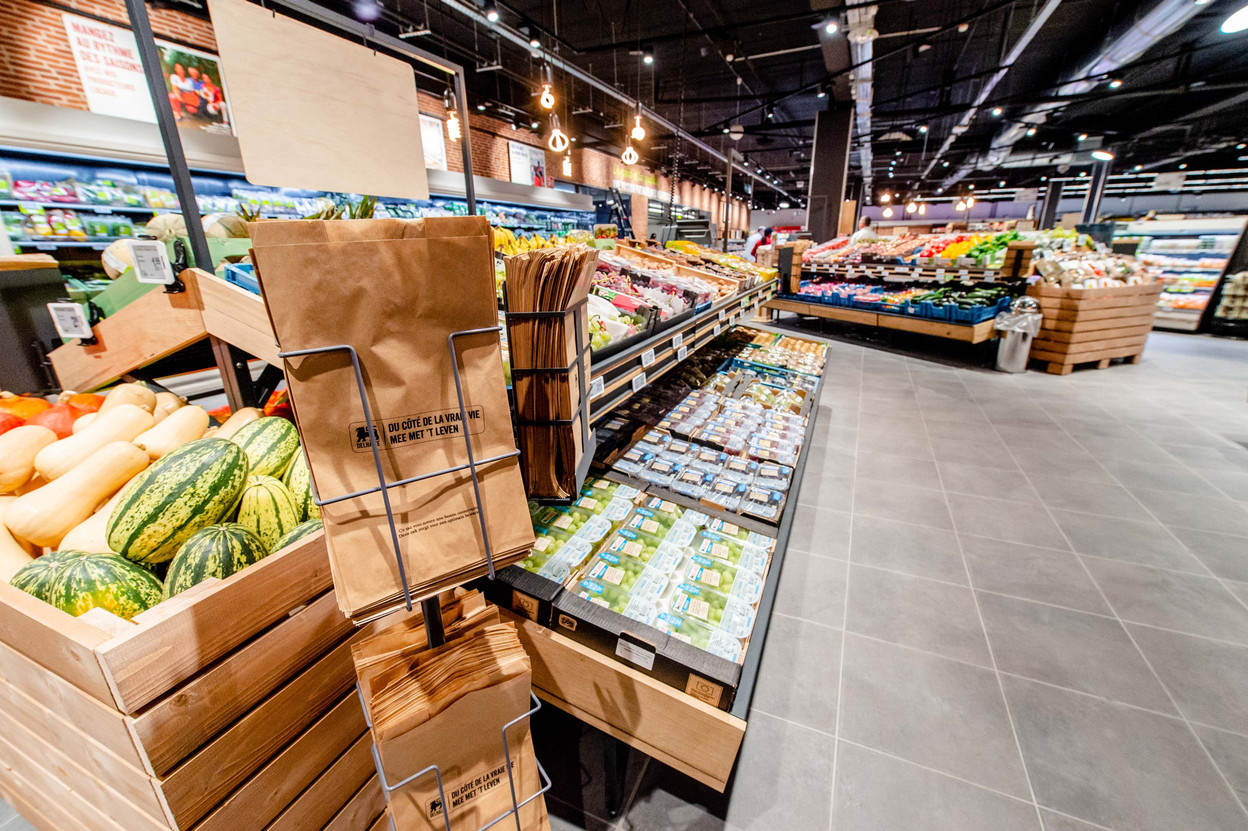
Our first objective is to upgrade our shops. We have carried out a number of remodelling projects in previous years. We're going to complete this process next year with our biggest shop in Luxembourg, in Pommerloch (3,000m2). By remodelling, I mean completely redesigning the shop to create a more modern, welcoming and brighter space, which will enable us to showcase our product range.
This article was originally published in French.