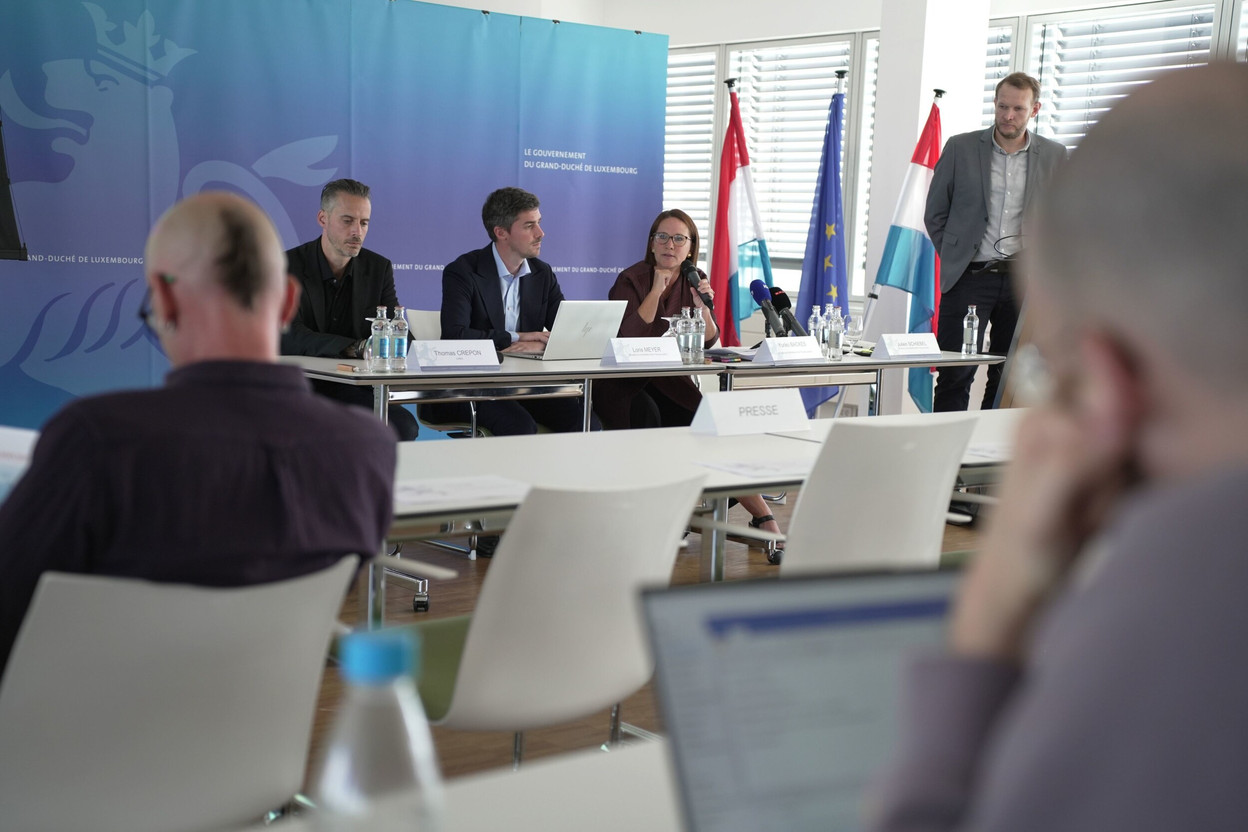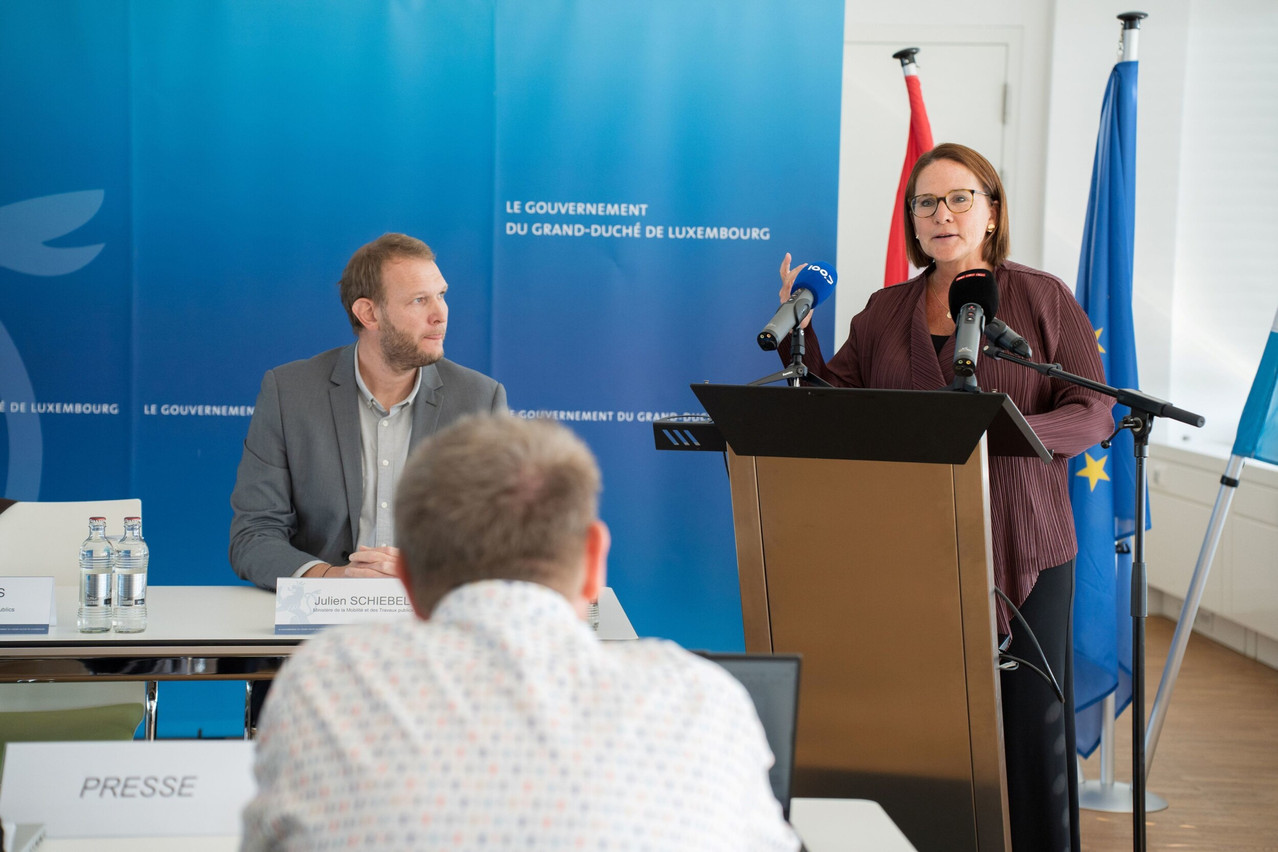
Expanding public transport, but not at any cost, nor in the same way everywhere. This is one of the lessons the Ministry of Mobility and Public Works has drawn from the survey Luxmobil 2025 to draw up the National Mobility Plan (PNM) 2040. “The aim is to focus on areas where we can offer credible alternatives to the car,” explains Julien Schiebel of the Digital Observatory of Mobility.
The results presented on Thursday 10 September reveal a very mixed picture across the country. Public transport accounts for the highest proportion of journeys to Luxembourg City, both amongst residents and cross-border commuters. In the rural areas of the north and south, however, the car remains by far the dominant mode of transport. “Between two small towns, it’s going to be difficult to provide an attractive public transport service,” admits Julien Schiebel.
The PNM 2040 should therefore not envisage a uniform phase-out of the car. 
Continuity of the PNM 2035
Expected in mid-2027, the new plan will build on the PNM 2035 – presented in April 2022 by 
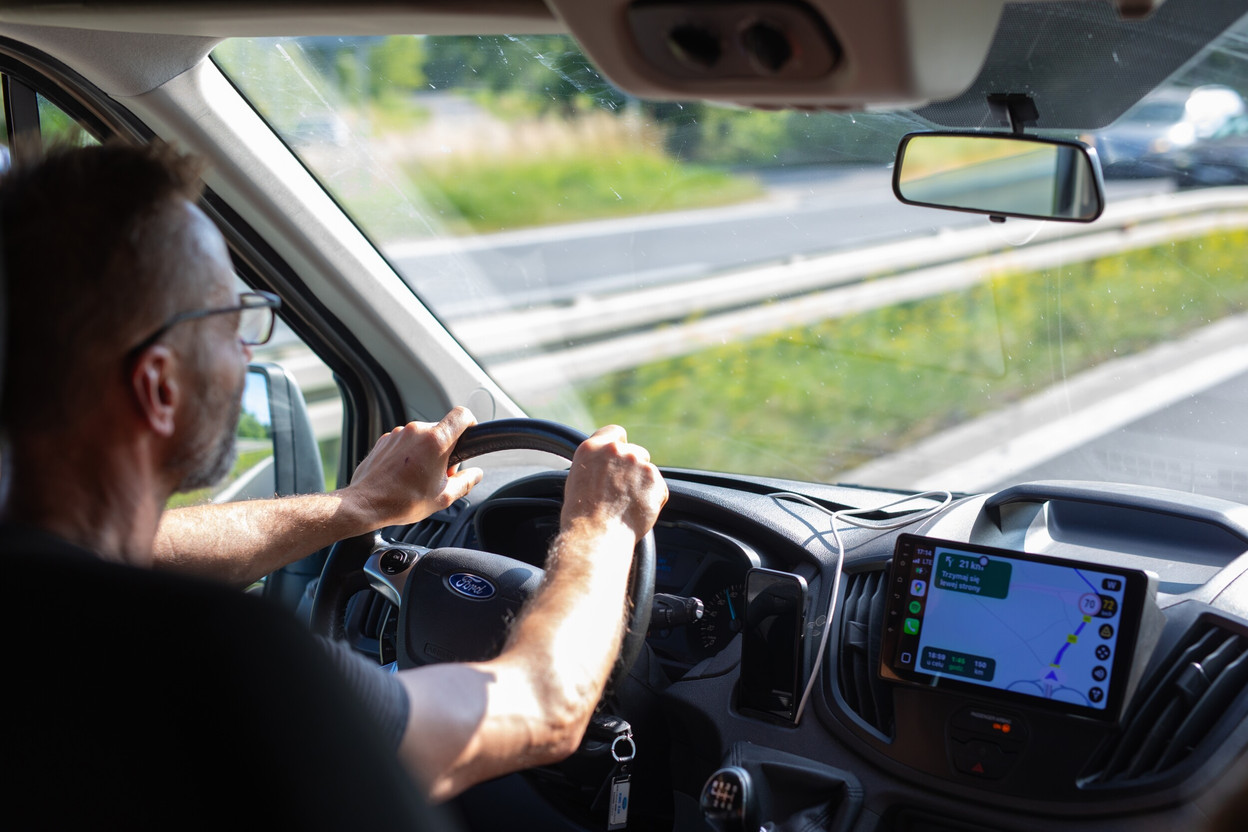
Luxmobil also provides the Ministry with a level of detail that goes beyond simply the journey between home and work. The survey maps out the various stages of a day: an employee might, for example, drive to work, then take the tram to have lunch or go shopping, before returning to their car. Business journeys made by van or lorry on public roads are also recorded. However, through traffic and movements within a private site are excluded.
These figures also necessitate a comparison of equivalent populations. Cross-border commuters are necessarily in work, whereas residents also include pupils, pensioners and the unemployed. When comparing only those in work, Julien Schiebel observes that cross-border commuters use public transport proportionally more than residents. He cautions, however, against overly fine-grained geographical breakdowns, which would undermine the representativeness of the sample.
Reference to the Paris Agreements
The low level of satisfaction amongst French cross-border workers with their commutes (43%, compared with 55% for Belgian cross-border workers, 56% for German cross-border workers and 77% for residents) finally puts cooperation with Paris and the Grand Est region back at the heart of the issue. When asked on the sidelines of the press conference about the possibility of increasing Luxembourg’s funding from 50% to 70% to speed up certain projects in France, Yuriko Backes ruled this out. “That is not what was agreed, and we are committed to the commitments we signed up to in the Paris Agreements,” she replied.
This position does not mean that the French side has made no commitments. The 2018 Paris Agreements and their 2021 amendment cover €460m of investment in France in the transport sector generally, funded equally by France and Luxembourg. Since April 2026, in the rail sector for example, new double-decker trains acquired by the Grand Est Region have been running as far as Luxembourg City. Their purchase cost €118m. The refurbishment of the 41 trains on the Sillon Lorrain line is also estimated to cost around €180m, whilst the future maintenance centre at Montigny-lès-Metz represents an investment of €120m, co-financed with Luxembourg. The Grand Est Region is aiming for a 50% increase in seating capacity during peak hours on TER services by the end of 2026 or early 2027.