Eight years after the first edition, the Luxmobil 2025 survey provides a new snapshot of travel patterns relating to Luxembourg. Its findings are based on responses from 9,000 residents and cross-border workers regarding a working day outside school holidays. This survey provides key insights for anticipating tomorrow’s challenges, planning responses to future needs and preparing the forthcoming National Mobility Plan 2040.
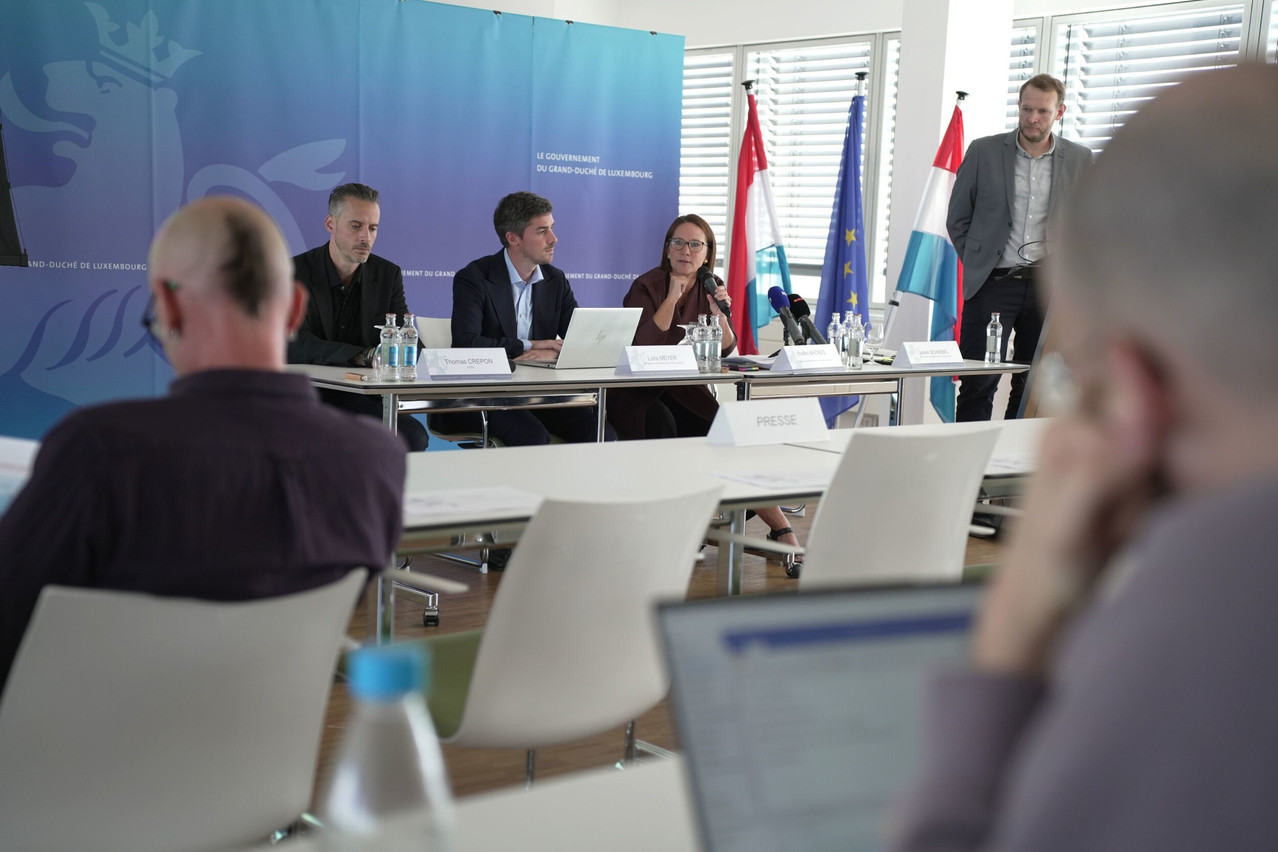
“The results (…) show that the changes introduced in recent years are bearing fruit. The modal shift towards alternatives to the car is gaining ground, public transport use is rising and sustainable mobility solutions are becoming more widespread. This confirms that consistent and coherent investment in transport infrastructure and services can bring about a change in behaviour,” emphasised the Minister for Mobility and Public Works, 
The survey was carried out under the scientific coordination of the Luxembourg Institute of Socio-Economic Research (Liser) and Cerema (Centre for Studies and Expertise on Risks, the Environment, Mobility and Planning), with support from Ilres for data collection.
How habits have changed
Firstly, the number of journeys is increasing at a slower rate than the number of people involved. The volume of journeys has risen by 14% since 2017, compared with around 18% for residents and cross-border workers combined.
Work has a much greater influence on the travel patterns of cross-border commuters. It accounts for 75% of their journeys, compared with just 22.6% of those made by residents. For residents, leisure activities are the main reason for travel, accounting for 25.1% of their journeys.
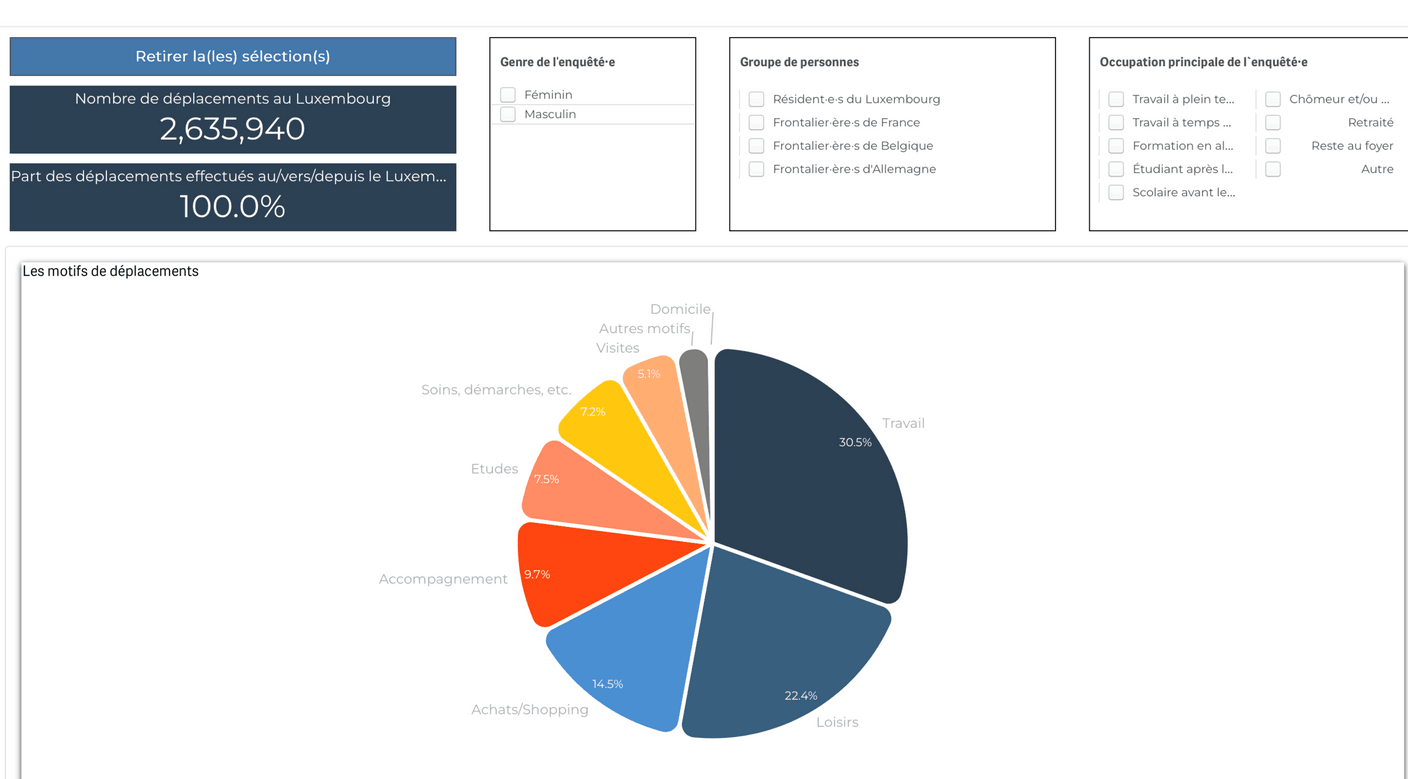
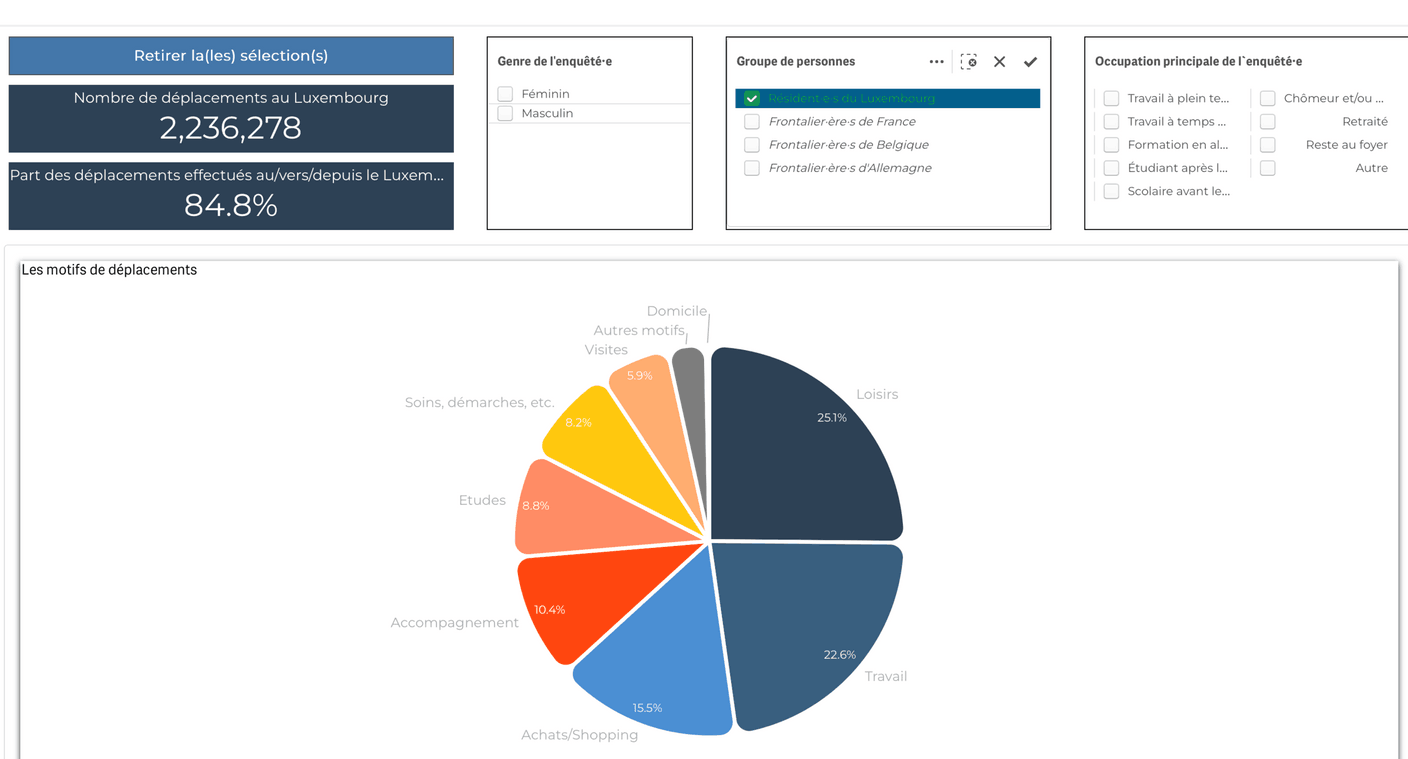
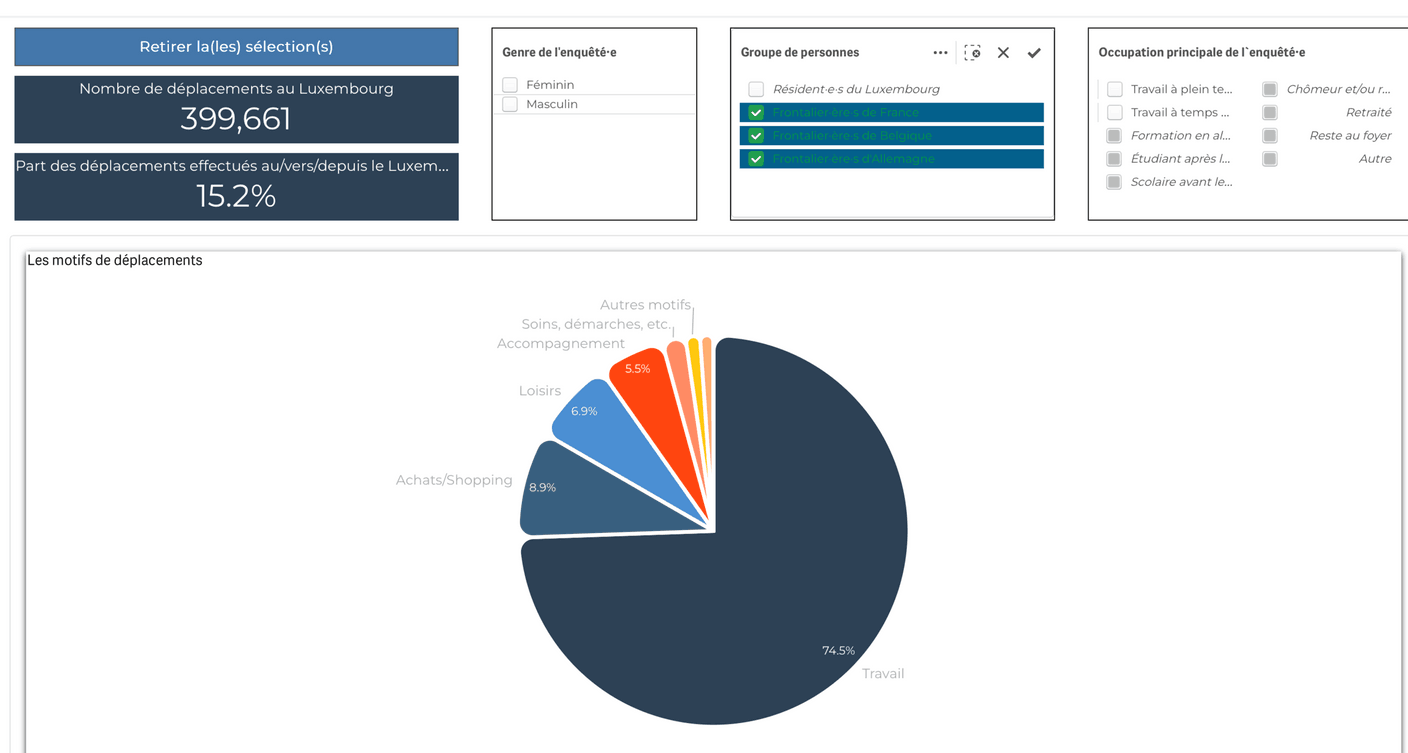
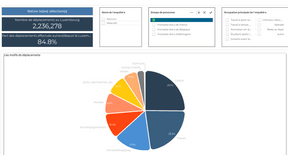
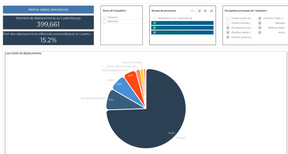
12% of residents do not travel at all on a working day. Among those who leave their homes, the total time spent travelling averages 1 hour 44 minutes per day.
The time cost is significantly higher for cross-border commuters. Those coming from France spend an average of 2 hours and 10 minutes a day travelling, compared with 2 hours and 19 minutes for Belgian cross-border commuters and nearly 2 hours and 20 minutes for Germans, according to the detailed dashboard.
French cross-border workers are also the least satisfied with their commutes. Only 43% say they are satisfied or very satisfied, compared with 55% of Belgian cross-border workers and 56% of German cross-border workers. Among residents, this figure rises to 77%.
Private cars are losing ground, but remain in first place. Among journeys made by means other than walking, its share has fallen from 55.7% in 2017 to 52.5% in 2025. In terms of volume, however, the number of journeys made alone by car has still risen by 7 per cent.
Public transport is making progress, though it has not overturned the established order. Its share of journeys made by means other than walking has risen from 18.6% to 20% in eight years. This represents around 72,000 additional journeys each day and a 22% increase in volume.
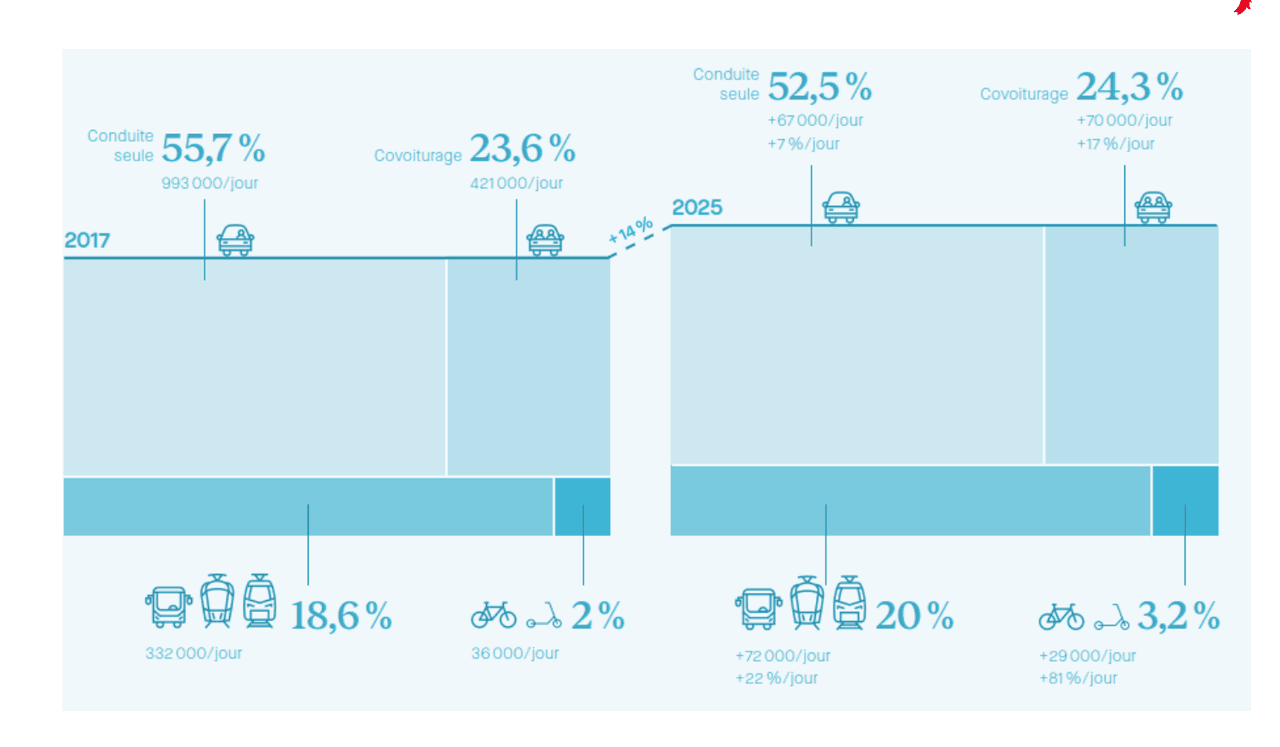
Comparison between the Luxmobil 2017 and 2025 models. (Photo: Luxmobil 2025)
Cycling has seen the strongest growth. Its use has soared by 81% since 2017, and its share of journeys not made on foot has risen from 2% to 3.2%. The starting point, however, remains very low.
Walking now accounts for 23% of all journeys. However, this figure cannot be directly compared with that for 2017 due to a change in methodology. Above all, the survey confirms that walking is the dominant mode of transport for short journeys, whilst the car regains the upper hand as distances increase.
Retirement does not put an end to long commutes. Retirees living in Luxembourg who commute spend an average of 1 hour 48 minutes a day on public transport, which is four minutes more than the average for all residents who commute. They travel 33 kilometres every day.