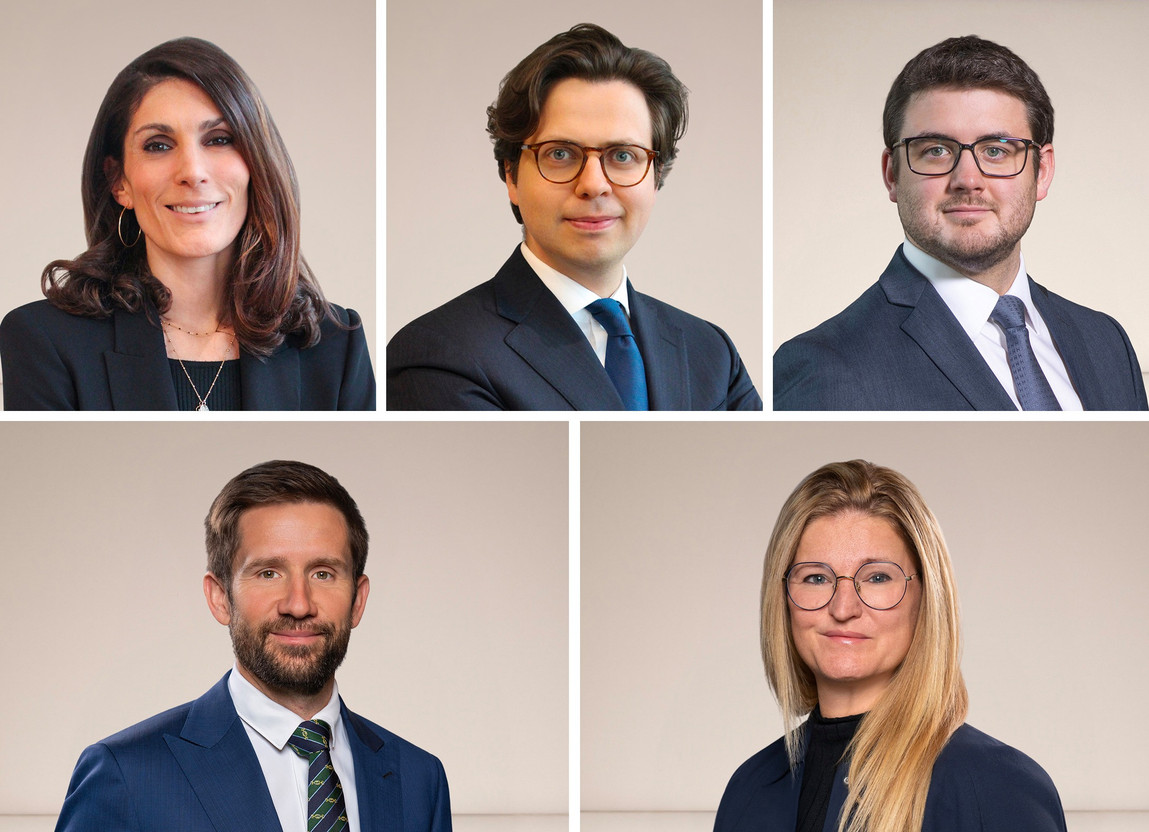
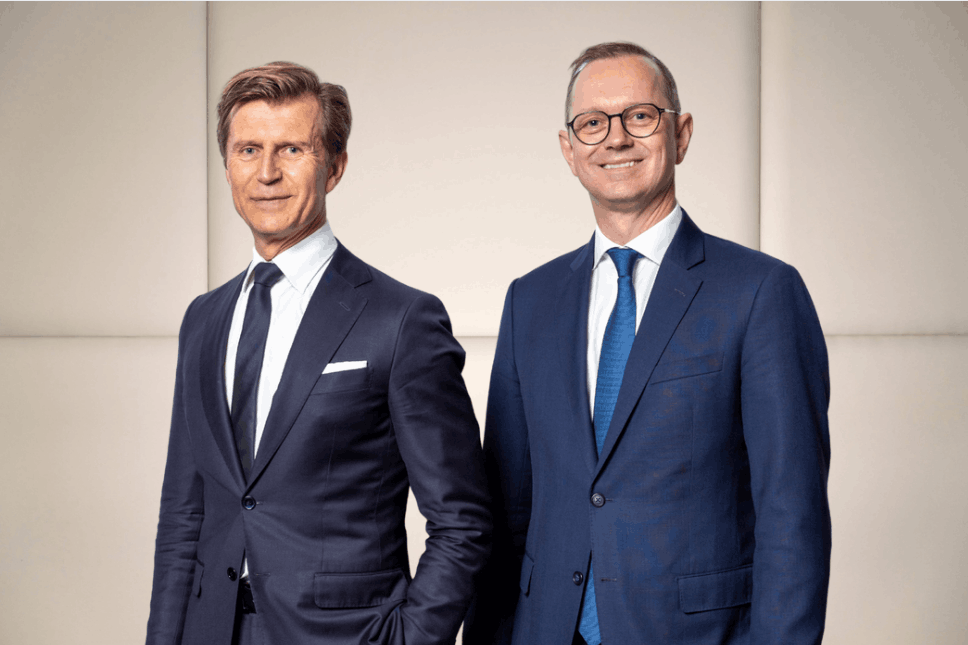
Arendt is changing co-chairs, without touching its power architecture. From 1 April, 


The official message is unambiguous. “This new chapter reflects both who we are and the direction we are taking: a firm driven by strong values, a clear ambition and full confidence in our ability to continue to make a positive contribution to the financial centre and to support developments in the European regulatory framework. Working with Thierry and Gilles in their new roles as co-chairmen ensures strong continuity between our strategic vision and its implementation,” says Jean-Marc Ueberecken in a firm press release. Thierry Lesage, too, insists on this logic of continuity, presenting the multidisciplinary model as “a strategic asset”, while Gilles Dusemon sees this change as part of “the firm’s mission and long-term vision”.
The BlackFin effect should start to show
Interrogated about the real scope of this transition during an interview with the new trio, Jean-Marc Ueberecken assumes this interpretation. “For me, it’s continuity. It’s more a question of external factors that mean we have to adapt. Artificial intelligence (AI) is a bit of a hot topic at the moment. Where there’s this continuity aspect is that the old governance is still in place until the end of the month, but we’ve already had several meetings of the strategic committee about the right way to develop the foreign offices. Now I think we want to change the strategy a bit.”
That’s where the nuance lies. The governance model remains unchanged, but the incoming trio are not content to simply carry on as before. They want to accentuate certain areas. At the top of the list is international expansion. “We wanted to expand internationally, but we didn’t have the financial resources or the expertise to do so, so we were looking for a real partner,” explains Jean-Marc Ueberecken of the merger with BlackFin Capital Partners to form Arendt Investor Services (AIS). The official press release already presented the deal as a lever to accelerate AIS’s European growth, BlackFin becoming a majority shareholder while leaving Arendt with a significant stake.
We’re interested in Ireland clearly because of the funds, France because we’re well established there, and perhaps Germany or the Anglo-Saxon islands.

In the interview, the managing partner clarifies the map of ambitions: “What we’re interested in is Ireland clearly because of the funds, France because we’re well established there, and maybe Germany or the English-speaking islands.” He adds that the plan is not to apply local law there, but to support clients wherever they are based. Thierry Lesage links this move to a long-standing logic: “There has always been a strong entrepreneurial dynamic. We have always had a strong entrepreneurial drive: to design our service offering around our clients’ needs, to put the client at the centre of our thinking. With BlackFin, we will have a strategic partner with an entrepreneurial vision and dimension, a strong entrepreneurial spirit.”
This sequence feeds the idea of strategic continuity rather than conservatism. For several years now, Arendt has been repeating that its difference lies in the integration of legal, tax, regulatory, advisory and investor services. Back in 2023, the firm described this combination as “unique” and linked it to its ambitions for growth. In the new interview, Jean-Marc Ueberecken goes even further: “The point is important because we are the only firm in the world that has this. There are others who have bits and pieces, but no one else has anything like it. Gilles Dusemon draws a market reading from this: “I think there’s a big market for this,” citing the rise of players such as Alter Domus or IQ-EQ in service segments that overlap with neither legal nor auditing activity.
A far from trivial distribution of profiles
On the substance, the new triumvirate is defending the same core model, but with a more assertive approach. “Continuity lies in the strength, conviction and resilience of our unique business model,” says Jean-Marc Ueberecken. “Over the years, we have created a group of respectable size, with more than 1,250 employees and sales of nearly €350m. Thierry Lesage, for his part, sees this continuity as part of an internal story: “At Arendt, we have succeeded in preserving our values and continuing to develop them. The transition from the founding partners was carried out as intelligently as possible, in a completely natural way.”
The profile of the two new co-chairmen also sheds light on this subtle balance between stability and shifting the centre of gravity. Gilles Dusemon is a partner in the Investment Management practice. He specialises in alternative fund structuring, with a particular focus on private equity, infrastructure and private credit, as well as regulatory, corporate and tax issues relating to AIFM. He has been an lawyer since 1997, graduated notably from NYU in international taxation, and teaches at both the University of Luxembourg and New York University.
Thierry Lesage is a partner in the Tax Law department. He advises on national and international tax matters, with a particular focus on private equity, real estate, M&A transactions, private clients and family offices. A law graduate of the University of Liège and a tax law graduate of the Free University of Brussels, he is regularly ranked by the main market guides and chairs the Alfi working group on direct taxation aspects of funds and fund structures.
Jean-Marc Ueberecken, finally, remains the linchpin of strategic execution. Managing partner since 2014, he combines his mandate with innovation, the creation of new products and the integration of technology into the firm’s ways of working.
Luxembourg is becoming an increasingly recognised destination for all things family office.

This distribution of profiles is not insignificant. It places a hedge fund specialist and a tax expert with extensive exposure to transactions, investment structures and private clients in the co-presidency. At the same time, it strengthens the position of those businesses that benefit most directly from the development of the Luxembourg financial centre: asset management, private capital and family office services. Gilles Dusemon puts it bluntly when he talks about market dynamics: “Today, the private client segment is growing strongly. So Luxembourg is becoming an increasingly recognised destination for everything to do with family offices. He also cites the upturn in private equity, the surge in private debt and the return of real estate.
AI at the service of enhanced regulatory expertise
The other inflection assumed concerns AI. Here again, the firm claims continuity with a long-standing direction, but describes a change of scale. In June 2025, Arendt announced its partnership with Legora, following a pilot run at the end of 2024 during which its lawyers submitted more than 8,000 queries and analysed more than 30,000 data points. The firm explains that the tool is used for data extraction, prospectus analysis, regulatory compliance and legal research.
In the interview, Gilles Dusemon defends a tangible effect, even if it remains difficult to quantify: “There is tremendous efficiency in deploying the tools internally and the benefits are at all levels. The work is done faster and better at every location. We give employees more time to think about what needs to be done and how it can be done.”
Jean-Marc Ueberecken completes the picture with a speech that is more operational than promotional. He cites the use of tools purchased on the market, such as Legora, but also the development of more complex in-house AI solutions. “We’re currently working on a tool to review a leaflet, to tell us whether it complies with the regulations or not.” He goes on to detail the very real limitations encountered: the cost of queries, the volume of documentation, the difficulty of maintaining in-house tools. “What’s more complicated, and here, on the other hand, the reality is really hard, is developing your own products based on AI.”
The trio do not, however, present AI as a substitute for human capital. On the contrary, they see it as part of a model in which regulatory expertise must regain value as certain tasks become more automatable. “And that’s the regulatory side that’s being put back into value,” says Gilles Dusemon. “This marketplace is driven by regulation, and we’re the only ones on the market who can go that far and cover it across the board.” Jean-Marc Ueberecken, for his part, dismisses the idea of a relaxation of quality control: “It doesn’t go out to the customer if it hasn’t been reviewed. That’s never been the case.”
Arendt Institute and Arendt Residence, two tools for attractiveness
On employment, the firm adopts the same non-substitution approach. “Last September, we recruited more lawyers than we had ever recruited before,” says Jean-Marc Ueberecken. Arendt is emphasising its training policy to support this growth, with a programme that the firm’s directors call the Arendt Institute. Jean-Marc Ueberecken explains that this programme, which is being rolled out over ten years, is based on individualised career paths and a dedicated platform. Thierry Lesage adds that the firm provides “over 800 in-house courses”, 95% of which are taught by experienced partners and associates. This centrality of training is, moreover, in line with the managerial vision set out on Jean-Marc Ueberecken’s public profile, which insists on specialised learning plans to support the growing regulatory complexity and digital transformation.
If everyone has to live across the border because it’s too expensive here, we’ll have a problem.
The trio’s diagnosis finally goes beyond the strict perimeter of the firm to touch on Luxembourg’s competitiveness. The directors highlight the human factor, housing, the tax attractiveness of carried interest and the country’s ability to remain a magnet for talent. Jean-Marc Ueberecken even mentions a pilot accommodation project, Arendt Residence, designed to facilitate the arrival of young recruits and international trainees. “If no one can come here any more, if everyone has to live on the other side of the border because it’s too expensive here, we’ll have a problem,” Gilles Dusemon sums up. The project should soon enter a new development phase, to welcome more trainees or young lawyers to Luxembourg.