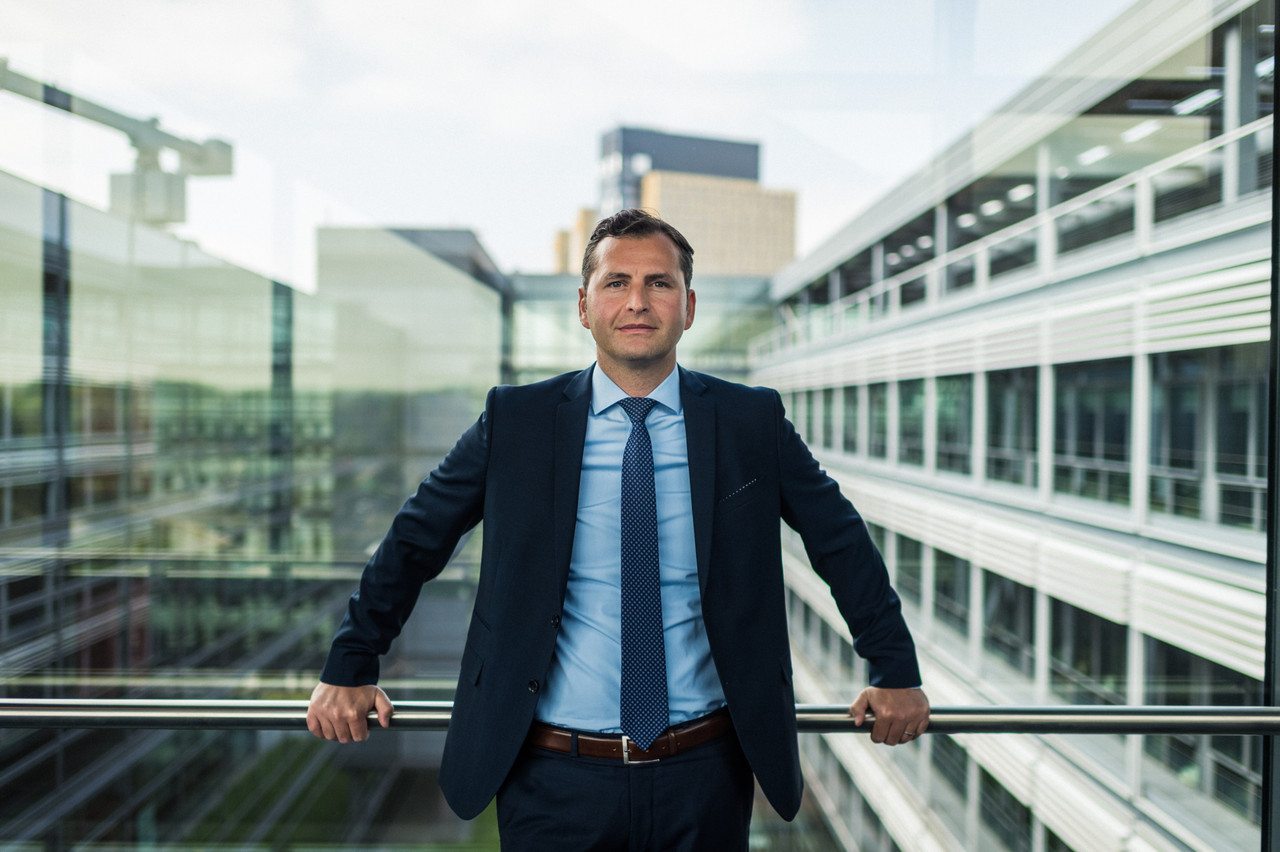
For those unfamiliar with Essca, what exactly is it?

What types of training do you offer?
“The main foundation remains management, broken down according to local expertise. Each campus develops a specialisation in line with its economic environment. In Malaga, the emphasis is on artificial intelligence and cyber security. In Shanghai, the focus is on international business. In Strasbourg, the proximity of European institutions gives structure to the teaching. The campuses operate as a network, with gateways, giving a real international dimension to the courses.
And in Luxembourg?
“Here, the positioning is geared towards finance. We now offer the 4th and 5th year of the grande école programme, taught entirely in English, with a specialisation in Investment Funds and Asset Management covering private equity, risk management, compliance and financial markets. From September 2026, a bachelor’s degree in management will be launched. Also taught in English, it will enable students to study in three different countries over three years.
The aim is not to teach within four walls, but to anchor courses in the local ecosystem.

Beyond training, what is your pedagogical approach?
“The aim is not to teach within four walls, but to anchor the courses in the local ecosystem. Numerous visits to companies and organisations are organised [PwC, European Investment Bank, Philharmonie, House of Startups, etc.] to link theory and practice. In Luxembourg, the concentration of economic and institutional players is a competitive advantage: within a few kilometres, students have access to European institutions, the Big Four, banks and innovative SMEs.
This is beneficial for them, but also for companies, particularly with a view to internships or recruitment. With this in mind, the master’s programme includes a six-month work placement in the final year. The future bachelor’s degree will also include an internship from the first year.
You have triple accreditation. What does this mean?
“These are the three main international management accreditations: AACSB [American], Amba [British] and Equis [supported by the European Foundation for Management Development]. Combining them enables you to join the very select circle of so-called ‘triple crown’ schools, i.e. around 1% of the world’s business schools.
What does it actually certify?
“This is a comprehensive audit, repeated every three to five years. The following are assessed: the academic level of professors, scientific output and publications, the quality and selectivity of students, the coherence and updating of programmes, as well as governance and international strategy. This is a constraint, but a positive one: it forces us to maintain high standards at all times.
Why did you choose the Chamber of Skilled Trades and Crafts as your base?
“Because we didn’t want to limit ourselves to just one sector. The aim is to open up the field of possibilities to students and expose them to a variety of worlds, beyond the sectors we’re always talking about. The Chamber of Skilled Trades and Crafts offers a cross-sectional view of the Luxembourg economy. It’s not about real estate, it’s about partnership. We’re not here to rent rooms, but to create synergies.
Locating in Kirchberg is also part of this approach. In the immediate vicinity of businesses, European institutions and major groups, the campus gains in visibility and connections. On a day-to-day basis, the district also offers services and infrastructures—restaurants, swimming pool, shops, etc.—that promote a complete student experience.
Do you tailor your programmes to the needs of the market?
“Yes, on several levels. Firstly, via our Alumni network, which has over 200 members from a wide variety of professional backgrounds. We regularly get feedback from them. Secondly, through our exchanges with institutional and professional players such as the Chamber of Skilled Trades and Crafts, BCEE, ABBL and Luxembourg for Finance. These interactions feed directly into the structuring of the programmes.
The country has real assets but housing is weighing on its attractiveness.

Is Luxembourg really attractive to international students?
“The country has real assets: a high level of security, free public transport, a multicultural environment and immediate proximity to businesses and European institutions. The main challenge, however, remains housing, which weighs heavily on the country’s attractiveness and ability to recruit. Strengthening cross-border links, particularly with France, could help to ease this constraint. The challenge is real. But the potential for attractiveness is just as real, provided that the ecosystem continues to be structured.
In the face of growing competition from schools, how are you positioning yourself?
“Competition is natural and healthy. For Luxembourg, having several credible business schools strengthens the country’s overall attractiveness. It’s a bit like a street with several restaurants: the choice benefits the customer, and the best establishments stand out for their quality. But this rivalry has to be based on high academic standards. If this is the case, it becomes a real lever for excellence and influence.
What are your objectives over the next three or five years?
“In this age of data and indicators, I’d like to be able to say in a few years’ time that 100% of our students have found a work placement; 100% have landed a job on graduation and that 100% are satisfied with their course. Volume is not an end in itself. What counts is quality: the quality of the students, the teaching, and above all the relationships built with local players.”