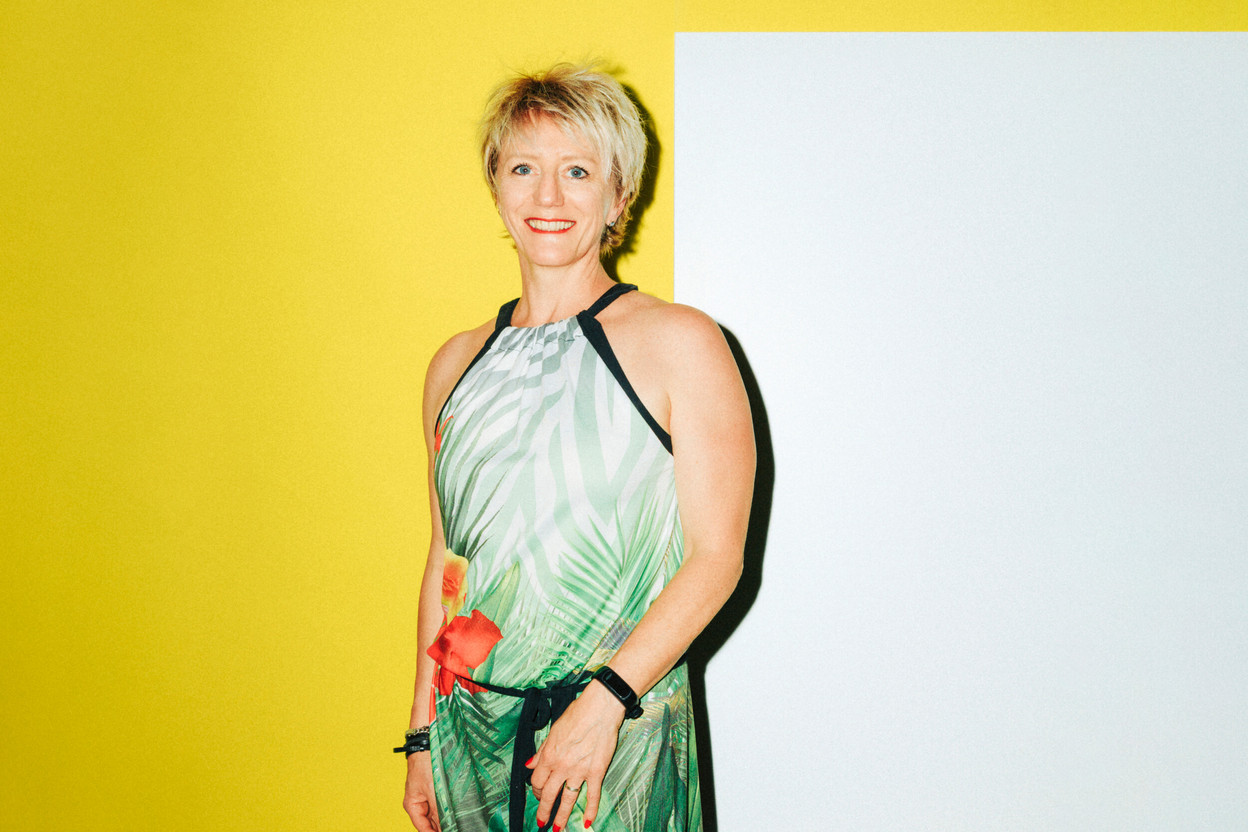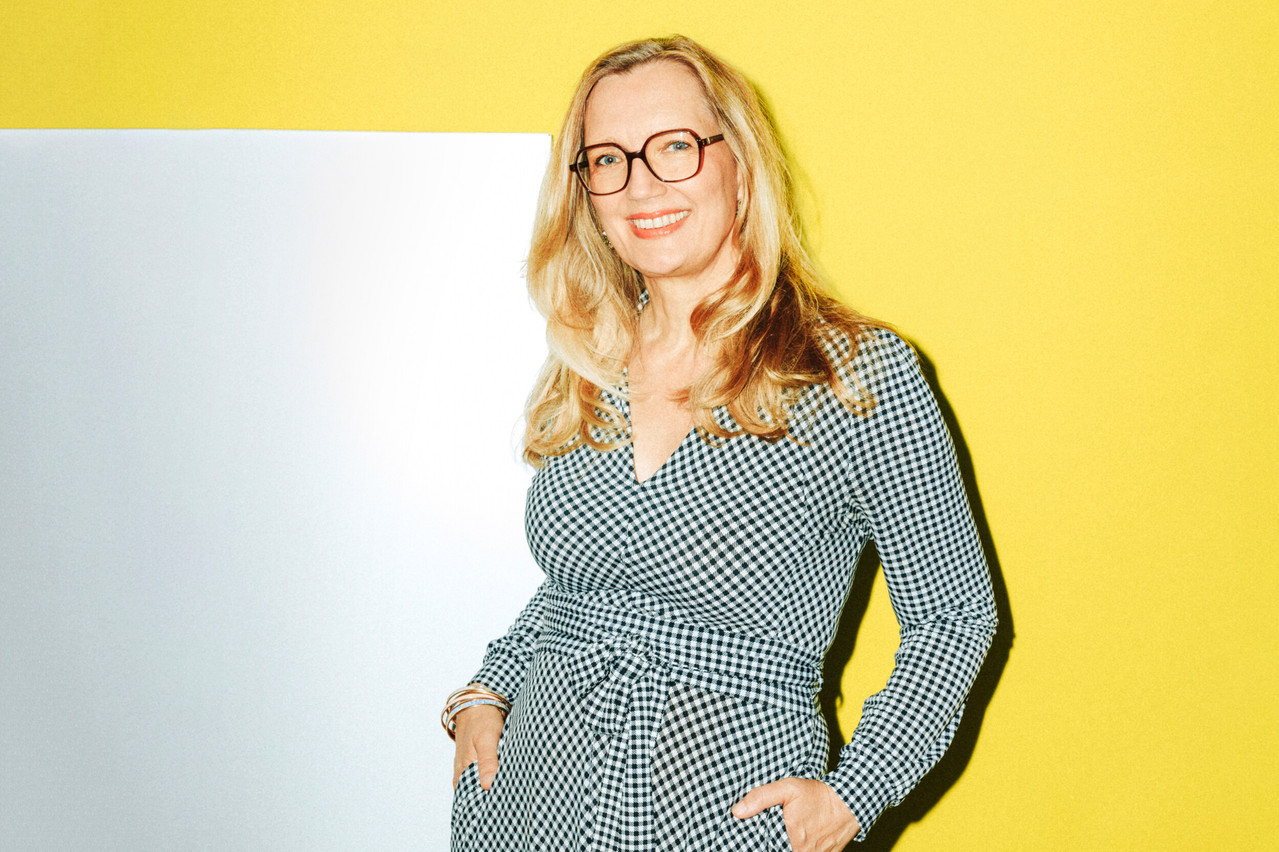
What was your career path before you became involved in philanthropy?

It’s a bit funny – or perhaps not – but when I was very young, I used to do a lot of figure skating. Back then, there was a tiny magazine that used to interview young people. One day, I was interviewed and turned up at the offices of that publishing house. It was actually a communications company, and everyone was a manager: there was the media manager, the advertising manager… I thought to myself: ‘I want to work in communications – it’s brilliant, everyone’s a manager here!’ I think I was 12 or 13 at the time. My family were a bit dismayed by this, because they’re all entrepreneurs. At the time, I was the only one not working in the family business.
I wanted to go my own way, on my own. I spent quite a bit of time in France, in Paris, but I’d still planned to move back to Luxembourg as soon as I had children.
So you’ve come back…
“My son was born very prematurely, before his due date, and when I found myself in hospital, I realised just how many things could be put in place to make those moments in hospital easier. Together with two or three other parents, we set up a non-profit organisation. Very quickly, I found myself thinking: ‘It’s amazing what we can achieve when we work together.’ That’s when I developed a taste for the voluntary sector.
Was that when you first got involved in philanthropy?
“Yes, I then joined the Banque de Luxembourg, which was a pioneer in the field of philanthropy at the time and promoted it to its clients from very early on. Bridging the two worlds, someone from the bank’s circle asked me if I’d like to come and help out for a few years at a charity. I ended up staying for 18 years at the charity, which supports children with cancer.
I’m a single mum raising three children, and I used to work for someone else, with a salary that came in every month.

I knew absolutely nothing about paediatric medicine. I told myself that, with some communication skills and a bit of management know-how, that would be enough. I was in for a rude awakening: it’s a world where emotions run very high, where grief is ever-present, and where you meet almost exclusively people who are going through the worst time of their lives. And, in the midst of it all, you have to be the smiling, welcoming pillar of strength who supports and manages.
When my 18 years at the foundation came to an end, I took a break. That was two or three years ago; I was 51 at the time, and I wondered what I was going to do. Half of the people around me said: ‘Go and work for the government.’ I knew that wasn’t for me. The other half advised me to look for a secure, conventional job so I could have peace of mind. Then one person said to me: ‘No, you need to start your own business. You’ve got all the tools you need to do it.’ The sleepless nights began: would I dare? I’m a single mum raising three children, and I’d come from a life as a salaried employee, with a salary coming in every month. That person was a real game-changer for me. Little by little, I came round to the idea.
What actually prompted you to take the plunge?
“I still remember St Nicholas’s Eve in 2024. I woke up with the name of what I wanted to create already in my mind: Philantree. For weeks, I’d been searching, but nothing felt right, because nothing reflected who I was. That night, I told myself: ‘I’m going for it.’ But I was scared stiff, wondering what I’d do if it all went wrong. So I drew on what I’d learnt previously at the foundation, working with families: resilience. I believe that was the first key ingredient.
The second was the people around me. I always call this person ‘my pink person’. She’s an entrepreneur herself. She’s had her share of setbacks, but she’s also enjoyed great successes. She was there day and night to check in with me on my progress, ask how I was getting on, and give me a bit of a kick up the backside – even though she had no financial or personal stake in pushing me forward. I think that made all the difference. Another thing was that I’d decided to have lunch three times a week with someone who could push me forward or lift me up, simply to soak up some inspiration.
If I could, one day I’d organise an awards ceremony for people who have had a real impact on society to shine a light on them.
What motivates you?
“The sector is in dire need of professionalisation, but also of support. Every single person I’ve met deserves a platform, without exception, because they all play an incredible role in society. I always say that, if I could, I’d one day organise an awards ceremony for people who have had a real impact on society, to shine a light on them. Perhaps I’ll do just that one day.
Part of my client base consists of charities and foundations. I advise them on governance, strategy, fundraising – which must also be ethical – and organisational structure. They are all united by a common mission, but the board can sometimes be too intrusive towards the teams; teams can sometimes lack structure; the project may be sound whilst the governance is not; and there may also be conflicts of interest.
Getting back to the essence of the mission is easier for me because I’m outside the system. When you’re on the outside, it’s easier to spot the little red flags. I can say to them: ‘Here are your red flags; we’ll deal with them as a priority. Get back to the essence of your organisation.’ It’s a part of my job that I really love, because it’s so rewarding.
How is philanthropy faring in Luxembourg?
“On several occasions during my career, I have met wealthy individuals who subscribed to what is known as American philanthropy: if I am rich, I want to give back because it is part of my moral code. This concept has made its way to Europe, but in a very different form. Americans felt the need to demonstrate their commitment. In Europe, we tend to be rather discreet. We want to give back to society, but without drawing attention to ourselves. When we do communicate, it’s usually about the project rather than the family or the philanthropists themselves. This is starting to change a little, with a few exceptions, but discretion remains the norm.
Philanthropists need a clear agreement: if I put a million into a project, what happens? Does it actually make a difference in the world? Charities, for their part, need to understand how to present their projects and what interests the donor.
If the two worlds were to come together, the philanthropic world would become more professional and the business world would become a little more human.
Until now, in the world of philanthropy, we have always kept business and philanthropy separate. On the one hand, there is business, where we make money; on the other, there is philanthropy, where we spend it. I am convinced that the opposite is true. In philanthropy, we work with our hearts; in business, we work with our brains. But if the two worlds were to come together, the philanthropic world would become more professional and the business world would become a little more human. I am convinced that we need to forge alliances between the two. This is starting to happen to some extent in companies that set up their own foundations or launch philanthropic initiatives. But all too often, the two paths do not converge. I hope to be able to contribute to bringing these paths together.
Figuring out what drives a philanthropist isn’t something you learn at school. How do you go about it?
“It’s something I learnt whilst working in paediatric oncology. When you want to support someone who isn’t well, you have to start by listening to them. In healthcare, we talk about active listening: understanding the other person and really hearing them. What interests me is uncovering that particular story. If I find it, I’m at the very heart of that person.
I am also a mentor at the French Fundraisers’ Association. Every year, we support a foundation with its fundraising efforts, but we also focus a great deal on the emotional aspects and on how to approach these issues. You have to give people time to take ownership of the projects, to ask themselves whether this is really what they want to do and whether they can identify with it. Within families, they often know their own values. We need to identify what is important to them. This also depends on their background and life experiences. Some foundations are set up following a person’s death, as a tribute to who they were and what they had achieved.
Just over a year on, when you look back on everything that used to worry you when you were starting out, what conclusions do you draw?
“I’m a sole trader: I work on my own, with no employees. I’ve experienced both extremes. On the one hand, that knot of fear in my stomach, wondering what I’d do if it didn’t work out. Procrastination is part of the process. Some days, I wake up to such a mountain of work that I don’t know where to start. Not getting feedback from a team, not being able to analyse my own approach, was quite difficult. I had no one to ask how they would have handled a situation with a client or what they thought of an idea.
On the other hand, there’s one word: freedom. The joy of freedom. I hadn’t realised this at all before. If I feel like working when I get home from a night out at one in the morning, I do it. If I don’t feel like working on a Thursday morning because I want to go to a Pilates class, I do it. I accept the consequences, but I can do it if I want to.”
This article was written for the October 2026 issue of Paperjam magazine, published on 16 September. The content is produced exclusively for the magazine. It is published on the site to contribute to Paperjam’s comprehensive archive. Click on this link to subscribe to the magazine.
Is your company a member of the Paperjam Club? You can request a subscription in your name. Please let us know via club@paperjam.lu.