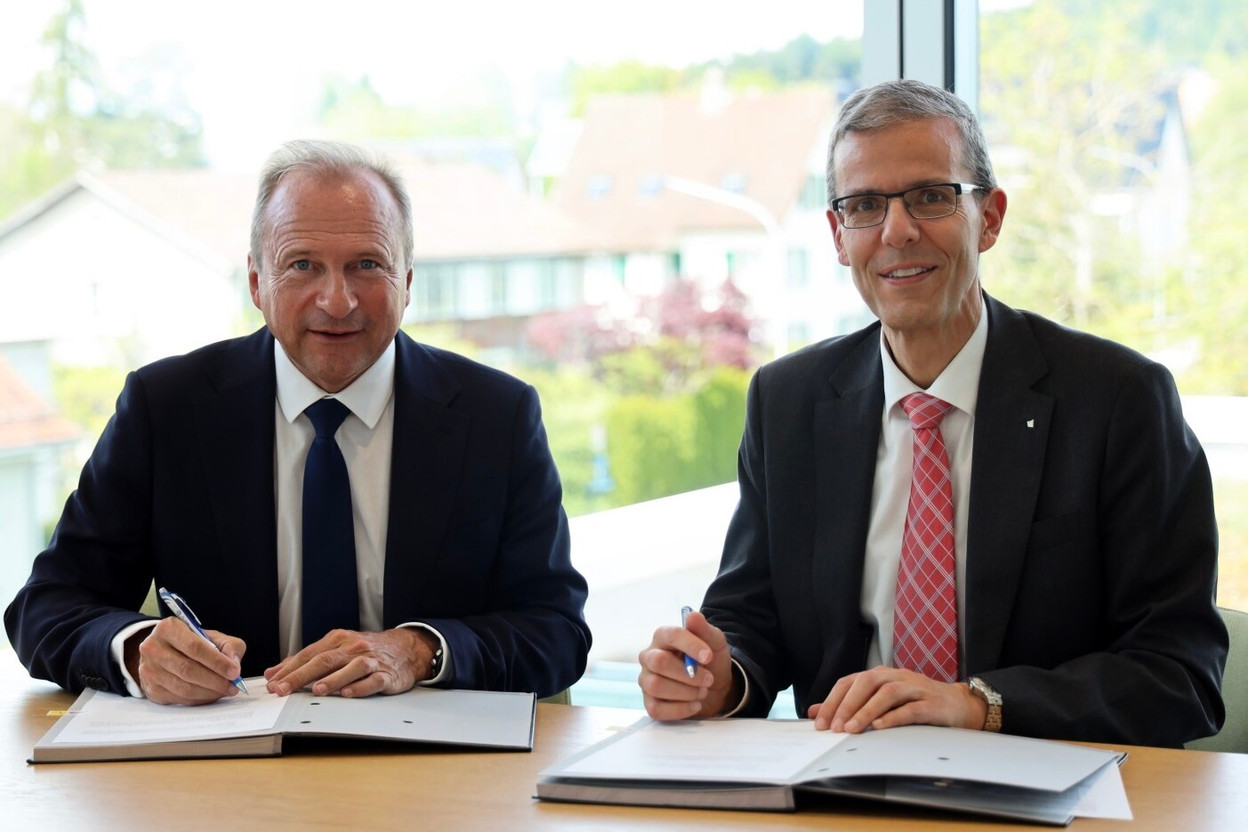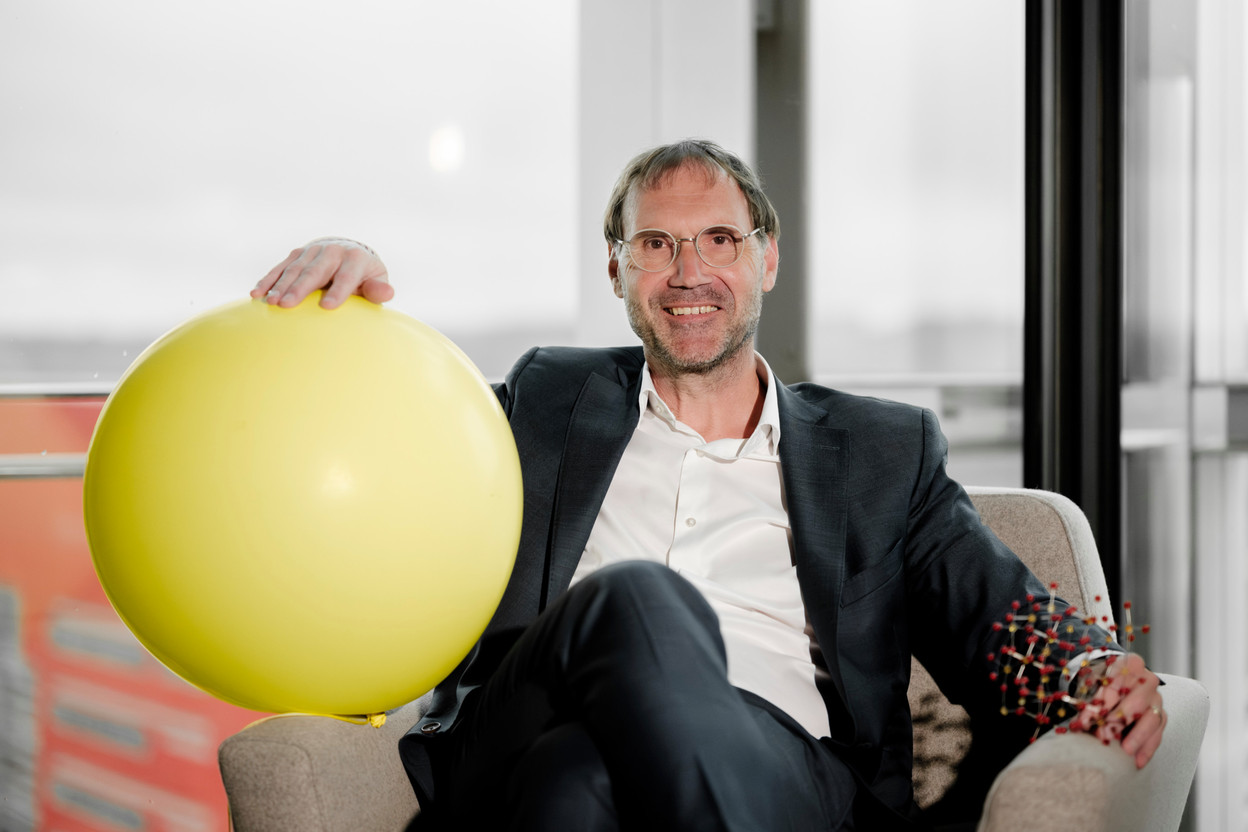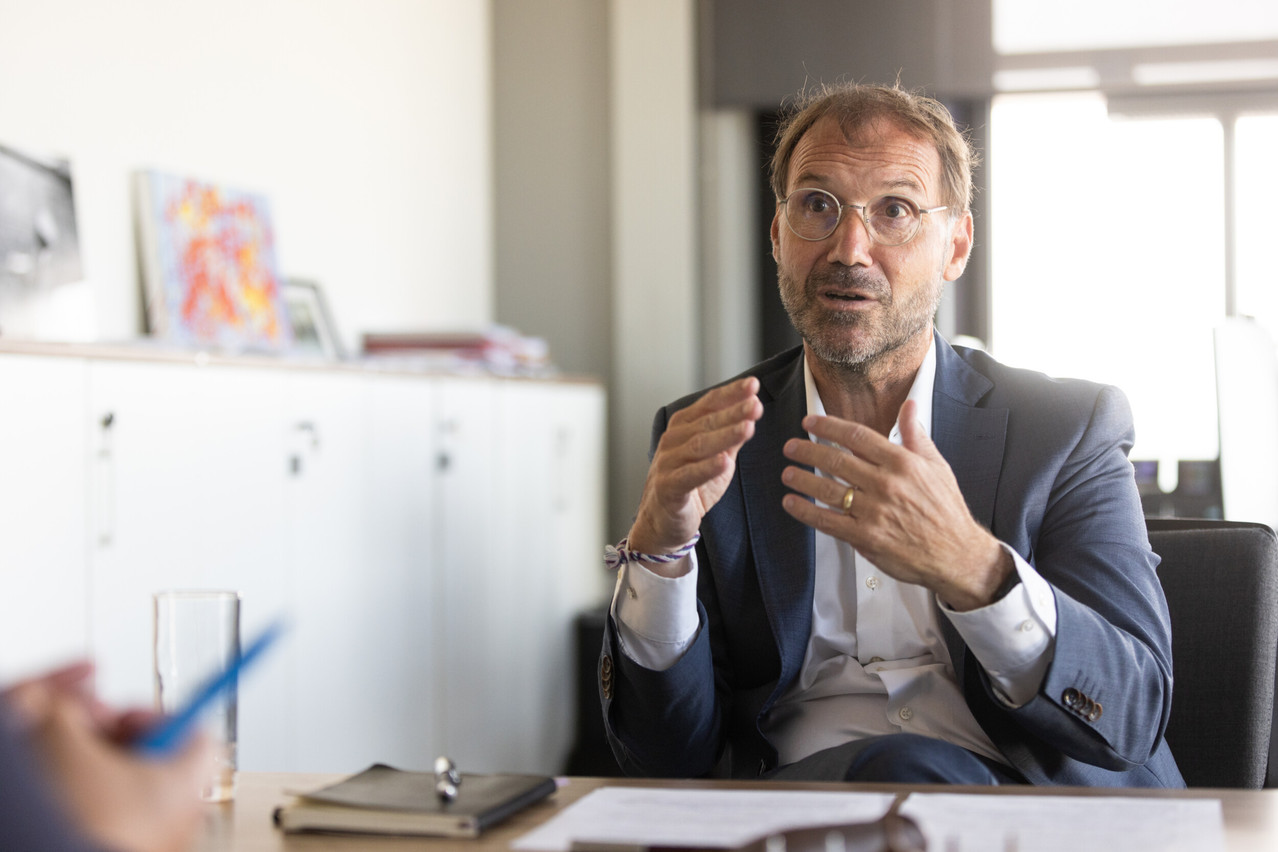
The University of Luxembourg does not intend merely to add a few lines to its strategic plan. In the new multi-year agreement concluded with the State, it is embarking on a more far-reaching transformation, centred on artificial intelligence, quantum technology and health. According to its rector, 
The financial signal is clear: the University has an additional €25m over four years to contribute to national strategies on artificial intelligence and quantum technologies. This funding, explains Jens Kreisel, is not general-purpose funding. It is earmarked for these specific objectives and should enable the institution to take a significant step forward in fields where international competition for talent is already fierce.
The first change will involve the creation of seven professorial posts. These new appointments will be made to the existing teams and will focus on two main areas. The first concerns technologies accelerated by artificial intelligence, with potential applications in cybersecurity or quantum communications. The second relates to what the academic world refers to as ‘AI for scientific discovery’, that is, the use of artificial intelligence to accelerate scientific research.
In this second group, two posts are to be focused on physics and materials science, a field in which the University believes it already enjoys strong international recognition. Another post is to be based at the Luxembourg Centre for Systems Biomedicine, with a focus on AI-assisted drug discovery. A seventh post will remain more open-ended, to enable the University to respond to new needs or emerging fields in the coming years.
Developing a concept for a faculty of medicine and health sciences
For Jens Kreisel, this balance is essential. Artificial intelligence must not merely be used to produce faster or more efficient tools. It must also transform the very way research is conducted, particularly in biology, chemistry, physics, medicine and materials science. The vice-chancellor specifically highlights the potential of AI in identifying new molecules, oncology and neuroscience. In his view, health and biomedicine are among the fields where progress could be most rapid.
This is where the announcement takes on a whole new dimension. For the first time, the multi-year plan provides for the establishment of a faculty of medicine and health sciences. Jens Kreisel is not talking about an immediate launch, but rather a long-term process. According to him, the multi-year agreement represents only the first steps in a broader plan. The outlook is not limited to just four years, but spans 20 years. The major challenge lies in bringing together artificial intelligence, health and biomedicine.
This strategy is also in line with recent developments in the Luxembourg ecosystem. Jens Kreisel points out that the country has already made some key strategic choices, notably with Meluxina. To attract international academics, the University intends to highlight not only competitive remuneration packages, but also access to an environment comprising the national supercomputer, the future development of quantum capabilities and Meluxina AI. The argument is not purely academic. It aims to present Luxembourg as a hub where high-performance computing, data, AI and quantum computing can be brought together on a more accessible scale than in larger countries.
A new technology transfer fund
But the recruitment of seven professors does not sum up the project. Jens Kreisel emphasises the need to get the whole University on board. A ‘knowledge and technology transfer’ fund is to be set up to encourage professors to develop spin-offs or start-ups based on their research. The aim is to transform more knowledge into commercial ventures, with a potential impact in Luxembourg. “You can’t transfer anything if you don’t have the knowledge,” sums up the rector. The University therefore wishes to boost scientific output, but also to strengthen links with the business world.
A second scheme will be run by the Institute for Advanced Studies, with a call for interdisciplinary projects utilising artificial intelligence or quantum technology. It will not be aimed solely at newly recruited lecturers in science and technology, but at the entire University. Jens Kreisel places particular emphasis on the social sciences, the humanities, law, history and psychology. In his view, AI cannot be left solely to computer scientists. It must be understood, critiqued and contextualised.
This point is central to his argument. The University must train specialists capable of understanding technical architectures, the explainability of models, code quality and the energy impact of systems. But it must also train students and researchers capable of examining the social, democratic and ethical consequences of artificial intelligence. The rector specifically mentions bias, the effects on society and the responsibility of public authorities in the face of technologies that are currently dominated by large private companies.
An AI training Welcome Week for everyone
This transformation will also involve training programmes. Starting with the next Welcome Week, the approximately 1,500 new students are expected to be offered a two-day course on artificial intelligence. A course on sustainability will also be incorporated, as the University regards both these subjects as cross-disciplinary. The aim is to make AI a common foundation, rather than a skill reserved for just a few degree programmes.
This same approach must then be extended to the University’s staff. Jens Kreisel points out that the institution has around 2,800 employees and that, like any large organisation, it must support them through this transition. Ultimately, these training modules are intended to be made available to external parties. Continuing professional development is thus becoming one of the key priorities of the multi-year plan, to the extent that the rector describes it as a kind of fourth mission for the University, alongside undergraduate teaching, research and the transfer of knowledge to society.
Majors and minors in experimental studies
The shift will also have an educational dimension. Jens Kreisel wants to trial major-minor-style degree programmes, inspired by the Anglo-Saxon model. The idea is to allow students to retain a main subject, such as physics, whilst broadening their studies to include another discipline, such as biology, sociology, communication or other fields. This approach is intended to promote interdisciplinarity without compromising disciplinary depth. The rector acknowledges the difficulty: broadening study pathways means moving away from a degree of hyper-specialisation. However, he draws a distinction between a loss of depth and a loss of quality.
The recruitment of academic staff will also follow a more flexible approach. Traditional procedures generally take at least a year and a half. For exceptional international candidates at full professor level, the University may resort to recruitment by invitation. Jens Kreisel states that concrete discussions are already underway with two individuals. Other candidates may be recruited through open recruitment processes, particularly to attract younger talent.
Taken as a whole, this paints a picture of a university that is still young, but determined to establish itself for the long term. Jens Kreisel is keen to point out that the Luxembourg institution is only 23 years old, compared with European universities that are sometimes several centuries old. This youthfulness calls for a certain humility. It also offers a flexibility that the University intends to harness to position itself at the forefront of future scientific breakthroughs.
Rethinking knowledge
The challenge remains considerable. Luxembourg does not have a large pharmaceutical industry, nor does it possess the market depth of the world’s major research hubs. In the field of AI applied to healthcare, international private-sector players are already investing billions. Jens Kreisel does not deny this competition, but he believes that the scientific breakthrough is still far from complete. From predicting protein folding to simulating more complex biological systems and discovering new molecules, the field remains wide open.
It is precisely in this sphere that the University wishes to play a part. The €25m will not, on their own, alter the global balance of AI or biomedicine. But they must serve as a catalyst to recruit, organise, train and further connect the University to the Luxembourg economy. This shift in scale will therefore not take place solely in the laboratories. It will depend on the institution’s ability to bring together its scientists, engineers, lawyers, historians, psychologists and future doctors to work collaboratively.
For Jens Kreisel, this is where the real challenge lies. Artificial intelligence is not just another technology. It is forcing the University to rethink the way it generates knowledge, trains students, supports its staff and contributes to society. The multi-year agreement marks the start of this process. The strategy, however, is already looking much further ahead.