In 2022, 17,163 accidents were recorded in the country, of which 13,368 happened at work and 3,095 during a commute; a further 200 were occupational illnesses.
While the Accident Insurance Association (Association d’assurance accident or AAA) will not publish its statistics for 2023 until September, the Labour and Mines Inspectorate (ITM) highlighted some more recent data in its latest activity report: in 2023, 2,183 accidents were reported to the ITM, ten of which were fatal and 230 considered “serious.” These accidents occurred mainly in the health sector (21.8%), construction (19.79%), commerce (16.67%) and industry (12.9%).
Based on these figures, it is apparent that work remains when it comes to health and safety at work.
In terms of risk, not all workers are in the same boat, depending on their sector of activity. While the construction, finishing, building enclosure and metal construction sectors have the highest accident frequency rates, the AAA points to other at-risk sectors including temporary work, agriculture, road transport and building cleaning.
A new phase of the Vision Zero charter began in 2023 and will run until 2030 to help prevent accidents. This national strategy, launched in 2016, aims to raise awareness and train employees by calling on the leadership of company directors. The first phase of the programme aimed at reducing the national frequency rate of accidents at work, while this new one sets out to cut the rate of accidents at work by 20% (compared to 2019).
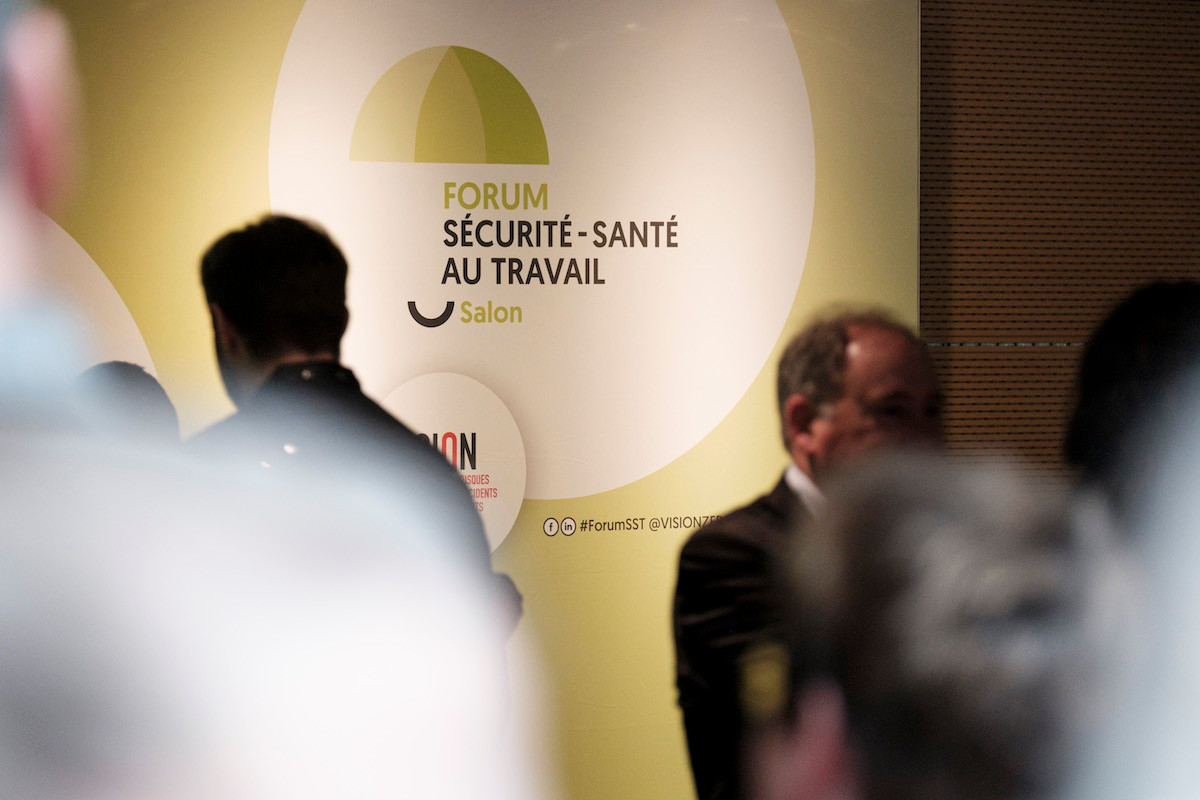
The Forum on Safety and Health at Work (Forum sécurité-santé au travail), launched in 2007, takes a similar approach. Its 17th edition will be held on 15 May 2024 at Luxexpo, organised by the AAA in conjunction with the Union of Luxembourg Companies (Union des entreprises luxembourgeoises or UEL) and the National Institute for Sustainable Development and CSR (Institut national pour le développement durable et la RSE or INDR). This is an opportunity for company directors, corporate health and safety managers and all those involved in this field to discover the latest innovations, with 20 workshops planned for the occasion.
The 2024 event will feature a number of innovative activities, including a simulation of the impact of lashing on load stability. Several workshops will also address mental health at work and psychosocial risks.
Trends in OHS
The forum will highlight a number of emerging trends in the field of occupational health and safety (OHS), such as the importance of taking into account employees’ mental health, their wellbeing and more generally ergonomics and digitisation. “Companies are adapting by integrating wellness programmes and mental health awareness training, improving workstation ergonomics to prevent musculoskeletal disorders, and using virtual reality and digital platforms for OHS training,” explains the AAA, which develops prevention recommendations that, although not part of the regulations, constitute best practice in OHS.
The impact of new technologies on health and safety at work will be discussed at the forum. “New technologies and innovations can actually improve health and safety in the workplace,” says the AAA. “For example, drones can inspect dangerous areas, while robots can carry out hazardous tasks previously performed by people, thereby reducing the risk of accidents. In addition, virtual reality makes it possible to offer employees immersive training in risky situations without any real danger, enabling them to react better if necessary. In addition, the analysis of historical data and artificial intelligence can anticipate and prevent incidents. These new technologies undeniably offer advantages, but they also introduce new risks, which must be taken into account in any risk assessment.”
The forum also includes the presentation of the Occupational Health and Safety Prize, awarded to companies that have put in place good practices in the field of OHS and wellbeing at work. “These companies stand out for their innovative initiatives or products in this area, which could potentially be adapted by other companies,” says the AAA. The prize will be awarded to five winners by the health and social security minister 

Examples of good practice
In 2022, Ceratizit won an award for its in-house “Take Care” approach, which aims to prevent musculoskeletal disorders and occupational illnesses by assessing different work situations using ergonomic rating tools. This solution was taken into account in the design of new workspaces and the acquisition of new production machines.
Cocottes also won in 2022 for its overall concept, which is based on three pillars: ergonomics, safety and wellbeing in the workplace. For example, the new equipment acquired is largely automatic to relieve employees of their tasks. Technical measures have also been adopted, such as non-slip floor coverings, the use of cleaning products that do not contain harmful substances, and the introduction of individual interviews with employees.
Another winner from 2022 is Syrdall Schwemm, a swimming pool in Niederanven where an e-learning tool was developed for employees. The tool, called “Security Academy,” conveys health and safety training and can also be used for user manuals, general in-house training and learning management systems. The principle of this database-based system enables employers to check at any time whether training courses allocated to employees have been successfully completed.
This article was originally published in Paperjam. It has been translated and edited for Delano.