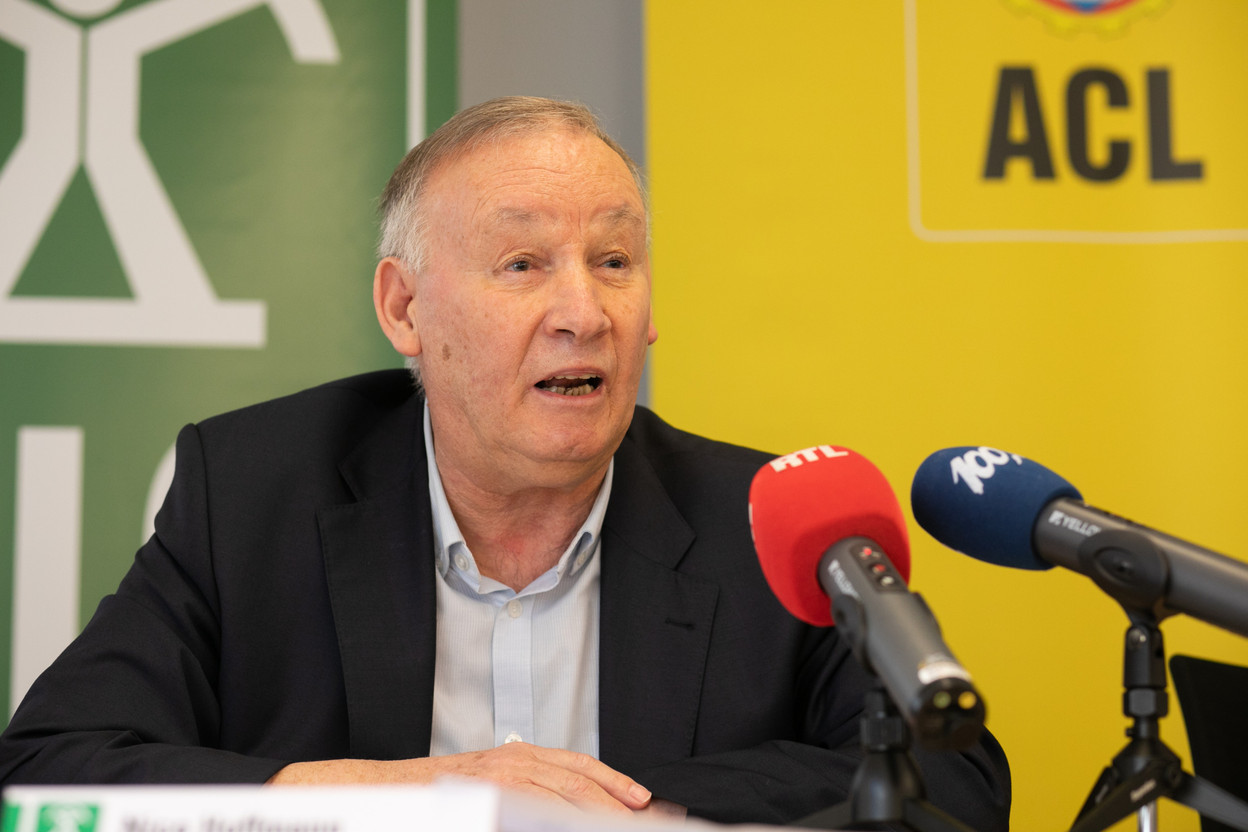
Paperjam: How would you describe the wage agreement reached at the end of January for the period 2025-2026?
Romain Wolff: It’s a reasonable agreement. There’s a lot of talk about salary increases [editor’s note: the index value will rise by 2% in 2025 and 0.5% in 2026], but it’s an agreement that covers 27 different points, so it goes well beyond that.
Could it have been better?
Certainly, but this agreement meets the expectations of our members without losing sight of the interests of the country.
What were your key demands?
We had said that we wanted a linear increase in the index point and we didn’t give up. Employers, on the other hand, felt that civil servants didn’t need a pay rise on top of indexation. We are well aware that we have indexation, but indexation is no longer enough to fully compensate for the loss of purchasing power.
Your demand for an annual pay rise of 4.1%, i.e. more than 8% over two years, makes a big impression on people.
We don’t comment on the demands, just the result. But what is also important to us is that the agreement contains, among other things, provisions to enhance the value of positions of responsibility in the civil service, and that it will allow state employees to be admitted to civil servant status after completing at least 10 years of service, compared with 15 at present.
Do you get the impression that there is a bashing of civil servants?
There are clichés that have always existed and that still exist today. In the private sector, there are also very high salaries… but there’s no transparency, unlike in the civil service, where there are scales, grades, etc. We’re well aware that we have a lot of problems. We are well aware that our salaries are, shall we say, decent. The aim of the civil service is not to generate profits like the private sector, but to serve individuals and companies. Civil servants are the guarantors of a functioning democracy. The general view is that it’s easy to get a job with the state or local authorities. This is not the case.
How would you describe your relationship with the CSV-DP government?
At the beginning of last year, we were not invited to the Logementsdësch, the roundtable on housing. We don’t understand this way of proceeding. The social dialogue left something to be desired. This time it was there. The next topic will be the discussions on pensions, and we’ll see how the social dialogue works.
Are you worried about a possible pension reform?
Worried, no, but attentive, yes, absolutely. The government is listening to the social partners, but that’s not enough; it has to involve them in the decisions that will be taken. Social dialogue cannot be defined as “listening to the unions and deciding on your own.” The government itself says it’s “business-friendly,” so we can see which way it’s leaning.
This article, originally published in French, was written for the March 2025 edition of Paperjam magazine, published on 26 February. The magazine content is produced exclusively for the magazine. It is published on the site to contribute to the full Paperjam archive. Click here to subscribe to the magazine.
Is your company a member of the Paperjam Club? You can request a subscription in your name. Let us know via club@paperjam.lu.