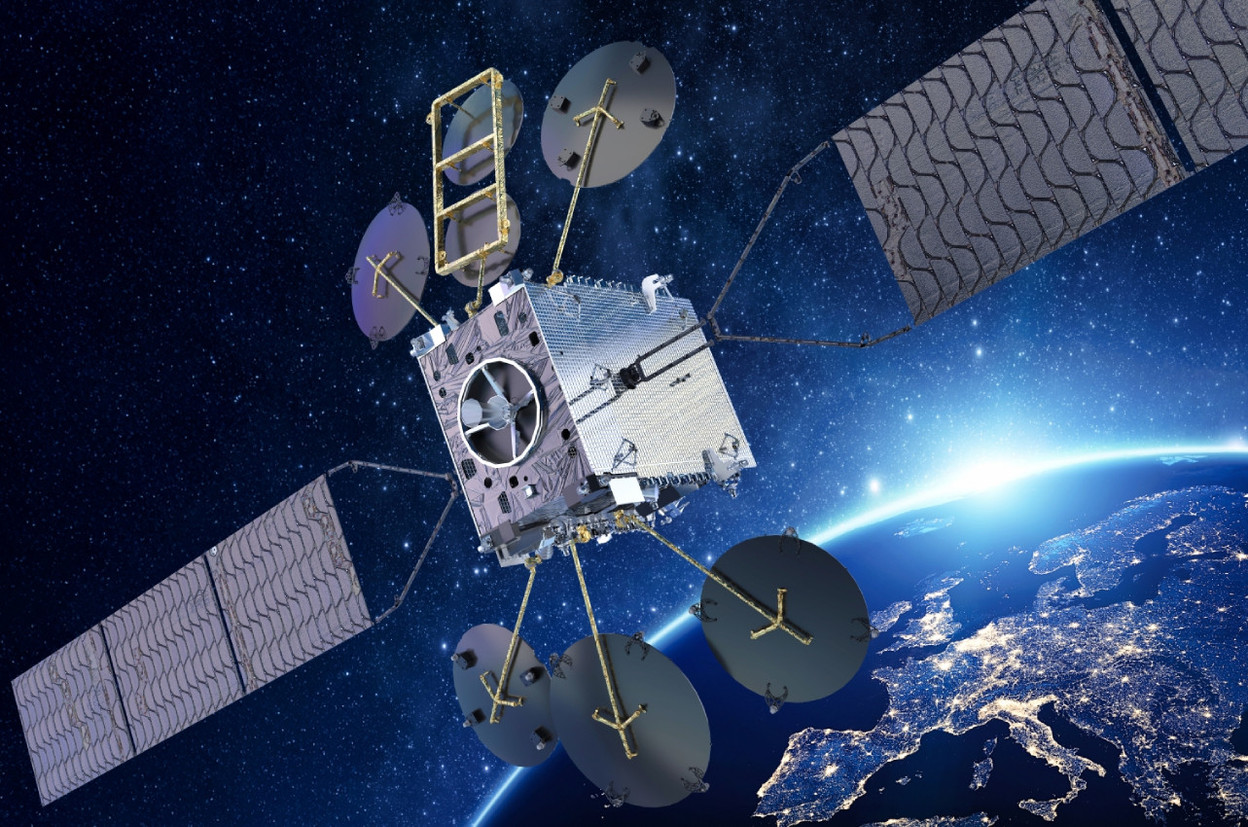
Since the launch of Govsat1 in 2018, Luxembourg has quietly but firmly established itself as a provider of secure satellite capacity for Nato, the European Union and several international partners. This satellite, born of a public-private partnership with SES in the form of LuxGovSat, has enabled the Luxembourg state to play the role of “anchor customer,” while establishing itself as a reliable player in defence operations.
Seven years later, Govsat1 is fully booked. The increase in military requirements, Russia’s war in Ukraine and the growing number of Nato operations have drained available capacity. The Govsat2 project aims to meet this exponential demand.
Equipped with double the SHF band capacity (high-speed communications) and enhanced with a tactical UHF component (essential for special forces), Govsat2 will also incorporate enhanced protection: hardening against electromagnetic pulses, advanced anti-jamming systems, geolocation of potential jammers. It’s a response to the growing threats to space infrastructures in an increasingly contested world.
With a total budget of €501m, financed via the Military Equipment Fund, the satellite will be a key part of Luxembourg’s resilience and sovereignty strategy in the military space sector until 2040. The minister for defence plans for the government to increase its participation by €101m (€41m in 2026 and €60m in 2027), to acquire €200m worth of capabilities in one overall package over the period instead of one package per year. A strategic budget reserve of €200m should also be set aside to cover any future developments.
In addition to the security dimension, Govsat2 is also an industrial anchoring tool. LuxGovSat, piloted with SES, will call on Luxembourg companies to build the components of the satellite and its ground segment. The project is part of the defence space roadmap adopted in 2022, aimed at developing a defence industrial base in the country.
While the defence minister, 
The ambition: to anticipate future capability requirements, particularly tactical, and prepare for technological and geopolitical developments in a space environment that has become highly competitive and militarised.
This article was originally published in French.