Céline Coubray: You currently live in New York with your family. But you come from Luxembourg. What is your background?
Umberto Bellardi Ricci: It’s not linear at all. My father, who is Italian, came to Luxembourg in 1952 and worked all his life for the European institutions. My mother is German and worked in Switzerland before coming to Luxembourg. They met on the golf course and that’s how the family started. A European romance, typically Luxembourgish. So I grew up in Luxembourg, where I had a Luxembourg education.
What nationality is on your passport then?
Good question! I was never a “local” in my country, as my passports were German and Italian until I was 18. When I came of age, to avoid military obligations, I gave up these two nationalities to become a Luxembourger. But that’s when I left Luxembourg.
To study?
Yes, social sciences. I went to London for three years. Then I worked for Amnesty International. I also did a traineeship with the European institutions in Luxembourg for six months and I went to Africa with the United Nations. But I gave all that up to make music and move to Paris where I also worked a bit in fashion and the advertising world.
It’s indeed an eclectic career path, but it also means that from Luxembourg you’ve had the opportunity to be open to the world and to different disciplines.
Absolutely! Growing up in Luxembourg, I had this international background. Not always cosmopolitan, but international. Which is a very good preparation for life. So, at the age of 26, I went back for a master’s in political science, before deciding that I wanted to learn architecture. So I went to the Architectural Association School of Architecture (AA) in London, where I studied for six years. Following this, the AA School asked me to stay on and teach, as my eclectic background was of interest to this rather experimental school in particular.
But you didn’t stay in London, you went to Mexico…
Yes, after Brexit, I left for a satellite programme of the AA School, in the Las Pozas sculpture garden. This garden was designed by Edward James, a British poet, artist and patron of the Surrealist movement. I taught classes there with Carlos Matos, a Mexican architect and sculptor, and Kanto Iwamura, a Japanese artist and architect. The workshop lasted five years. In Mexico, identity is very fluid, more mixed. We travelled with the students, organised pre-Hispanic and modernist visits and studied how the two styles blended together, how the cultures were reappropriated. It was also during this stay that I met my wife, who is of Serbian origin, but was living in New York, having previously lived in Poland and Berlin.
So it was through her that you headed for New York?
After hesitating between staying in Mexico, returning to London or moving to New York, we finally settled in New York in 2018. I found a position at Cornell University in Ithaca where I taught for a year. It was a shock for me, because I went from very large megalopolises to a small town of 30,000 inhabitants... It was at that time that I started to look at objects from a greater distance. When I came back to New York, I continued my research on objects, took a studio in Brooklyn, in the Navy Yard.

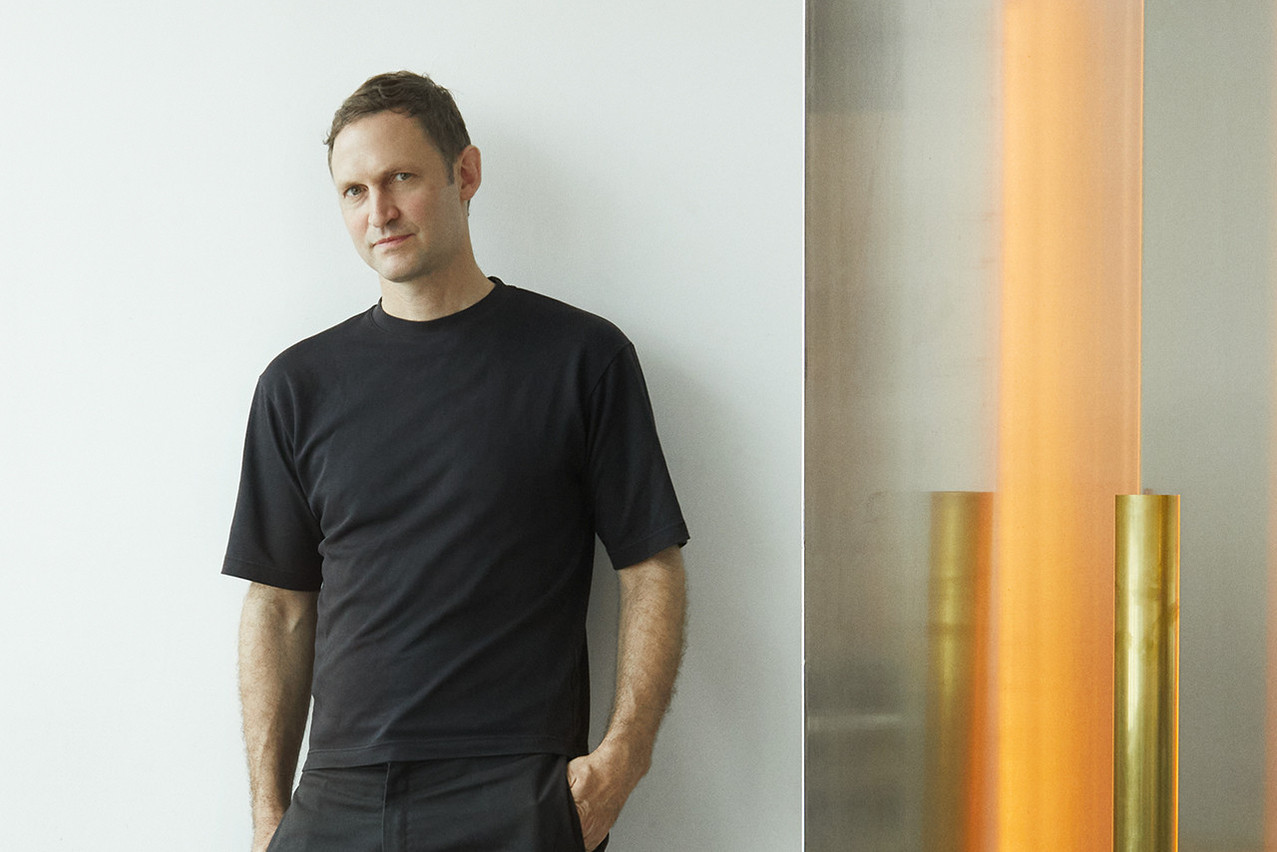
Umberto Bellardi Ricci behind a desk of his creation and other objects in New York. Photo: Matthew Williams
And that you were therefore interested in design.
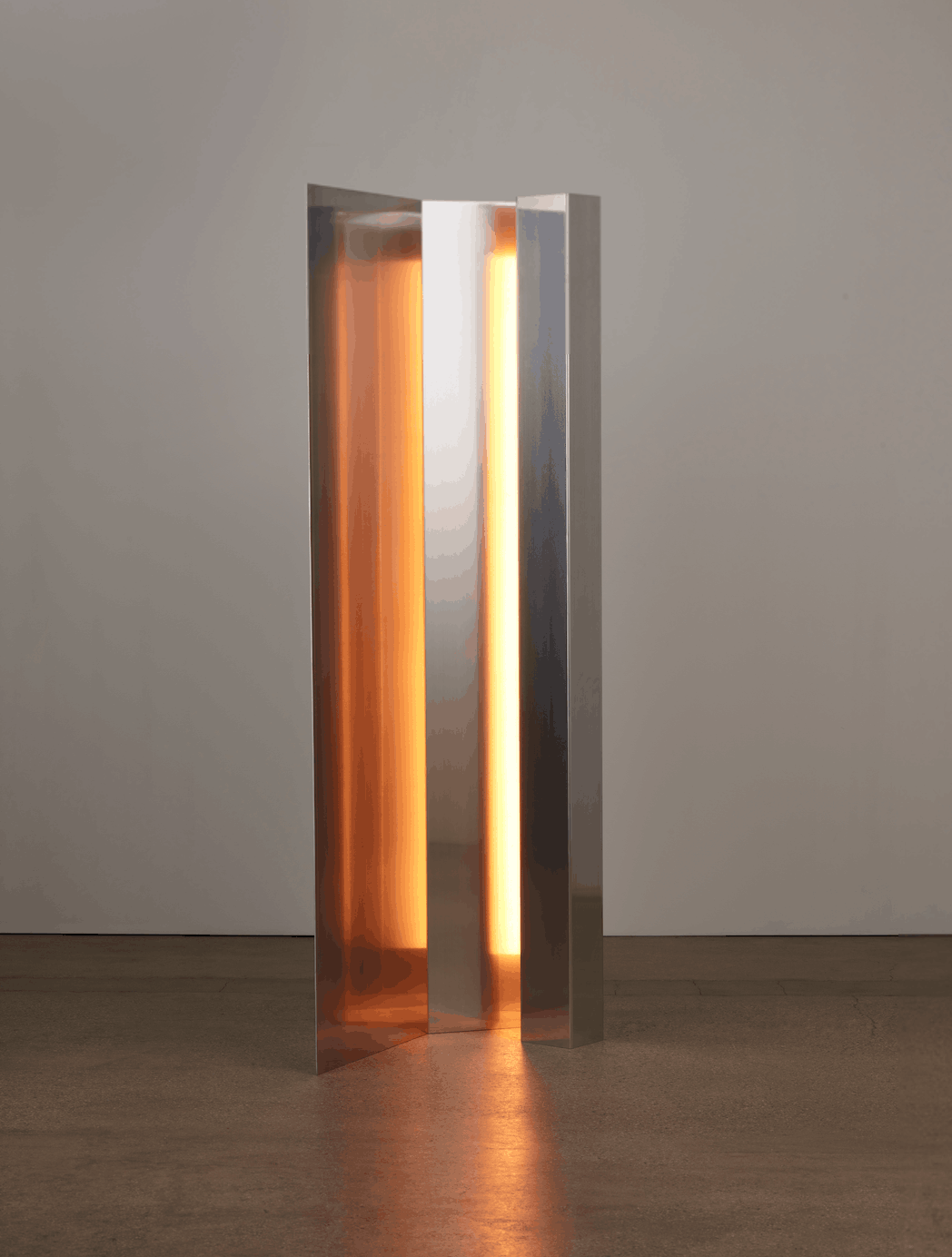
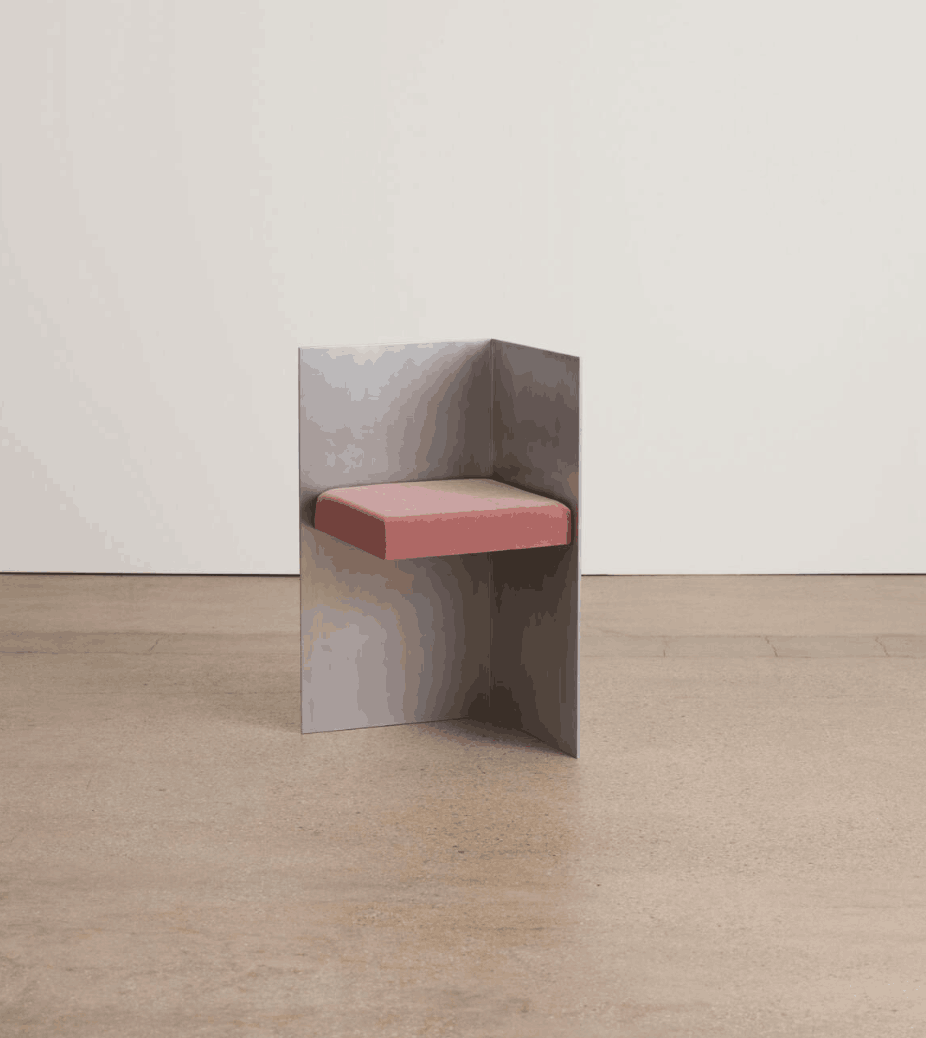
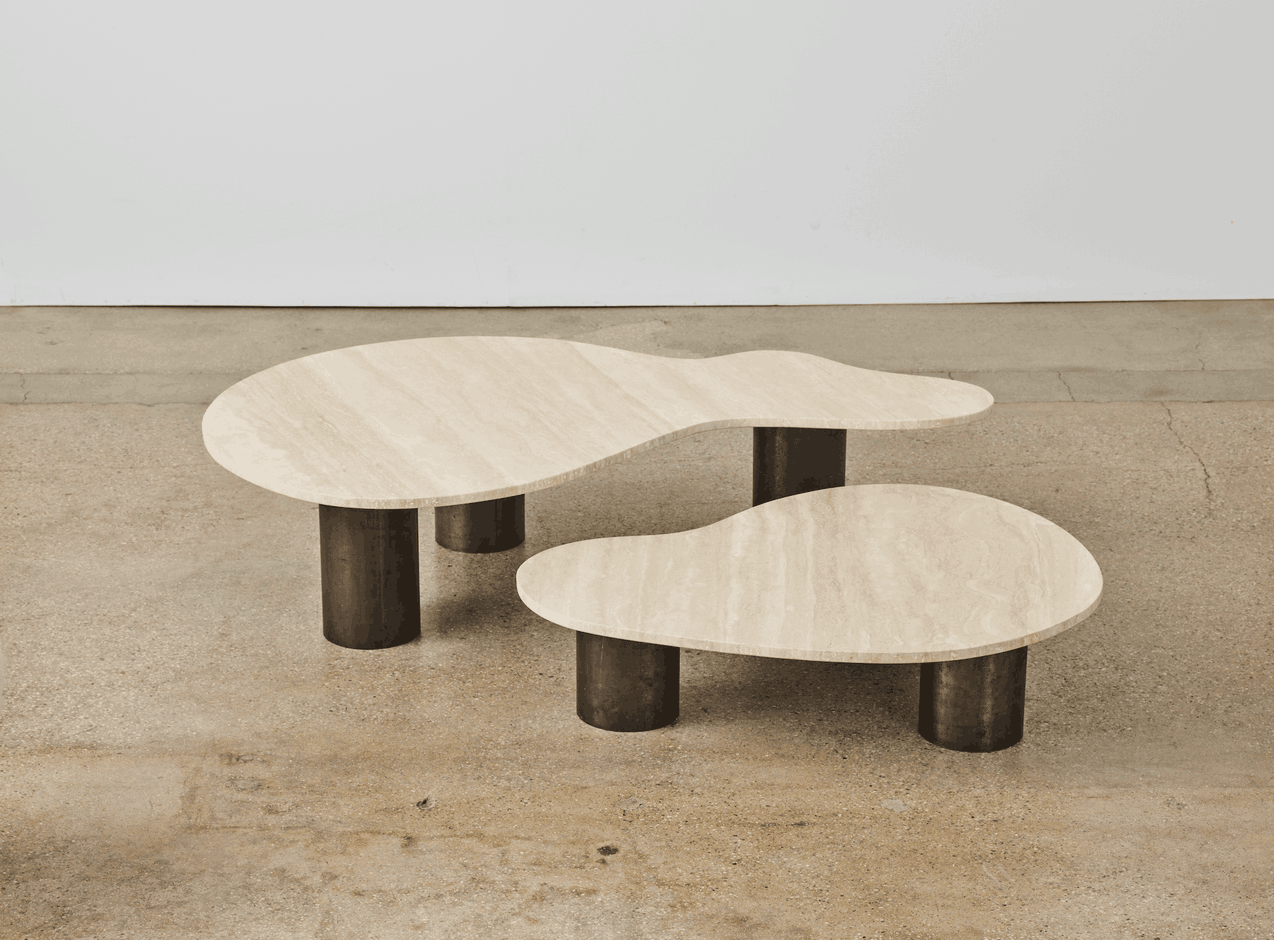
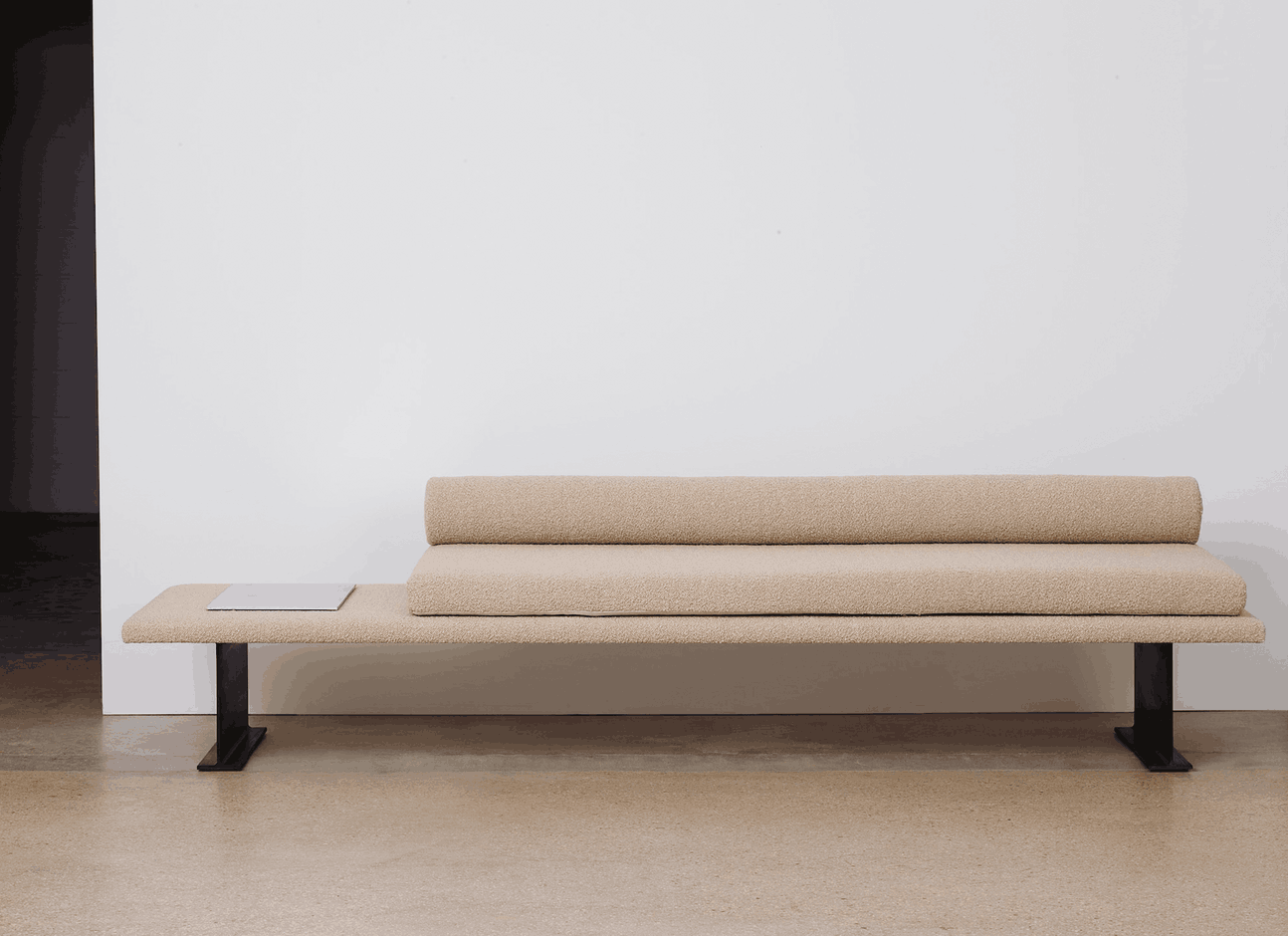
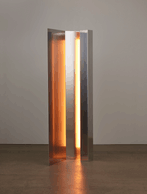
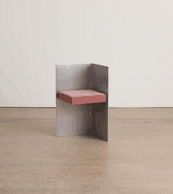
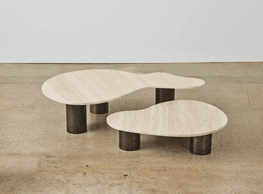
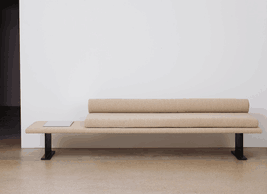
From 2021, I have exhibited my designs at the Matter Gallery. These objects are at the intersection of design and sculpture, mixing contrasting materials such as metal or aluminium from the industrial world with stone, fabric or glass, which are more refined, more fragile materials. The critics were quick to place me in the American tradition of minimalism, but it was also interesting to see how they interpreted my work. As they tend to flatten everything out, they shortened everything to Italian architect and sculptor, because of my name.
And how would you define yourself?
I feel like a Luxembourger. I love the country and the language. Culturally, I feel close to this country. But my family is also heterogeneous: with an Italian father and a German mother, I’m a Luxembourger; my wife is Serbian, but has an American passport; my children are Americans and also have a Luxembourg passport. I also see that I adapt a lot depending on where I live: when I was in Mexico, I was more Italian; when I’m in New York, I’m more German, more organised.
So this duality of cultures, between the Latin character and the Germanic character, serves you on a daily basis.
In fact, I define myself between chaos and order. When I was doing experimental music and free jazz, these qualities helped me a lot. I’m also used to working quickly and messily on models, whilst becoming precise, detailed and structured afterwards when it becomes necessary.
And architecture, have you left it aside?
No, not at all. My objects are very architectural. They’re called sculptures because I play with form and scale. But they’re also design because they’re functional. It’s a design collectible. But I still enjoy working on architectural projects.
There’s a form of ambiguity in your work then, of slippage, of porosity, as in your cultures.
Yes, you’re absolutely right! It’s like coming from several places at once. There’s this ambiguity in my cultures and in the disciplines I work in. It’s an interesting mix, when one touches the other, creating a porosity of disciplines that feed off each other.
Has New York City, with its singular relationship of scale, influenced your creations in any way?
Absolutely. And I also find that the city scale doesn’t work in many cases, because there’s no connection between the street and the skyscrapers. These are buildings that need to be seen from a distance. I’m lucky enough to have this view of the skyscrapers from my studio, so I can work with this view of the city. As a result, on a daily basis I experiment with this relationship between the small scale of my models or objects in my space and the theatrical backdrop of the big city. I’m also influenced by the materiality of the city. In Mexico, I used to do a lot of concrete, but here, the whole city is made of glass and folded metal. That’s why I became interested in metal, a material that's easy to find, cheap and still has a craftsman’s knowhow, in neighbourhood workshops.

You are currently working on a project with the Luxembourg embassy in the United States. Can you tell us a bit about it?
I’m very happy to be able to work with Luxembourg again today, after having done these trips and stays elsewhere. Sometimes you have to do the Grand Tour [a journey of initiation and culture that young aristocrats made in Europe in the 17th and 18th centuries, editor’s note] to appreciate your own culture. This is very important for Luxembourgers, because the country is small and it’s not so easy to recognise the value of this culture, which does exist. This project involves working in the interiors of the embassy in Washington. The current ambassador is very sensitive to design and wants to highlight the work done with steel. The residence is quite busy, and my idea is to create a strong contrast, a minimal, contemporary approach.
Have you suffered at any point in your life from these multiple identities and origins?
Frankly... no, not really. In Luxembourg, I was always the Italian kid. What confused me was having been brought up in the Protestant religion, which is unusual for an Italian... Otherwise, no, because my case was not at all exceptional in Luxembourg. What’s more, I discovered how enriching it is to be a foreigner in a country where you live for a long time. It gives you a distance from your own culture.
Did you encounter any obstacles to integrating in the countries where you lived?
No, not really. But I had a shock when I was studying in London, when a professor asked me my opinion on a subject. My teachers in Luxembourg had never asked me for my opinion, let alone argued about it. Language learning was fantastic, but there was no dialectic in our teaching. I also discovered a much more competitive spirit. And their sense of humour gave me a hard time! I could never understand their sarcastic jokes. In German, the language is so precise that there's no room for humour.
Any other surprises?
New York has offered me some truly extraordinary professional opportunities, but culturally, it’s a desert. As a European, you’re not used to that. The market is here, but the creation is elsewhere.
Has distancing yourself from Europe helped you in your creative process, changed your relationship to cultural heritage?
I work a lot with metal, which is a traditional material in Luxembourg, and the buildings in New York were built with this metal. But I also have this tradition of the refined arts of Europe, the magnificent Italian stones, the French and Italian textiles... I think that the contrast between high and low, the industrial and the refined, that I use in my work, comes from this cultural distance. It’s true that it’s sometimes cumbersome to stay within your own culture. From a creative point of view, it’s liberating to have a distance, to reinvent. And the United States is perfect for that. There’s a kind of naivety and enthusiasm that’s refreshing. Mexico has also helped me in this approach, because Mexicans are much more playful in their creations and aren’t afraid of reappropriation.
Does the American dream still exist?
It’s hard to answer that, because it’s so busy. But there is this freedom in a meritocratic society. And the economy, which is doing rather well, also allows for a certain enthusiasm, with people who are prepared to take risks.
Have you kept any Luxembourgish habits or traditions?
Recently, we celebrated Kleeschen (St Nicholas) at the consulate with the children. Otherwise, no, not really, although my heart remains in Luxembourg.
Do you feel like an ambassador for your country abroad?
Absolutely. And I’m also very happy to meet other expatriate Luxembourgers. As it’s a small country, we often have acquaintances in common. It’s fun.
Would you ever consider moving back to Europe?
Yes, we often think about it, to be honest. I think about Luxembourg, but also Italy. But I try not to make too many plans, to counter my German character, which anticipates everything and rationalises…
This article was written in French for the April 2025 issue of Paperjam magazine, published on 26 March. The content is produced exclusively for the magazine. It is published on the site to contribute to the full Paperjam archive. Click on this link to subscribe to the magazine.
Is your company a member of Paperjam Club? You can request a subscription in your name. Let us know via club@paperjam.lu