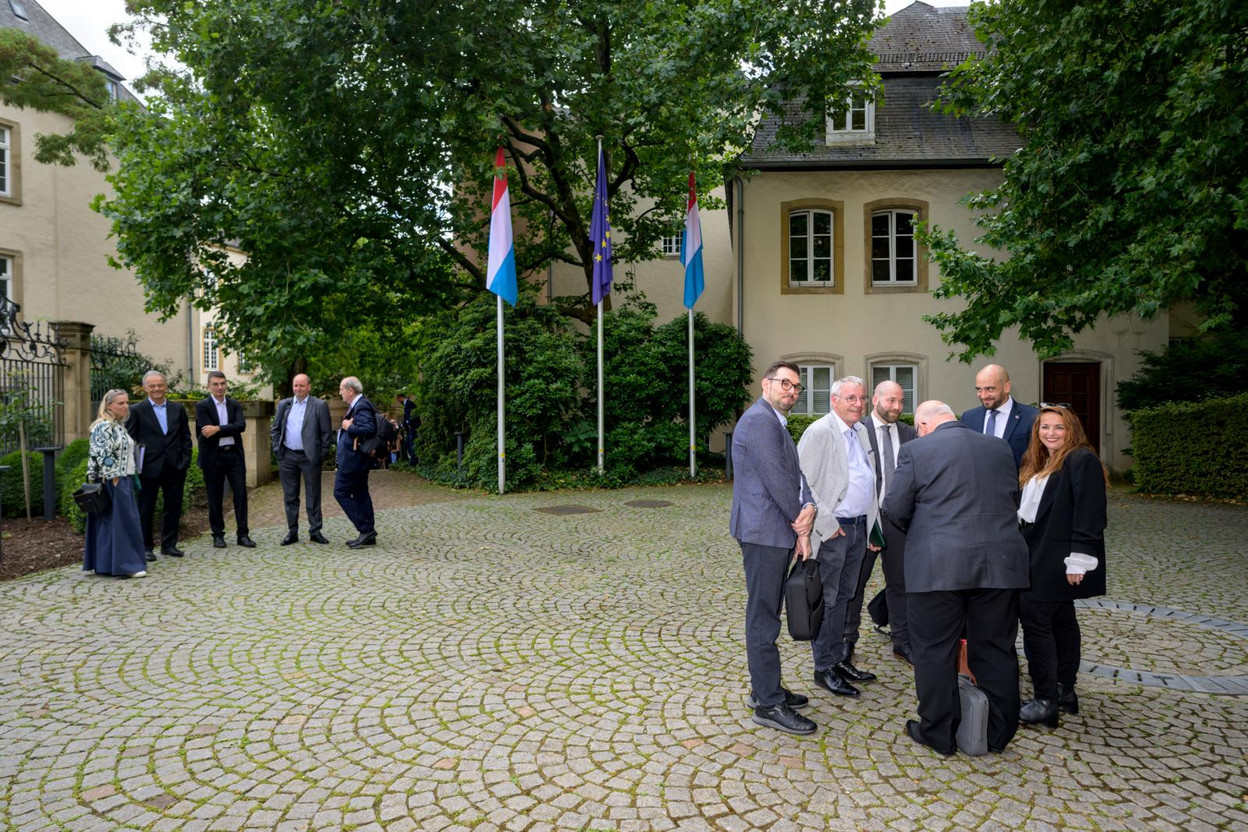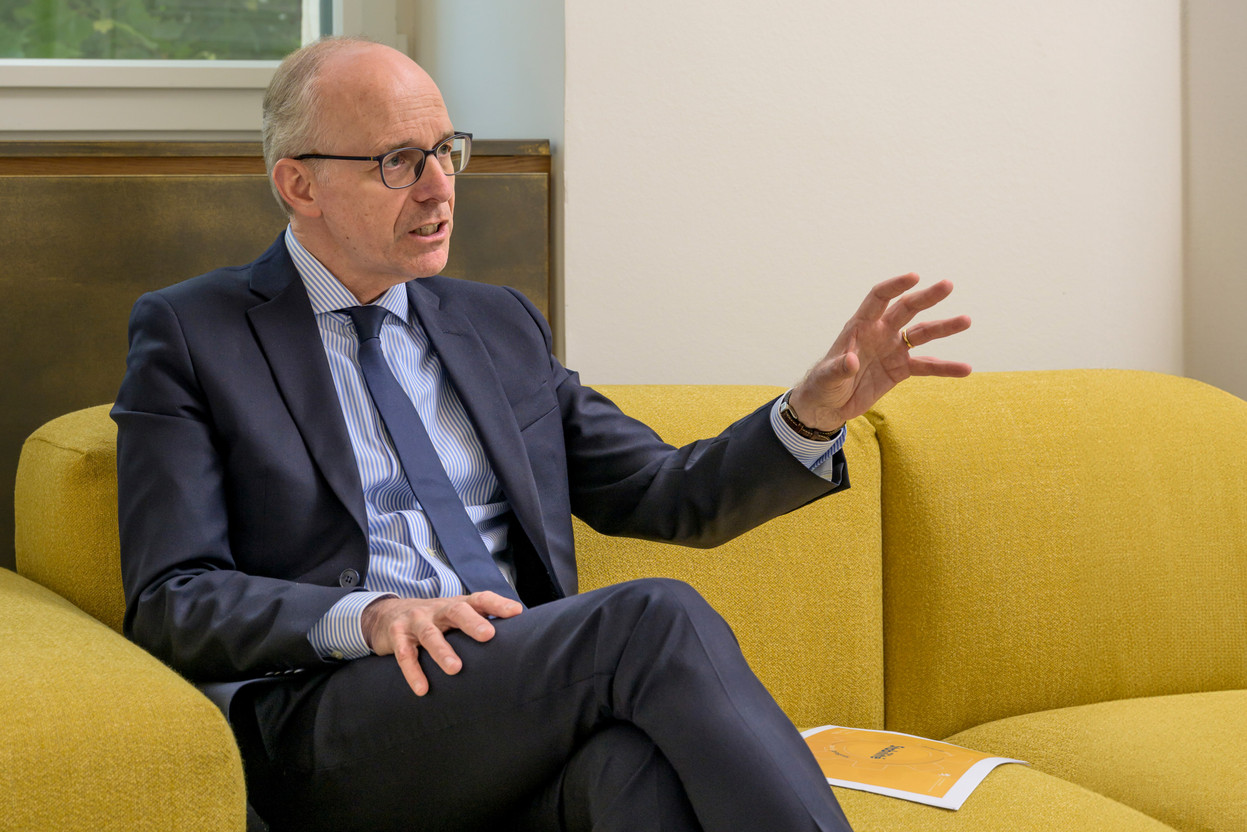
This Monday 14 July, the social partners are meeting again to continue the discussions that began on 9 July and ended after an 11-hour marathon. This marathon focused on a central point for the unions: the issue of the signature of collective agreements, which remains the monopoly of only nationally representative unions, and company agreements, which must be signed by affiliated delegations. This concession was made by the government to avoid blocking discussions on five other subjects. The question of the organisation of working time, included on the negotiating agenda at the request of the Union des entreprises luxembourgeoises (UEL), will be settled within the standing committee on labour and employment (CPTE).
Four issues remain on the agenda: opening hours, Sunday work, the minimum social wage and pension reform. Whilst the unions want a global agreement on all the issues--even if it means discussing the details and application procedures in other places and at a later date--this agreement is far from a sure thing, given how far apart the points of view seem to be--particularly on the issue of pensions. The unions, led by the OGBL and LCGB, buoyed by their participation in the demonstration on 28 June and supported by the LSAP and déi Gréng, played the firm card at the negotiating table on 9 July. This firm stance could pay off if--as is feared on the employers’ side--the government does not want the crisis to drag on and gives in on key points of the coalition agreement. A third round of negotiations could be hard to organise quickly, given the agendas of both sides.
Read also
As an odd coincidence, on Wednesday 16 July, MPs are due to consider bill 8456 amending the rules on Sunday working and appoint a rapporteur. Also in the Chamber of Deputies, discussions on the reform of property tax and the tax on the mobilisation of land resume, after the measures concerning the tax on unoccupied dwellings were dealt with separately.
The European Parliament will have a week of committee work. MEPs will examine the European Union’s long-term budget proposal for the period 2028-2035, take stock of progress in Ukraine’s EU accession process and the priorities of the Danish presidency.
Monday 14 July
Chamber of Deputies. Exchange of views with Claude Scho, head of the Luxembourg liaison office to Europol.
Council of the European Union. The agriculture and fisheries council meets in Brussels to present the work programme of the Danish presidency. The council will then analyse the market situation for agri-food products and commodities and discuss ways of diversifying protein sources for human and animal consumption in Europe.
Council of the European Union. Meeting in Brussels of a foreign affairs Council devoted to trade. The agenda includes relations with the United States and China.
Council of the European Union. The EU and the six Central American countries of Costa Rica, El Salvador, Guatemala, Honduras, Nicaragua and Panama are meeting in Brussels for the first meeting of the EU-Central America Association Council, under the Association Agreement between Central America and the EU, which entered into force on 1 May 2024. The meeting will be chaired by Kaja Kallas, High Representative of the Union for Foreign Affairs and Security Policy, and Lars Løkke Rasmussen, the minister for foreign affairs of Denmark, the country holding the rotating presidency of the Council of the EU. On the agenda: bi-regional relations and current crises, and global issues of mutual interest, such as migration, security and illegal trafficking, the environment and climate change, and the governance of artificial intelligence. An exchange of views on regional cooperation, investment and the trade agenda will complete the programme.
Tuesday 15 July
Chamber of Deputies. The Minister for National Education, 
Council of the European Union. Meeting in Brussels of a foreign affairs council chaired by the High Representative of the Union for Foreign Affairs and Security Policy, Kaja Kallas. On the agenda: Ukraine, Georgia, the Middle East and the new pact for the Mediterranean.
Wednesday 16 July
Government. The minister for national education, children and youth, Claude Meisch, presents the project for the creation of a new European public school in Schifflange. This school will be the seventh state European school in the country. Public European schools are an integral part of the Luxembourg school system. They respond to the socio-economic, cultural and linguistic diversity of pupils in the Luxembourg school system by offering a more flexible language offer and teaching leading to the European baccalaureate, with no tuition fees.
Chamber of Deputies. The health and social security committee will look at dossier 8575 aimed at adapting the 2018 hospital legislation, in particular with regard to the maximum number of inpatient beds, the inclusion of health reserve beds in hospital capacity, and the updating of terminology in the fight against severe obesity. They will also be examining bills 8333, on tobacco control, and 8333, on the creation of a national purchasing and logistics centre. Together with members of the labour committee, they will then look at the follow-up to public petition 3254 advocating greater flexibility for women with endometriosis.
Chamber of Deputies. Members of the labour committee will be working on Sunday working (dossier 8456), the online submission of unemployment benefit claims (dossier 8479), changes to the arrangements for job retention (dossier 8513) and leave for family reasons (dossier 7489). At the request of the political sensibility déi Lénk, labour minsiter 
European Commission. Presentation of the post-2027 multiannual financial framework and the white paper on the review of the EU’s anti-fraud architecture.
Council of the European Union. Three-day informal meeting in Copenhagen of the ministers responsible for research and the ministers responsible for the internal market and industry.
Thursday 17 July
Chamber of Deputies. The home affairs and housing and planning committees begin their work on property tax reform and land mobilisation. Bill 8082 was intended to carry out these two reforms at the same time. It was split in two so that the provisions relating to property tax and land mobilisation tax (parliamentary dossier 8082A) could continue the legislative process independently of the provisions on tax on unoccupied dwellings (parliamentary dossier 8082B). It is part 8082A that will be dealt with today with the appointment of a rapporteur.
Chamber of Deputies. The mobility and public works committee are continuing their examination of bills 8335 (introduction of surveillance cameras in public transport), 8494 (financing the rail infrastructure management contract), 8517 (management, access, use of rail infrastructure and regulation of the rail market).
Chamber of Deputies. The justice committee is continuing its work on bill 7882B aimed at making amendments to the code of criminal procedure, particularly with regard to suspended sentences and fixed prison terms. They will also debate bill 8432 on the modernisation of the legal profession and bill 7919 reforming mediation in civil and commercial matters.
Friday 18 July
Council of the European Union. Meeting in Brussels of a general affairs Council mainly devoted to the EU’s long-term budget for the post-2027 period.
This article was originally published in French.