Waiting for the PNM (National Mobility Plan) 2040, which should be presented in a few months' time, the Mobility Minister, 

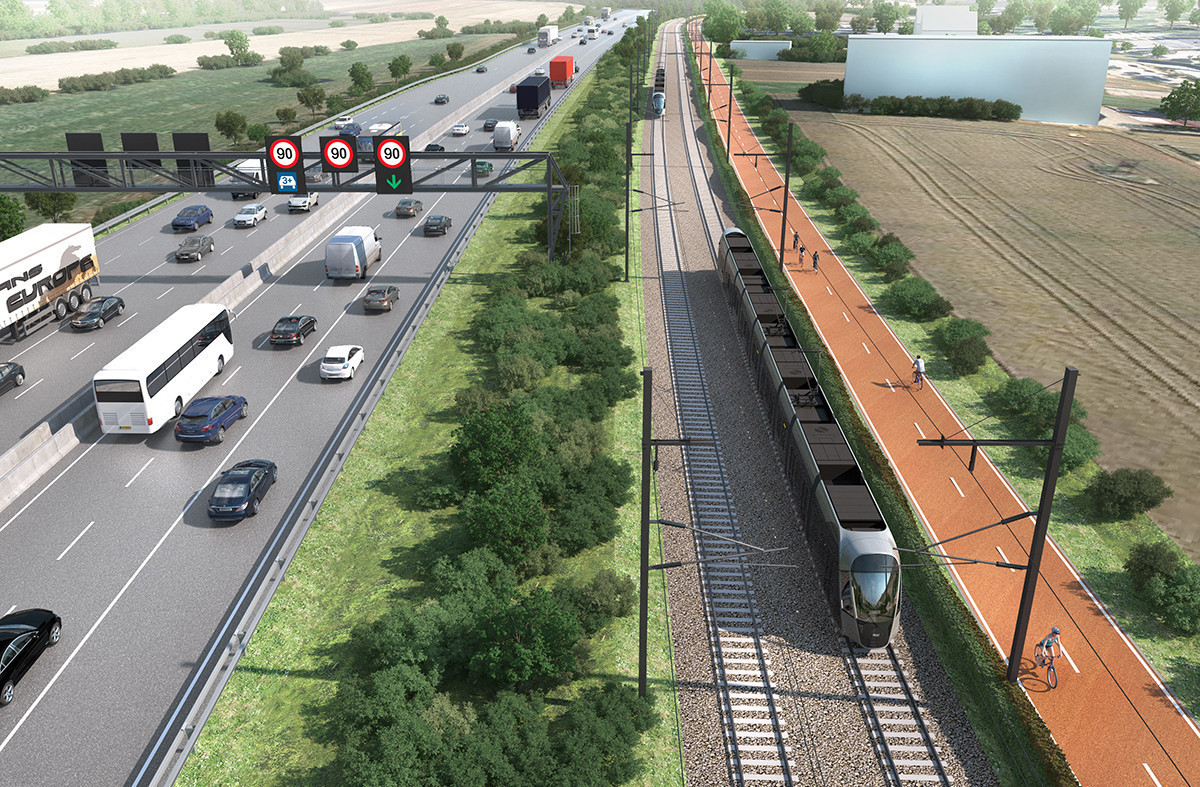
In this case, Gridx, in Wickrange, will indeed have its rapid tram stop. "The first route did not stop at Wickrange and we decided to optimise the project by shifting the route north of Pontpierre, towards this business park. The high-speed tram will therefore link the Cloche d'Or, a new interchange at Leudelange, then Pontpierre-Wickrange, then an interchange at Foetz, then the Metzechmelz stop - just before Lallange - and finally Belvaux. New trainsets will be used to further increase the capacity of this fast tram, which should link the Cloche d'Or to Belvaux "in 40 to 44 minutes", adds Frank Vansteenkiste. "Initially, people will have to change trams at Cloche d'Or to then get to the city centre, but in the PNM 2040 there may be adaptations to avoid this."
Financing bills to come
As for deadlines, the target date is still 2035. "It's a very ambitious project and several funding bills will be needed to complete it," confirms Yuriko Backes. Work is due to start in 2028-2029 for the first section, then the Foetz-Metzeschmelz section will start work in 2031 for entry into service at the end of 2032 and the Metzeschmelz-Belvaux section will start work in 2033 for entry into service in 2035, therefore.
"We are also confirming the ambition to have multimodal mobility. The aim is not to tell people to stop using their car, but perhaps to combine it with other means of transport, such as the train, tram, bus or bicycle", the minister supports.