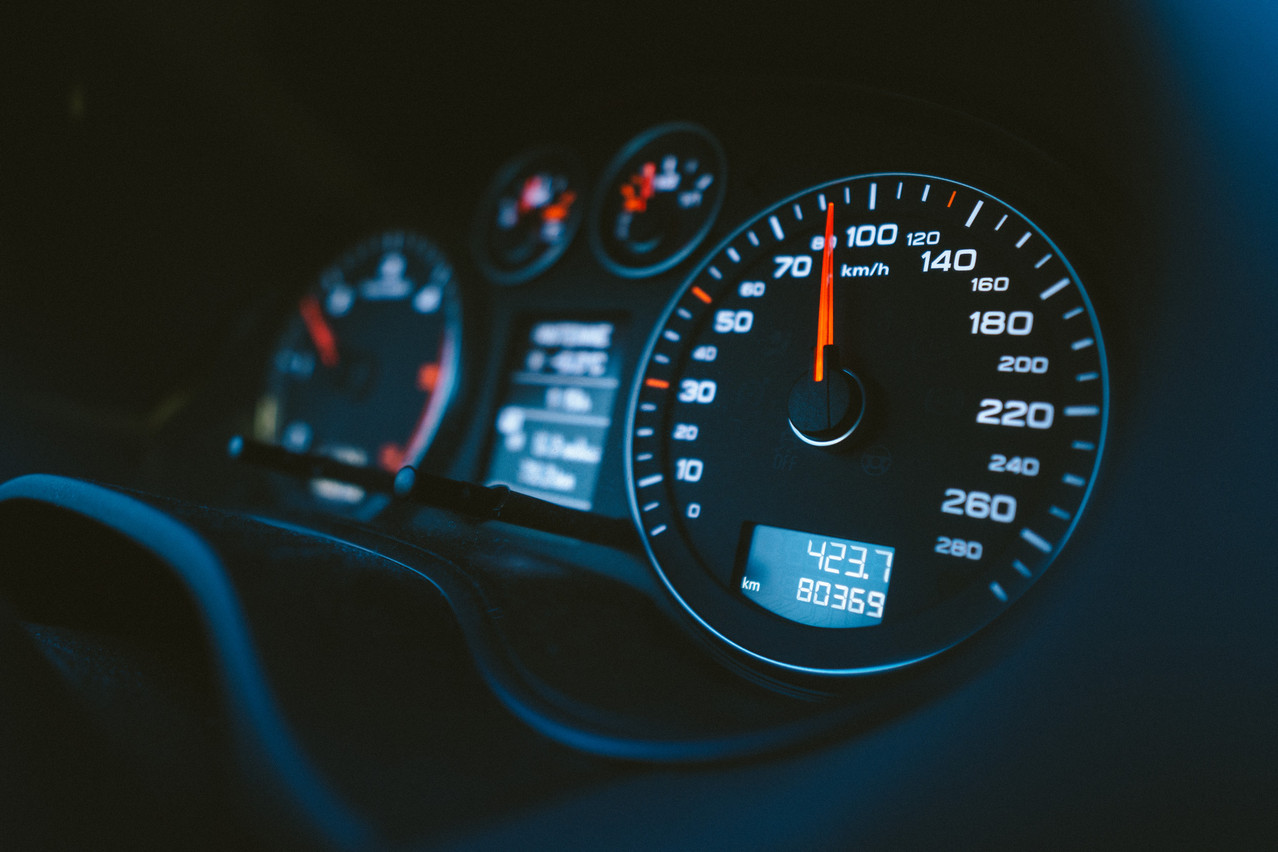
"My old car broke down and there were too many things to fix, so I decided to buy a 'new' second-hand car. I found a decent car at a small dealership in Esch, everything looked OK, but the guy was acting a bit odd, he was reluctant to let me drive the car and insisted on parking the car for me. I thought he was afraid I'd damage his other cars or something. Long story short, I bought the car and now I find out it has 6,000km on the clock and the parking sensors don't work... It says on the paper that he gave me the car at 74,000km, but in reality it had 80,000km on it, and the original online ad also said 74,000km." If 6.000km isn't really likely to fundamentally change the condition of the car, testimonials continue to pour in, on discussion forums, about German saloons that strangely regain a second youth after an engine wash and a trick on the odometer...
For years, buying a second-hand car was sometimes a lottery, especially when it came from abroad. Luxembourg, which is heavily dependent on imports, experienced this first-hand: it was only really possible to detect any tampering with the speedometer at the first roadworthiness test, once the transaction had already been concluded. This gap created a grey area where fraudsters could operate with complete peace of mind. But this regulatory blind spot is probably in its final years. Between the success of the Belgian Car-Pass model and the imminent arrival of an integrated European system, the entire architecture of automotive confidence is being turned upside down.
One in ten vehicles was tampered with, according to Car-Pass
In Belgium, the not-for-profit organisation Car-Pass has just issued its 15 millionth certificate, almost 20 years after its launch on 1December 2006. The contrast with the situation before is striking: in the past, 10% of second-hand Belgian vehicles were sold with an altered odometer. The requirement for regular odometer readings, consolidated in a national database, has helped to crush fraud, which fell to less than 1,500 manipulations in 2024. The document has been enriched over the years, incorporating the Euro standard, CO₂ emissions, maintenance history, electric range and soon, from 2026, the state of health of the batteries. Car-Pass has become a benchmark tool, cited by Luxembourg's automobile federations as early as 2016 as a model to follow, in a context where fraud represented up to €2.8 billion in annual losses for consumers in the region.
However, this successful national model is reaching a turning point. Car-Pass will continue to exist and provide services in Belgium, but it will no longer be shaping the future of the fight against fraud in Europe. That role now falls to Movehub, the interconnection platform piloted by the European Commission, designed to harmonise and secure the exchange of data between Member States. Movehub is not a central database: it is an infrastructure that enables national administrations to query, in real time, the mileage data collected by their counterparts. The dedicated module, Odocar, is capable of identifying inconsistencies between records, even when the vehicle has been driven in several countries. In its parliamentary response of 2024, Luxembourg also stressed the importance of this platform and pointed out that the country already makes its own data available via Eucaris, pending full European integration.
A major turning point for those buying outside our borders
The adoption, on 4 December 2025, of the European "roadworthiness" package will further accelerate this development. By harmonising registration certificates, modernising inspections and above all requiring the systematic exchange of mileage records, the Union is creating an architecture of cross-border trust that did not exist until now. The Minister for Mobility, 
Because even today, a buyer cannot obtain an official certificate from a German dealer or administration attesting to the mileage prior to purchase. There is no equivalent to Car-Pass in Germany, France or Italy, and no European public service that can check the mileage history of a foreign vehicle before the transaction. As Luxembourg points out, any inconsistencies can only be detected at the first roadworthiness test, once the car is already in the country. Movehub removes this obstacle. As soon as the Member States have connected their systems, an authorised player - control centre, administration, approved garage - will be able to automatically query the data available in the other countries and confirm the consistency of the mileage before the sale. This is not yet a direct consultation by the consumer, but it is a radical change: cross-border fraud becomes technically detectable, and therefore dissuasive.
For Luxembourg, which has long argued for a comprehensive European system, this integration represents an opportunity to secure a market where imports play a key role. The manipulation of mileage was based on opacity. This opacity is gradually disappearing. As Movehub and the European certificate become the norm, confidence will no longer depend on the country in which the vehicle has been serviced, but on the ability of national systems to communicate with each other. The tinkering around second-hand meters, long considered an inevitability, looks set to become a relic of the past.