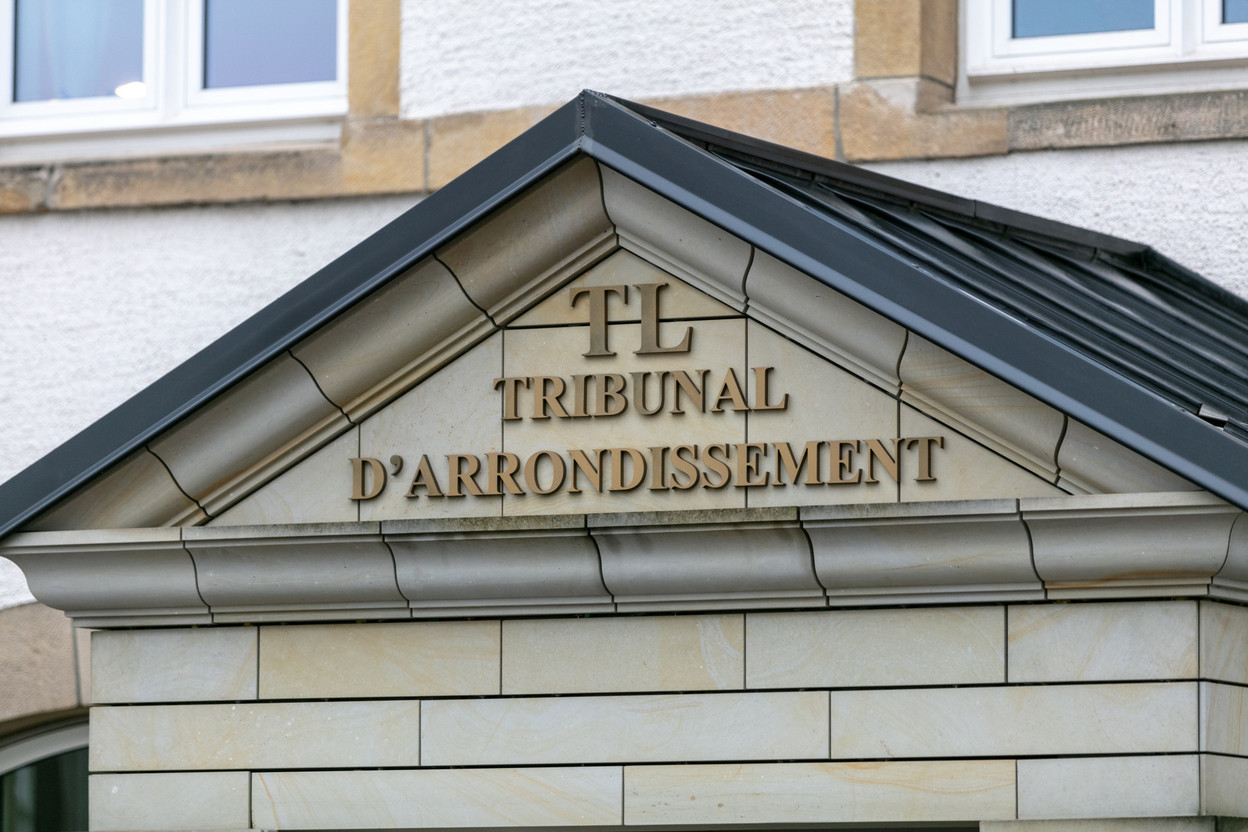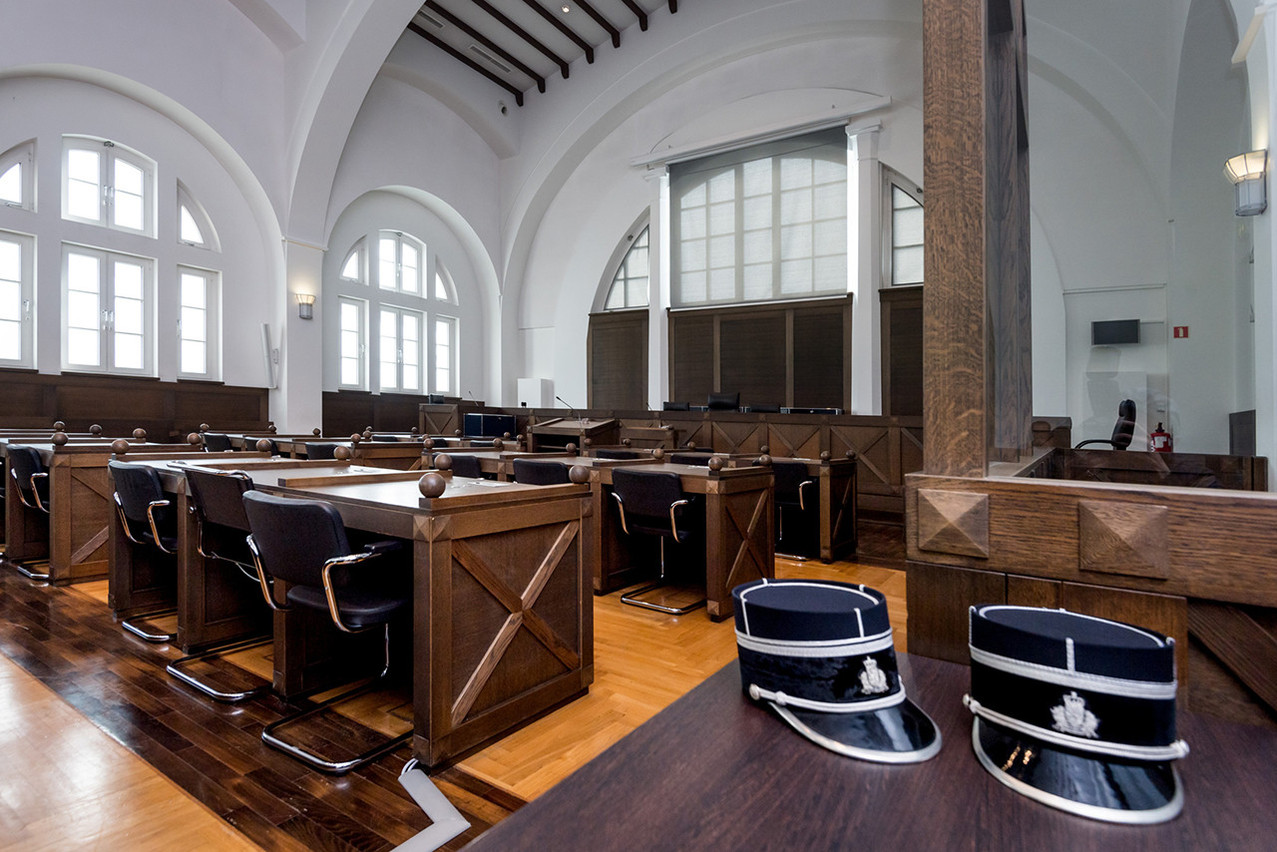
On Monday 17 November, the “Bommeleeër” case returns to the courts. The “bombers” case dates back to the period 1984–1986, when the country was hit by a wave of attacks. These attacks were attributed to the “Stay Behind” networks, clandestine networks based in Western Europe, coordinated by NATO during the Cold War with the mission of slowing down any Soviet advance.
16 days of hearings are scheduled until 11 December. Seven defendants are targeted: four former leaders of the Grand Ducal Gendarmerie— Guy Stebens, Pierre Reuland, Armand Schockweiler and Aloyse Harpes—, one former member of the Mobile Brigade— Marcel Weydert—, as well as two former public security officials— Paul Haan and Guillaume Büchler. They will all have to answer for giving false evidence during the first trial, which was held in 2013 and 2014. Charles Bourg, former head of the gendarmerie and first Director General of the Grand Ducal Police, who is also on trial, died on 30 July. The main trial against defendants Marc Scheer and Jos Wilmes, which was interrupted on 2 July 2014, will resume at the end of these proceedings.
In parallel, a week of plenary sessions at the Chamber of Deputies with four public sittings scheduled. To mark Children’s Rights Day, the 2025 report by the Ombudsman fir Kanner a Jugendlecher (OKaJu) will be presented and the “Zuch vun der Demokratie (Democracy Train)” will make a stop at the Chamber on Friday 21 November.
In committees, the examination of the 2026 budget continues. This week, on 17 November, the Conseil national des finances publiques (CNFP) will present its assessment of public finances, on the occasion of the draft budget for 2026 and the draft law on multiannual financial programming for the period 2025 to 2029, to MPs and then to the press. It will then be the turn of the House of Employees to do the same.
The European Parliament will also be working in committee this week. The political groups will be preparing for the plenary session from 24 to 27 November, when MEPs will debate how to respond to Chinese restrictions on the export of rare earths. They will examine and vote on a number of dossiers, including toy safety to protect children’s health, the protection of children and adolescents online, the EU budget for 2026 and the EU’s post-2024 strategy on the rights of people with disabilities. MEPs will also vote on a resolution on Hungary and violations of EU values in the country, on simplifying the information reporting requirements of the InvestEU programme, as well as on strengthening Europol’s capacities in the fight against migrant smuggling and human trafficking.
Monday 17 November
Justice. Opening before the judge of the 9thchamber of the tribunal d’arrondissement de Luxembourg sitting in criminal matters of the “Bommeleeër” trial.
Council of the European Union. Meeting of the General Affairs Council in Brussels. On the agenda: the Multiannual Financial Framework (MFF) 2028–2034 and relations with the United Kingdom.
Council of the European Union. 
Council of the European Union. Seventh meeting of the Accession Conference with Albania.
House of Representatives. On the occasion of the International Day of Children’s Rights on 20 November, Charel Schmit presents the 2025 annual report of the Ombudsman fir Kanner a Jugendlecher to all MEPs in the plenary chamber. OKaJu’s mission is to promote, safeguard and protect children’s rights in Luxembourg.
Tuesday 18 November
Government. The Minister for the Environment, Climate and Biodiversity, 
House of Representatives. Public session number 107. On the agenda: one hour of questions to the government, an interpellation on the issue of suicide in Luxembourg and an interpellation on the rights of indigenous peoples in the context of COP30. MPs will then vote on bills 8560 (electronic signature in legislative and regulatory matters) and 8566, a bill authorising the government to participate in the multiannual funding of support for audiovisual production to the tune of €180 million until 2029.
House of Deputies. Members of the National Education, Children and Youth Committee continue their examination of Bill 8587 introducing the “Alpha—zesumme wuessen” reform. This will enable parents to choose their child’s literacy language—either German or French—at the end of cycle 1, on the basis of a professional recommendation. On this occasion, MEPs will visit the Deich school in Dudelange, which took part in the pilot project.
Government. The National Council for Public Finance presents its opinion on the draft 2026 budget.
Wednesday 19 November
Chambre des députés. Public session number 108. On the agenda is a current affairs hour concerning the rental market and the difficulties faced by tenants, a motion concerning the establishment of a national rent commission and the introduction of a rent tax credit and two extended questions concerning language learning at school.
European Commission. Presentation of the defence, digital, savings and investment union and supplementary pensions packages.
European Court of Auditors. The ECA presents a special report on the European Commission’s support for the fight against hunger in sub-Saharan Africa. Between 2014 and 2020, the EU signed contracts worth €17 billion for anti-hunger initiatives worldwide, followed by a further €6.2 billion for the period 2021–2024. Almost half of this funding, more than €11 billion, has been allocated to sub-Saharan Africa. This financial commitment has made the Union one of the world’s largest donors in the fight against hunger.
Council of the European Union. 11the meeting of the EU-Tajikistan Cooperation Council.
Thursday 20 November
Council of the European Union. Meeting of the Foreign Affairs Council in Brussels chaired by the High Representative of the Union for Foreign Affairs and Security Policy, Kaja Kallas. On the agenda: the situation in Ukraine, the Middle East and Sudan.
House of Representatives. Public session number 109. On the agenda: the swearing-in of a new MP from the ADR political group, Michel Lemaire, who replaces 
Public session number 110 will provide an opportunity to debate the extension of out-of-hospital medical services, unemployment trends and the development of sports infrastructures. Bills 8606 (addition of the profession of genetic counsellor to the list of health professions), 8536 (update of the National Energy and Climate Plan), 8386 (renewal of the environmental and climate protection aid scheme) and 8565 (double taxation treaty with the Republic of Vietnam) will be put to the vote.
Professional organisation. The Chamber of Employees (CSL) presents its opinion on the draft budget.
European Court of Auditors. The ECA publishes a special report on the financial corrections made by the European Commission in the context of EU cohesion policy. This is implemented under shared management, which means that the Member States and the European Commission are jointly responsible for protecting the Union’s budget. They are obliged to make financial corrections where necessary. The aim is to exclude from EU funding any expenditure that contravenes the applicable legislation and to recover EU funds that have been paid out in error. Financial corrections are therefore an important tool for safeguarding the EU budget.
Friday 21 November
Chambre des députés. As part of the International Children’s Rights Day, 140 children from the Grand Duchy aged between 8 and 12 will take part in the eighth edition of the “Zuch vun der Demokratie” at the Chambre des députés in Krautmaart. In groups, they will discuss their rights with MPs. The thoughts of the young citizens and their concrete actions will be presented in the form of cardboard figurines that the pupils have prepared over the past few weeks.
Council of the European Union. EU-ASEAN Ministerial Meeting. On the agenda: deepening strategic cooperation between the EU and the Indo-Pacific region.