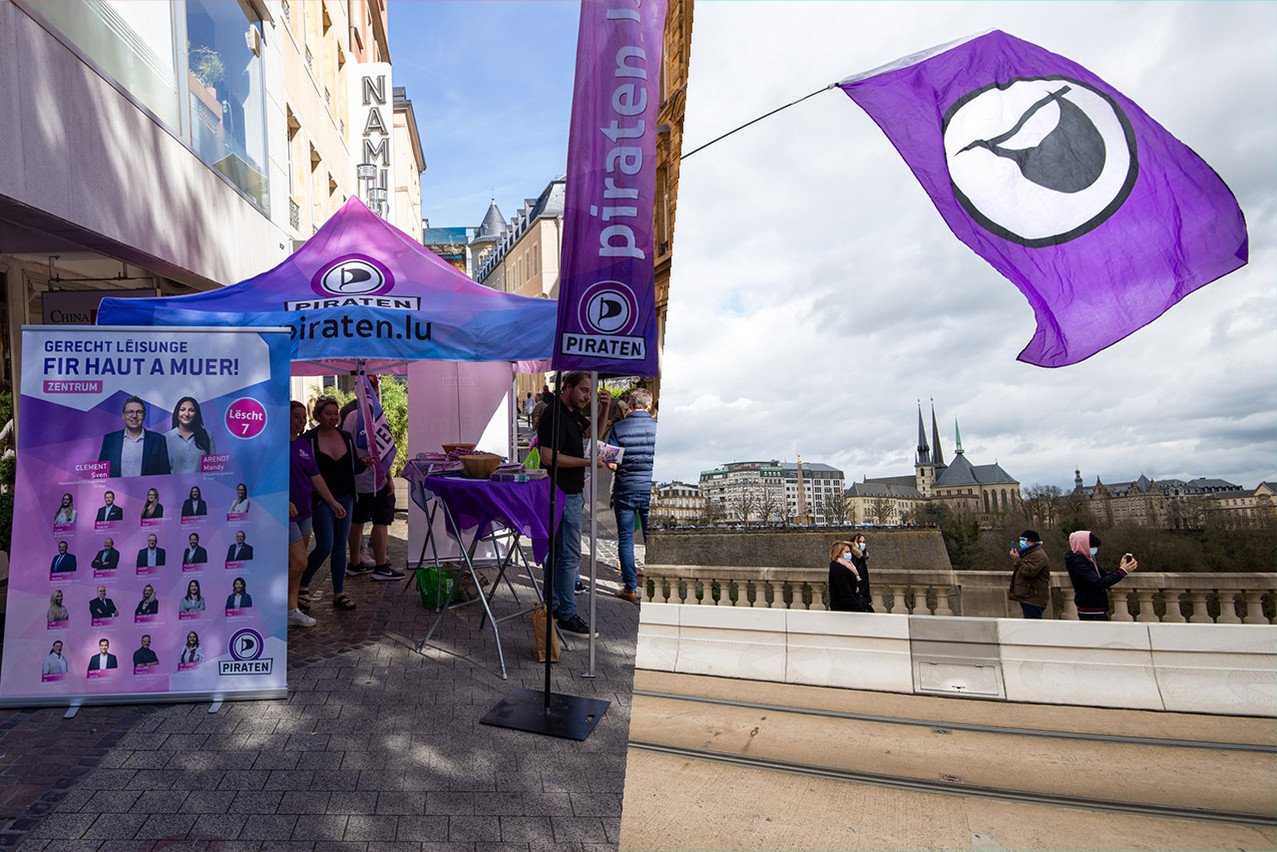
In a report presented on 4 February 2026, the Court of Audit states that, following a request from Luxembourg’s parliament in August 2024, it carried out an audit of the financial statements of the Piraten political sensitivity for the period 2018-2023. The audit covered both the regularity of the sensitivity's accounts and the control arrangements put in place by the parliament for the allocation and use of financial aid allocated to political groups and sensitivities.
The Court notes that, at this stage, there is no specific legislative or regulatory framework governing the allocation, use and control of this aid. Funding is mainly allocated on a lump-sum basis, with no obligation for the groups and political parties to draw up budgets or keep accounts that comply with binding rules. As a result, there is no systematic control of the legality and regularity of the use of public funds.
Shortcomings noted in the accounting and expenditure
With specific regard to Piraten sensitivity, the Court of Audit notes several shortcomings in the accounting. The accounts and entries were drawn up retrospectively, after the audit was announced in 2024. Out of a sample of entries representing €632,909.89 over the period audited, supporting documents were missing for €118,848.60, or 18.78% of the total.
The Court also highlights the use of a single accounting licence used by both the sensitivity and the Piraten political party, a situation likely to lead to confusion between the two entities and to undermine the transparency of the accounts. More broadly, financial management and internal organisation are judged to be inadequate in terms of internal control, separation of responsibilities and traceability of transactions.
The report mentions direct links between certain service providers and members of the sensitivity. Between 2019 and 2023, four service providers, including one established abroad, linked to two MEPs, provided services for a cumulative amount of €34,606.85, without competitive tendering or documentation of comparable offers. The Court recommends the introduction of formalised procedures to prevent any risk of conflict of interest.
Irregularities were also found in the reimbursement of expenses advanced by one member, totalling €140,860.81 over the period, with incomplete or missing supporting documents in a third of cases and the use of a private credit card. The Court recommends the exclusive use of business cards.
Finally, the report mentions shortcomings in the justification of communication expenses, business travel with no demonstrated link to parliamentary activity, insufficiently documented catering expenses and the granting of financial loans to third parties, practices considered not to be in line with the use of public funds.
In view of all these findings, the Court of Audit makes numerous recommendations, both to Luxembourg’s parliament and to the Piraten sensitivity, aimed at establishing a clear regulatory framework, strengthening controls and improving transparency and the sound management of public funds.