“The shareholders passed all resolutions in accordance with the recommendations of the SES board of directors,” says the SES in a statement dated 4 April 2025, “including the company’s 2024 annual accounts and the proposed annual dividend of €0.50 per class A share (€0.20 per class B share). This total amount includes the interim dividend of €0.25 per A share (€0.10 per B share) already paid to shareholders on 17 October 2024. The final dividend of €0.25 per A share (€0.10 per B share) will be paid to shareholders on 17 April 2025.”
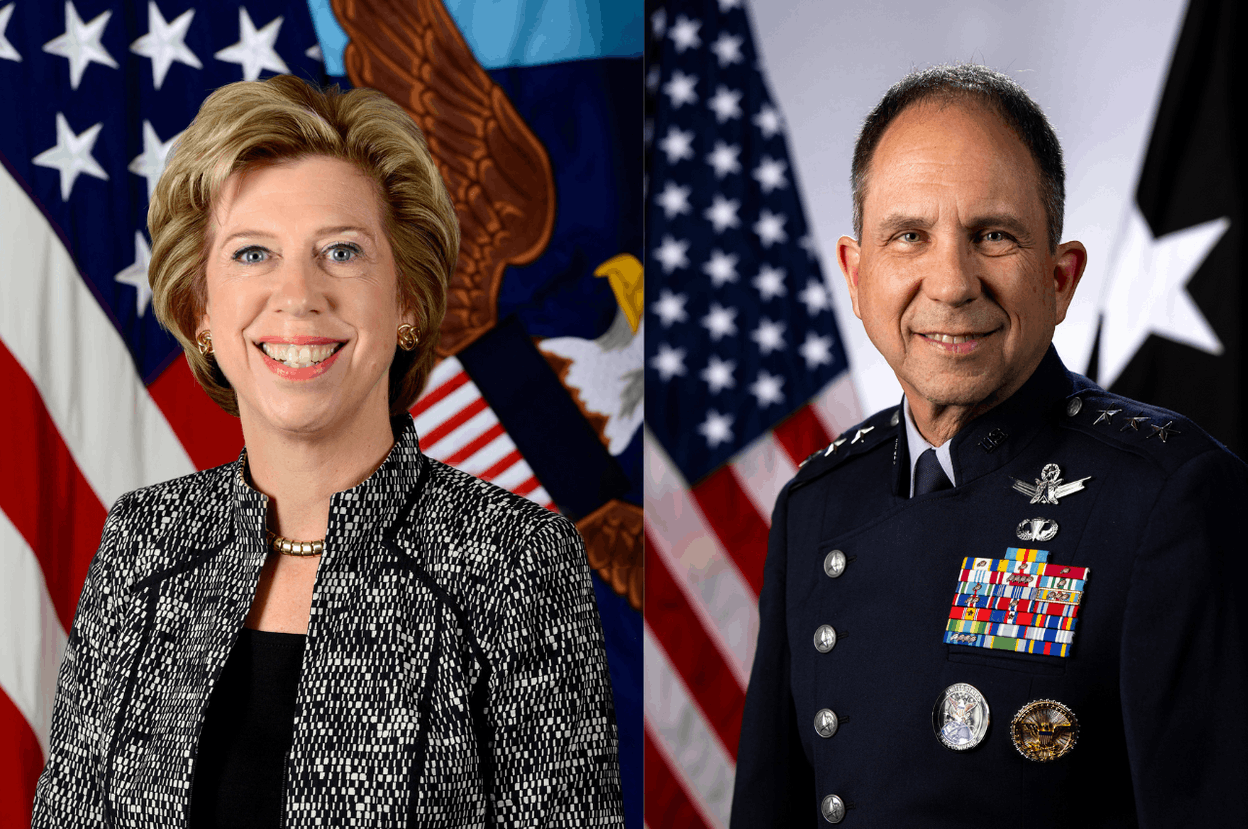
As a sign of its willingness to ease tensions with its investors, who want more returns on their investments, the general meeting approved the appointments of Ellen Lord and John Shaw, as well as the non-binding agenda item submitted by Atlas Infrastructure Partners concerning returns of capital.
To this double appointed will be added, just before or just after the 2026 annual general meeting, the recruitment of a new director to add “further expertise” in capital markets, the company has said. At that time, the board will be reduced from 11 to 9 members.
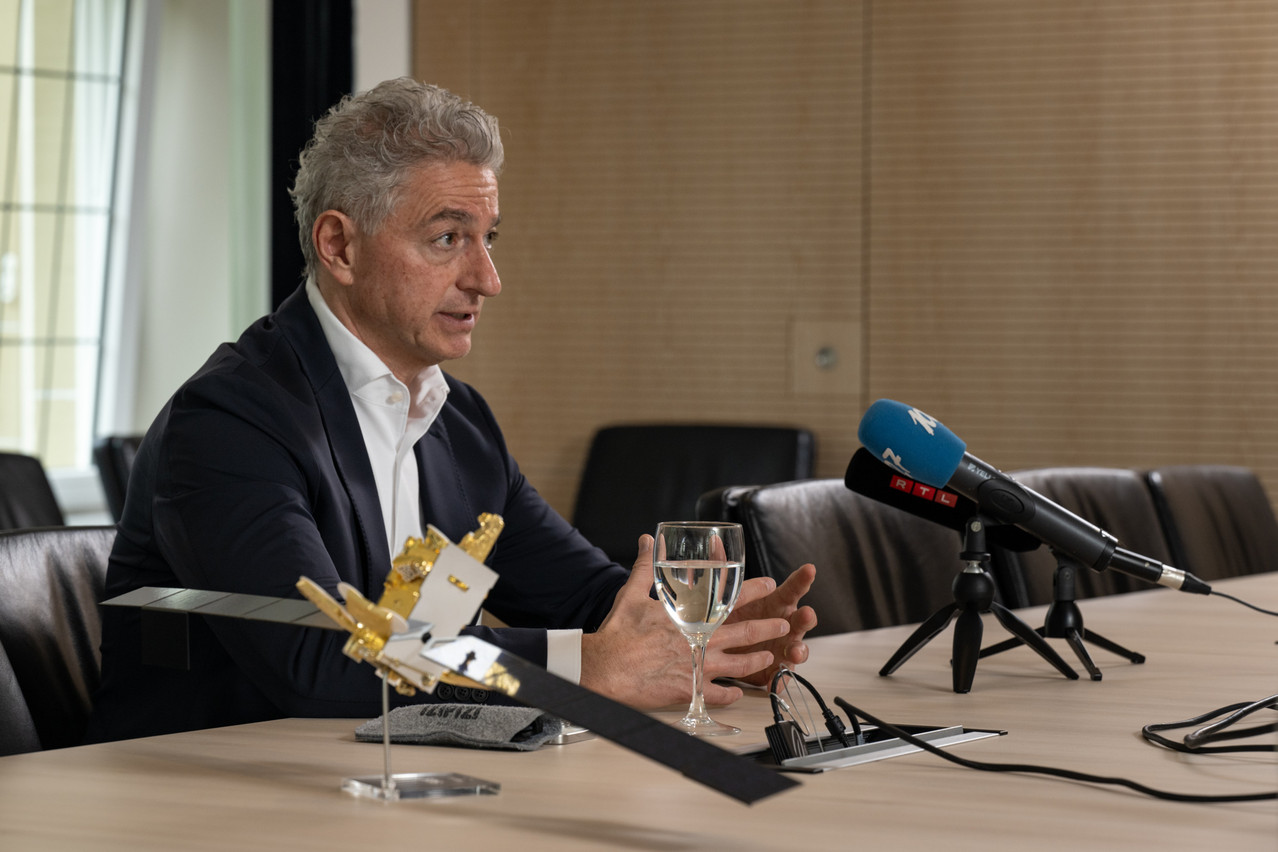
“The outcome of the annual general meeting reflects SES’s continued commitment to a constructive dialogue with its shareholders, ensuring a convergence of views and confidence in the company’s long-term strategy," said SES CEO Adel Al-Saleh. “We greatly appreciate this constructive collaboration and have benefited from our discussions with our shareholders. We welcome Ellen Lord and John Shaw to our board of directors as we continue SES’s successful trajectory.”

The SES has appointed two new directors: Ellen Lord, former undersecretary of defense; and John Shaw, former deputy commander of the US Space Force. Photo: US Defense/US Space Force/Montage: Maison Moderne
Shareholders also re-elected Peter van Bommel, Fabienne Bozet and Françoise Thoma as directors for further three-year terms. The board then elected Frank Esser as chair for a one-year term, and Anne-Catherine Ries and Peter van Bommel as vice chairs, also for one-year terms.
The new board
—Frank Esser, chair of the board
—Peter van Bommel, vice chair of the board, chair of the Audit and Risk Committee
—Anne-Catherine Ries, vice chair of the board, chair of the Nomination and Governance Committee
—Fabienne Bozet, director, member of the audit and risk committee
—Carlo Fassbinder, director, member of the audit and risk committee
—Ramu Potarazu, director, member of the remuneration committee
—Kaj-Erik Relander, director, member of the audit and risk committee and the nomination and governance committee
—Jacques Thill, director, member of the nomination and governance committee.
—Françoise Thoma, director, chair of the remuneration committee and member of the audit and risk committee
—Katrin Wehr-Seiter, director, member of the audit and risk committee and the remuneration committee.
It should be noted that Jennifer Byrne stepped down as a director on 17 October 2024.
A renewed management committee around Adel Al-Saleh
Since the arrival of Adel Al-Saleh at the head of SES on 1 February 2024, the executive committee--also known as the senior leadership team (SLT)--has undergone a number of changes, creating a stronger leadership team with complementary international profiles. This committee is responsible for the day-to-day management of the group, developing policies and strategies to be submitted to the board of directors and implementing its decisions. Coordinated by the CEO, its members report directly to him.
Here is the current composition of the SLT, as presented by SES:
—Adel Al-Saleh, chief executive officer (CEO), head of the group since February 2024
—Sandeep Jalan, chief financial officer (CFO), present since May 2020
—John-Paul Hemingway, chief commercial officer (CCO), initially chief strategy officer in January 2022 before progressing to his current role
—Xavier Bertrán, chief product and innovation Officer (CP&IO), who arrived in April 2024 to drive innovation and the product offering
—Veronika Ivanovic, chief people officer, responsible for human resources since September 2024
—Fabien Loeffler, chief transformation officer (CTRO), appointed in September 2024, with responsibility for leading the group’s transformation projects
—Greg Orton, chief M&A and development officer, appointed in April 2024, with responsibility for mergers, acquisitions and strategic development
—Thai Rubin, chief legal officer (CLO), present since July 2020
—Milton Torres, chief technology officer (CTO), formerly senior vice president of information, technology and security, now head of group technology.
—Nihar Shah, chief strategy officer as of 1 January 2025, which already heralds a further change in the composition of the management board
To fully understand the structure of SES
SES has two types of shares: A shares and B shares. As of 31 December 2024, there were 371.4m A shares and 185.7m B shares, with a total subscribed capital of €696.5m.
A shares are mainly held by private and institutional investors. They are represented on the stock exchange by fiduciary depositary receipts (FDRs) listed in Luxembourg and Paris. Each A share entitles the holder to one vote and full economic rights.
B shares are held by the State of Luxembourg through BCEE and SNCI. Each B share carries one vote but only 40% of the economic rights of an A share. They are not listed on the stock exchange.
The ratio between A and B shares must be maintained at 2:1. In total, A shares represent approximately 66.67% of the voting rights and 83.33% of the economic interest, while B shares represent approximately 33.33% of the voting rights and 16.67% of the economic interest.
This article was originally published in French.