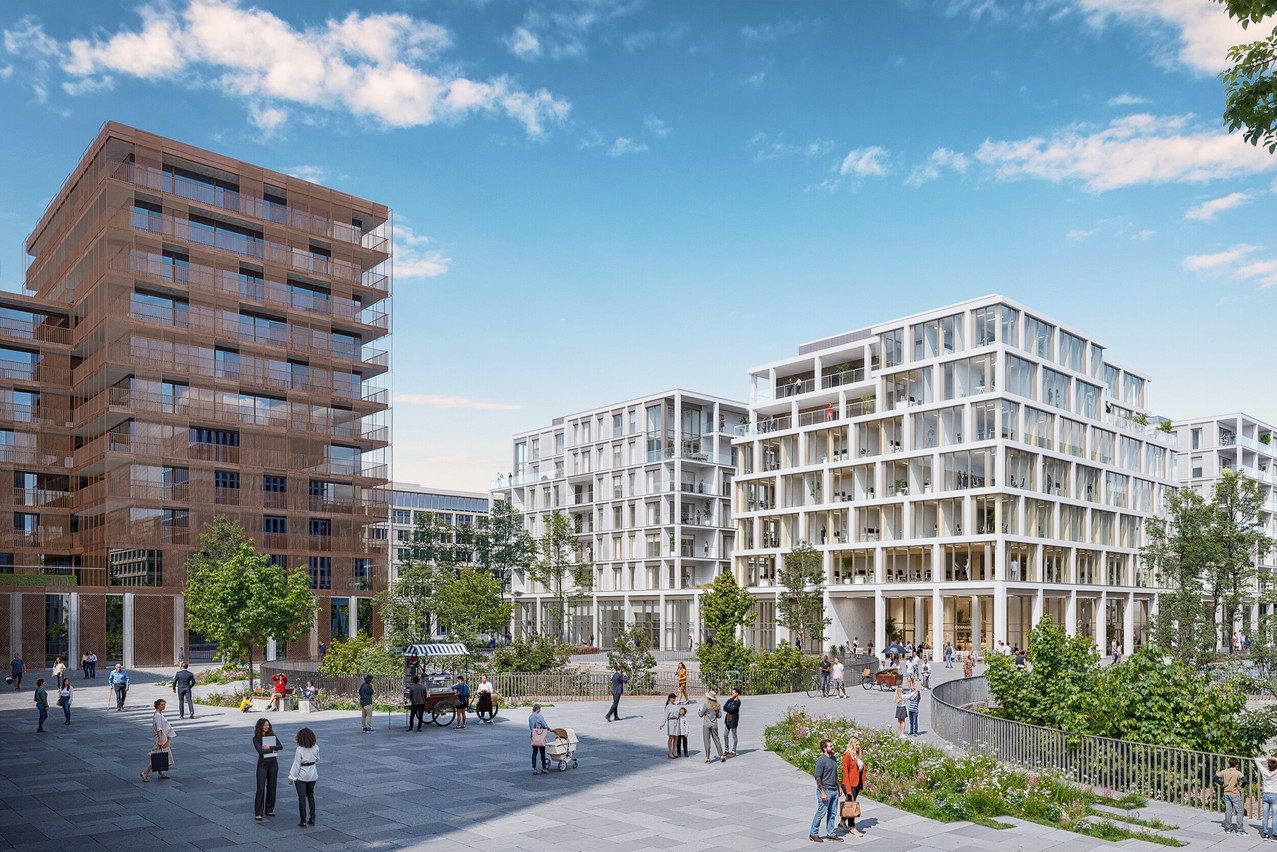
With less than a year to go before delivery, 50% of the flats in the Roots development have been sold. Does this level reflect your initial targets, or does it indicate a difficulty in selling new-build properties in Belval?

This is precisely what we’re seeing every week at Roots: interest is growing as the building takes shape, the layout becomes clearer and the handover schedule becomes more definite. The completion of the structural work marks an important milestone, enabling prospective buyers to visualise their future homes much more clearly.
The government’s new measures to support property purchases and investment are also helping to boost this sales window. Our priority is therefore to support this new phase, with a property that is now visible, open to view and much easier for buyers to understand.
You are promising guaranteed delivery by summer 2027. What does this guarantee entail in legal terms, and what compensation is provided for buyers in the event of a delay?

At this stage, there is nothing to suggest that this timetable is in doubt.

At this stage, there is nothing to suggest that this timetable will be affected. The first handover is scheduled for summer 2027, with a schedule determined in line with the deeds of sale, in consultation with the buyers and taking into account operational progress.
From a contractual perspective, notarised deeds set out the applicable deadlines and any compensation arrangements provided for in the event of delays, depending on the specific types of transaction and circumstances involved. This is therefore not an isolated commitment to provide updates, but a timetable based on the actual progress of the works to date and the contractual framework specific to each acquisition.
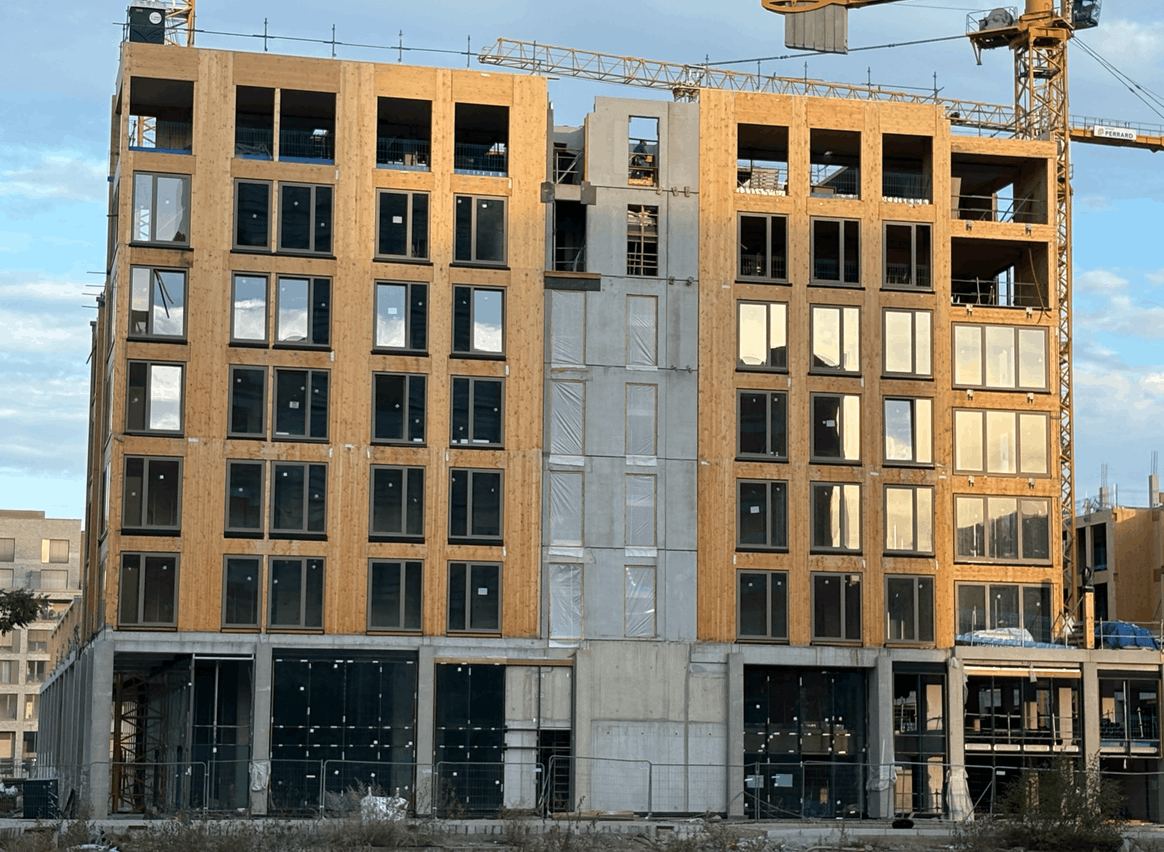
The most telling example is undoubtedly the timber structure itself. Seen from the outside, it may resemble a perfectly assembled ‘large matchbox’, but it is in fact the exact opposite of a flimsy structure: the timber components are dimensioned to withstand fire. (Photo: BPI)
The Government has acquired a block of flats within Roots. How many flats are involved, at what price, and will they be offered as affordable rental accommodation?
S.L. – “The State has indeed acquired a block of 30 flats within the Roots development. These flats are intended to be offered as affordable rental accommodation upon completion of the development. The SNHBM is overseeing the project and will subsequently be responsible for letting the properties and their day-to-day management. The letting terms will be governed by its own framework.”
This acquisition is seen as a sign of confidence in the quality of the project, its environmental ambitions and the ability of the partners – BPI Real Estate, Unibra, CLE and the CFE Group – to ensure its successful delivery.
The marketing of office space operates on a different timescale to that of residential property.

The 5,000m² of office space is still available. Does this lack of tenants call into question the financial viability of the project or the relevance of its commercial component?
S.L. – “Not at all. The marketing of office space follows a different timeline to that of residential property. Commercial tenants generally make their decisions once the project is sufficiently advanced for them to assess the layout, access, facilities and tenancy conditions in practical terms. Roots comes onto the scene at precisely this stage. Serious discussions are underway with stakeholders who place great importance on the quality of the location, the immediate proximity to the station and the university, as well as the ‘walkable’ concept. Belval is now regarded as a mature urban neighbourhood, combining housing, businesses, education, research, culture and leisure.
The building’s low-carbon ambitions and the certifications it is aiming for are also key selling points for companies that are mindful of their ESG commitments and the quality of the working environment and wellbeing they offer their staff.
This appeal is, in fact, confirmed by a survey carried out by Agora amongst local residents and published last July: 94% of those surveyed regard Belval as a pleasant place to live and work, and 61% say they would choose Belval as a place to work if they had the opportunity, ahead of Luxembourg City (24%) and the Cloche d’Or (5%). These results reinforce the value of a commercial offering integrated into a mixed-use, vibrant neighbourhood that its residents have already largely embraced.
The retail and leisure sector is therefore not merely an afterthought: it contributes to the diversity and vibrancy that Central Square is aiming for, and is an integral part of Belval’s transformation into a genuine part of the city.
Roots boasts a timber structure and several environmental certifications. What additional cost does this entail, and what measurable reduction in running costs can future residents actually expect?
Saint Lucia – “Roots is based on design choices made at a very early stage, with a well-defined roadmap: a hybrid timber structure, prefabrication, high-quality building envelope, natural light, thermal comfort and the sensible use of materials. The aim is not simply to accumulate certifications, but to design a sustainable, high-performing building that is a pleasure to live in.
Roots has been awarded LCBI Excellence certification right from the design stage, at the highest level of the standard – a first in Luxembourg.

Timber construction involves specific technical choices, but these must be assessed within a broader context: reduced construction time, a lower carbon footprint, high-quality construction, occupant comfort and the pursuit of long-term energy efficiency. Roots has achieved LCBI Excellence certification right from the design stage, at the highest level of the standard – a first in Luxembourg. This certification enables the project’s environmental ambition to be objectively assessed and made measurable.
As regards running costs, it would be premature to announce a flat-rate reduction before the building is actually in use, as these will also depend on individual usage patterns. However, every consideration has been given to promoting reduced energy consumption and offering buyers lasting value: a comfortable, energy-efficient home that meets the standards of tomorrow.
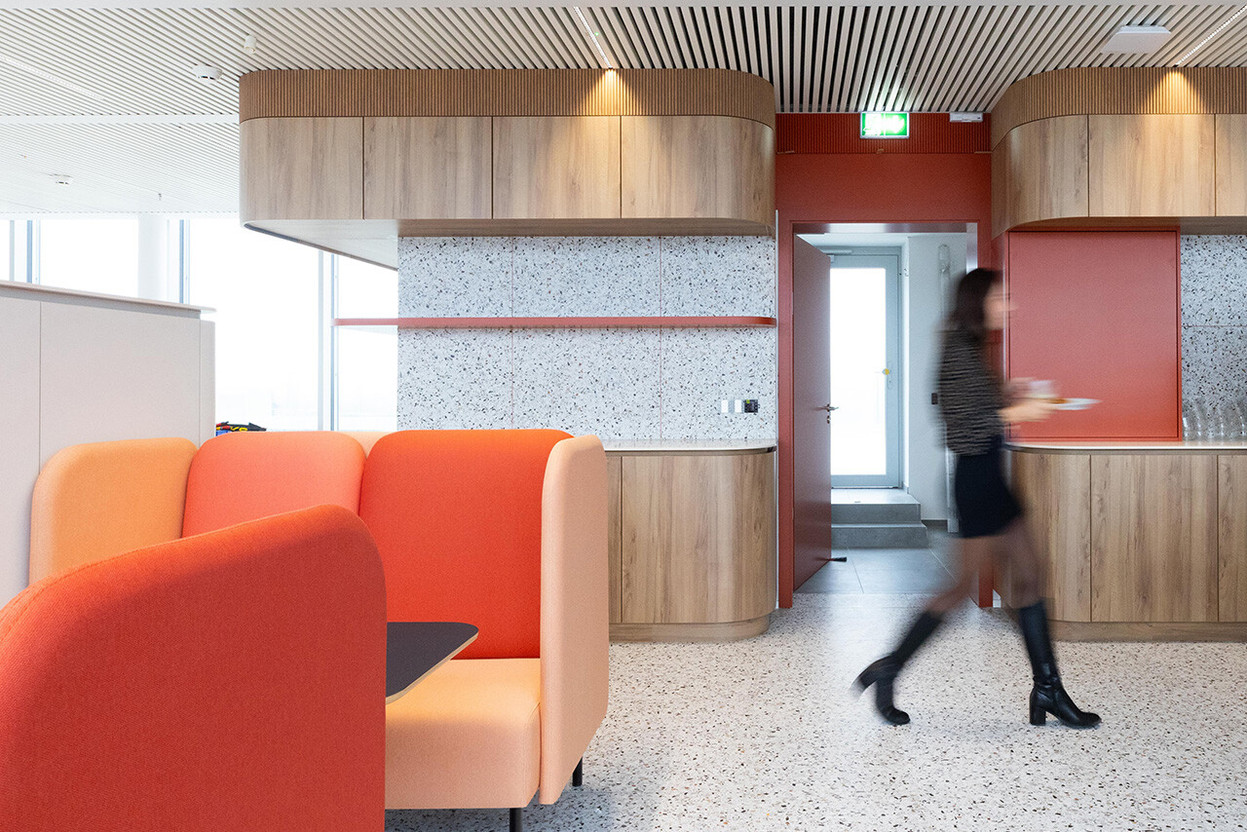
Following National Housing Week, we will open the show flat to visitors in November 2026.

Any details, anecdotes or exclusive news about this project?
G.P. – “Several! One very concrete development is coming up soon: following National Housing Week, we will be opening the show flat to visitors from November 2026 onwards.
And, in our view, the most telling detail is undoubtedly the timber structure itself. Seen from the outside, it may resemble a large, perfectly assembled matchbox, but it is in fact the very opposite of a fragile structure: the timber components are dimensioned to withstand fire. In the event of a fire, the surface chars and forms a protective layer that slows the spread of the fire, whilst the core of the structure retains its load-bearing capacity for the duration required by safety standards, in exactly the same way as a concrete structure.
In ESG terms, the impact is also very tangible: thanks to the extensive use of timber in the superstructure, Roots stores the equivalent of 159kg of CO₂ per square metre – a volume comparable to the carbon sequestered by a 22-hectare forest over 30 years. In other words, the building does not merely reduce its environmental footprint; it also helps to store carbon within its structure.”