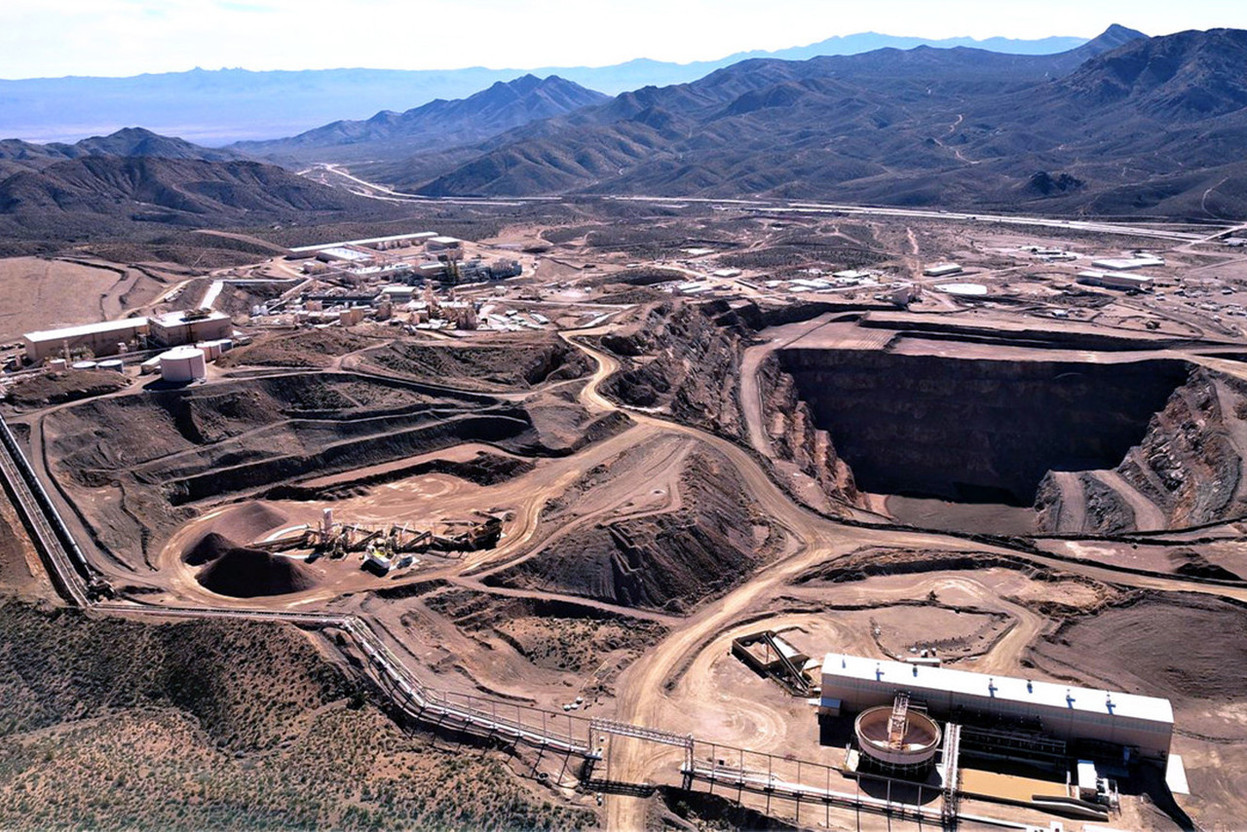
Just before the Halloween and All Saints’ Day weekend, the Canadian government gave life, on the sidelines of a G7 meeting in Toronto, to a set of investments and partnerships aimed at securing access to critical minerals for its domestic industries. One of these initiatives caught the eye: the Matawinie graphite mine project in Quebec, backed by offtake agreements involving Panasonic (Japan) and trader Traxys (Luxembourg). In other words, Canada has called on the services not only of industrialists, but also of a commodities trader to guarantee the future sale of the mine’s production. This choice to integrate a commercial intermediary at the heart of a state strategic plan underlines Ottawa’s pragmatic approach: to ensure outlets and financing for new mining projects from the outset, in order to diversify sources of supply and reduce dependence on China for key elements (such as the graphite needed for batteries).
Traxys, in this case, is one of the major players in metals and minerals trading worldwide. Based in Luxembourg, the company, which was founded in 2003, has annual sales in excess of 10 billion dollars and operates across the entire raw materials supply chain - from procurement to financing and distribution. Traxys specialises in strategic metals and rare earths, acting as an interface between mining producers and industrial consumers.
Traxys’ involvement in the Canadian project is not anecdotal: by committing to buy part of Quebec’s graphite production, this trader provides the miner with a reliable customer and helps secure the project’s viability. This is a classic pattern in the mining sector, where offtake contracts with traders or major customers help to reassure investors and complete the financing of new mines. Canada, via its federal government and private partners, has therefore chosen from the outset to rely on market forces by combining public investment, agreements with industrialists (such as Panasonic) and agreements with a global trader (Traxys). The approach is intended to be both offensive and collaborative: the Canadian government is even going so far as to become a buyer itself of part of future production, an unusual practice in Europe, in order to guarantee a market for these strategic minerals.
47 labelled projects in Europe
Opposite, Since 2023, the European Union has had a very proactive critical raw materials strategy on paper - symbolised by the Critical Raw Materials Act (CRMA) - but with significantly different methods. Brussels has defined quantified targets for increasing internal capacity: by 2030, the EU aims to ensure that 10% of its extraction, 40% of its refining and 25% of its recycling of strategic raw materials takes place on its soil.
To achieve this, the European Commission has labelled 47 strategic projects in Europe (mines, processing plants, recycling, etc.) and is promising increased financial and regulatory support. However, traders are not given any special place in this vision. Priority is given to boosting European industrial production and to geographic diversification through partnerships between States. For example, the EU is concluding political agreements with supplier countries (Canada, Australia, Chile, Namibia, etc.), speeding up the issuing of mining permits in Europe and mobilising public funds. But it has no plans to become directly involved in mineral purchase contracts or to cooperate openly with trading houses. At best, Brussels indicates that it will help new projects to find customers by facilitating “contacts with the relevant buyers”, a sign that it is counting on European manufacturers to buy production. The involvement of specialist intermediaries such as Traxys is never mentioned in official press releases.
This difference in approach reflects divergent philosophies. On the Canadian side (and more broadly on the North American side), there is no hesitation in involving all the players in the value chain, both public and private, in order to move quickly. The Canadian federal government is investing massively and multiplying pragmatic agreements with industrial or financial partners ready to commit immediately.
Washington is following a similar path by directly supporting its critical supplies, including via strategic stockpiles and public-private consortia. “The United States and Canada are investing massively in their own supply chains and are trying to secure their resources by signing bilateral agreements with producer countries,” sums up one analysis, calling on Europe not to fall behind.
In contrast, the European Union is favouring an institutional and long-term approach. It is banking on the creation of a favourable framework (accelerated permits, financing, diplomatic alliances) so that, in the end, the private sector itself secures the flow of materials. This stance is partly explained by the nature of the EU - a standard-setting power with more limited direct investment resources than a nation state - and by the desire to let the market operate within the safeguards set (environmental standards, traceability requirements, etc.).).
Industrialists still use traders
It is true that commodity traders sometimes get a bad press in Europe. Their involvement is accompanied by concerns about the transparency of supplies and ethics. Traxys, for example, was the subject of an investigation by the NGO Global Witness in 2025, accusing it of buying coltan from conflict zones in the Democratic Republic of Congo and selling it via Rwanda. In response to the Global Witness investigation, Traxys denied that its coltan came from Rubaya and was helping to fund the M23, saying it was “firmly committed to working only with responsible supply chains when sourcing minerals from conflict-affected and high-risk areas”. It also provided details of its due diligence measures, which include steps such as mine visits, plausibility checks, frequent communication with African Panther and knowledge of African Panther’s suppliers.
This kind of revelation is enough to chill authorities anxious to build “clean” and responsible supply chains. The European Union has introduced strict due diligence rules for importers of minerals from high-risk areas, and its discourse emphasises ESG (environmental, social and governance) criteria. In this context, publicly including a trader in the strategy could be seen as contradictory to the emphasis placed on responsibility. It is therefore easy to understand why Brussels remains cautious, if not reluctant, to be seen to be involved with these private intermediaries.
However, the de facto exclusion of traders from the European plan raises questions. In practice, these players remain essential in the field. They are often the ones who physically transport rare metals from distant mines to factories, manage stocks and market fluctuations, and sometimes finance or pre-finance mining projects in exchange for future supplies. Ignoring their role in the chain means risking strategic blind spots. To secure their needs in lithium, cobalt or rare earths, European manufacturers will in any case continue to deal with traders or subsidiaries of major mining groups - whether via direct contracts or spot markets - as long as domestic supply remains insufficient. We can already see this: some European battery and magnet producers have signed contracts with foreign suppliers, and many of these transactions are facilitated by commercial intermediaries. In other words, the market is finding its channels, with or without official blessing.
Ultimately, the gap between the two approaches calls into question Europe’s ability to ensure its mineral sovereignty with public power and major industrial groups alone, without explicitly mobilising raw material brokers. The Canadian model suggests that close cooperation between government, industry and traders can speed up the establishment of secure supply chains. Europe, on the other hand, is playing a more institutional game, banking on the long term and rigorous supervision. But at a time when the race for metals is intensifying, would it not be wise for the EU to review its game and include these intermediaries in the solution, while subjecting them to its ethical requirements? Because when it comes to critical metals, efficiency and responsibility must go hand in hand - and every link, including trading, can help to strengthen the Old Continent’s supply chain.