Finland has often been cited as an example in European debates on data governance. As of 2019, Helsinki has created Findata, a centralised authority responsible for issuing access authorisations for health and social data. This one-stop shop, the first of its kind in Europe, has made it possible to simplify and secure the secondary use of sensitive data, based on a technical infrastructure that prohibits any extraction and guarantees the protection of citizens. The Finnish experience was so convincing that its legislation served as a model for the European regulation on the European Health Data Space (EHDS).
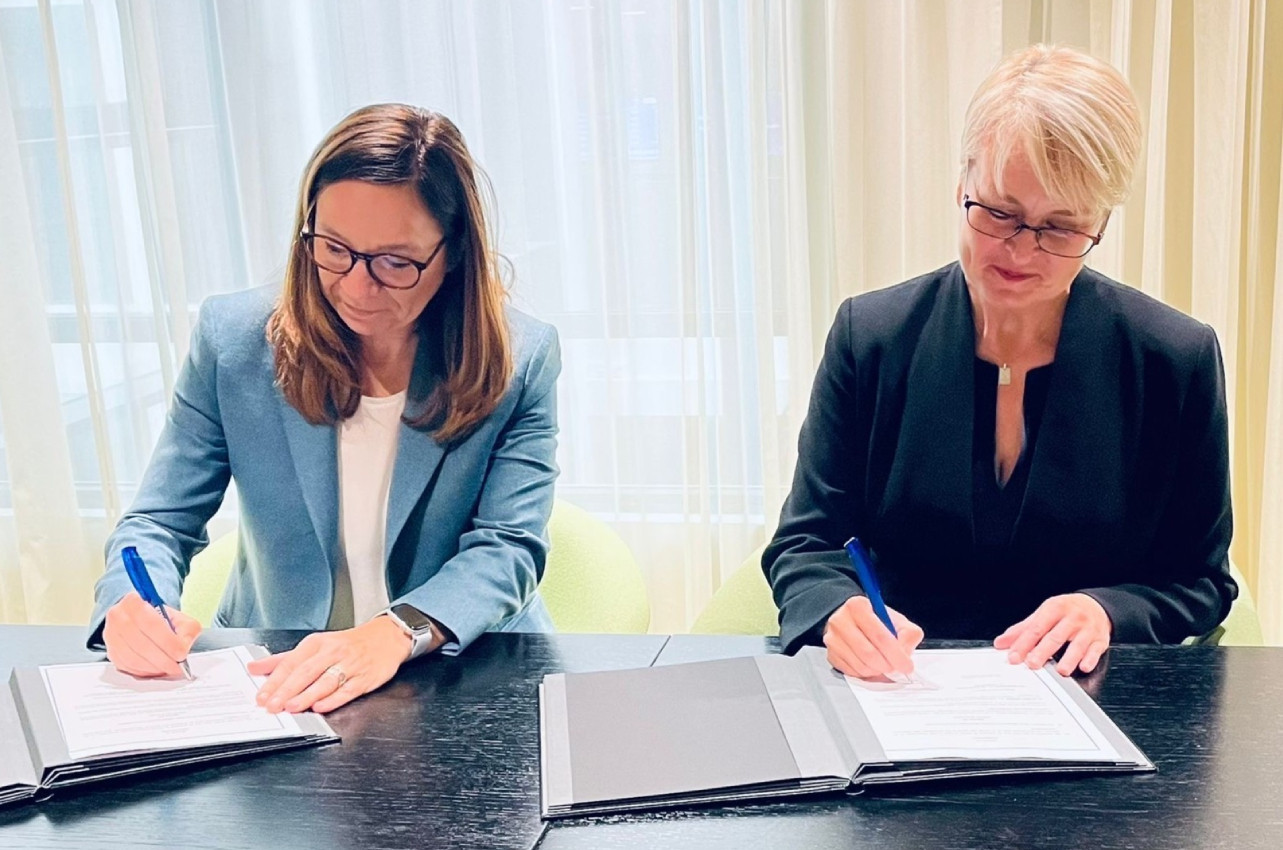
Six years later, Findata has chosen to share this know-how with Luxembourg. On 23 September, a memorandum of understanding was signed between the Luxembourg ministry for digitalisation and the Finnish authority. The aim is to pool skills and develop joint projects in data governance and artificial intelligence over a two-year period. For Luxembourg, which has set itself the goal of becoming a European data hub, this partnership will reinforce a strategy centred on the establishment of a national authority for centralised access, the Luxembourg Data Authority, which is set to play a key role in the application of new European regulations.
The alliance between the two countries appears to complement each other. Finland brings proven expertise, based on several thousand requests processed by Findata, while Luxembourg highlights its institutional framework, its proximity to the European institutions and its desire to offer a one-stop shop for access to reliable, high-quality data. Areas of cooperation include in particular the reuse of pseudonymised data in secure environments and experimentation within regulatory sandboxes dedicated to AI.
Beyond the technical aspect, the two partners display a common objective: to promote a culture of responsible innovation, improve transparency and strengthen citizens' confidence in the secondary use of public data. This convergence illustrates how two small states, through agility and cooperation, intend to carry more weight in the construction of the European data market.
However, it remains to be seen whether this cooperation will be able to go beyond the announcement effect. The creation of centralised authorities and "one-stop shops" is a strong trend in Europe, but it often comes up against problems of coordination, cumbersome regulations and a lack of concrete projects. For Luxembourg, the challenge will be to transform the ambition to become a European hub into tangible results for research and businesses, beyond the political rhetoric. As for Finland, while its model has proved its worth, it now needs to prove that it can be replicated elsewhere without losing effectiveness or confidence. The alliance between the two countries therefore looks promising, but its relevance will be measured in its ability to generate real use cases rather than piling up structures.
This article was originally published in French.