
* At the beginning of 2023, the editors of Paperjam isolated ten themes from the Frieden-Bettel government's coalition programme. After a year spent taking stock of government action, here is the second phase of the Polit-Radar.
1. Faced with demographics, is the sustainability of the pension system simply impossible?
The Gordian knot of the age pyramid
While the issue of pensions was largely absent from the last election campaign, a form of consensus already existed among the political parties, who agreed that this issue was more likely to be fought than voted for! Today, the government is faced with a statistical wall and, if the situation remained as it is, the system would be in deficit. According to the Inspectorate General of Social Security (IGSS), revenue would no longer cover expenditure from 2026, the reserve of the general scheme would be exhausted in 2045 and there would be more retired people than working people in 2070. The Luxembourg system, as in most European countries, is based on demographic data typical of the post-war period. In other words, a high birth rate and an average life expectancy of between 60 and 65 years, compared with 81.7 years in 2024 according to Eurostat. The pyramid has thus been inverted and maternity wards are emptying out, while retirement homes are filling up.
To offset such an imbalance, there is no miracle recipe but three levers to pull: boost births, encourage immigration or robotise society. But boosting the birth rate will be difficult in a new social normality where fewer children are being born and which is imposed on immigrants whose behaviour tends to be aligned with the local population. As for the path of robotisation, it raises many societal questions about the replacement of humans.
Until the government's family policy - which aims to give children back space in families by helping parents combine family and private life - bears fruit, the pension scheme can only be balanced via two variables: revenue and expenditure. Which raises another question: how long will it be possible to guarantee the system's level of benefits?
Working population and number of pensions in thousands
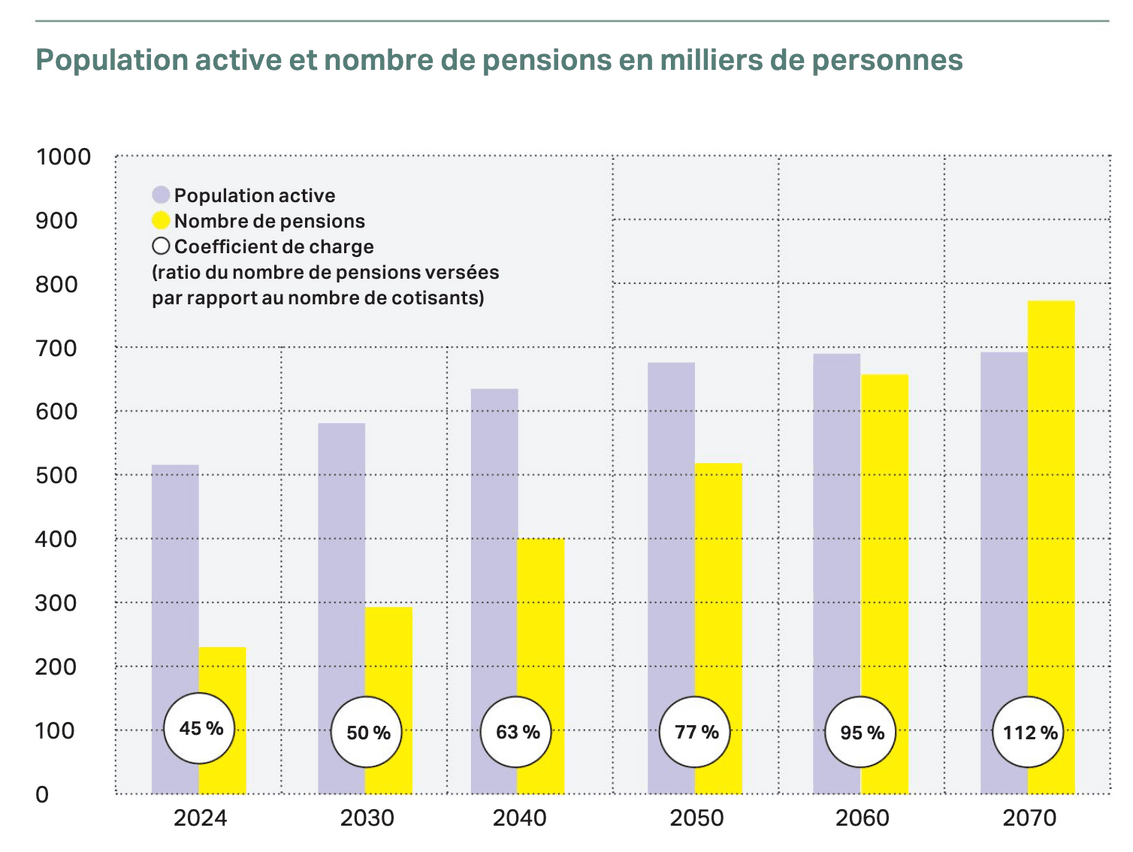
(Source: CNAP Annual Report)
15%
of the population will be under 15 in 2024 and 15% over 64. The median age is 39-40. The European average is 45, which means that it is growing more slowly than its neighbours. But the cost of ageing will remain high: in 2024, according to the IGSS, pension expenditure will account for 8.20% of GDP. This will rise to 11.20% in 2040 and 18.7% in 2070.
2. Pension reform: what if consensus wasn't as impossible as it seems?
Reform: what does civil society have to say?
Faced with pension reform, trade unions and employers are head to head. And the government has made its decision, arousing the ire of the unions. Prime Minister Luc Frieden (CSV) has ruled out a referendum, but what do citizens think? The aim of the "Schwätz mat!" consultation carried out under the authority of Social Security Minister Martine Deprez (CSV) was to get a clear picture of their expectations. The proposals put forward by the 9,000 participants point in the direction of a public pension system that should remain central and whose financial equilibrium must be preserved. The system should also take into account the "extra-professional" career, integrating periods of training throughout the career and family duties.
On the levers to be activated, opinions are clear-cut: there is no consensus on funding, on the effective retirement age, on the degree of redistribution - in other words, capping and increasing the lowest pensions - or on the role of private and occupational pension provision.
The Chamber of Deputies has also taken up the issue of the state of opinion. In the latest edition of its Polindex, the question of pension funding was raised. And the results show big differences between foreign and domestic residents. The two groups agree on one point: reducing the current level of pension payments to guarantee the sustainability of the scheme would be unacceptable. Among the disagreements: the question of developing funded schemes - 52% of foreigners are in favour, compared with 44% of nationals - raising the retirement age by two years - 42% compared with 39% - and using immigration to fund the system - 37% compared with 26%.
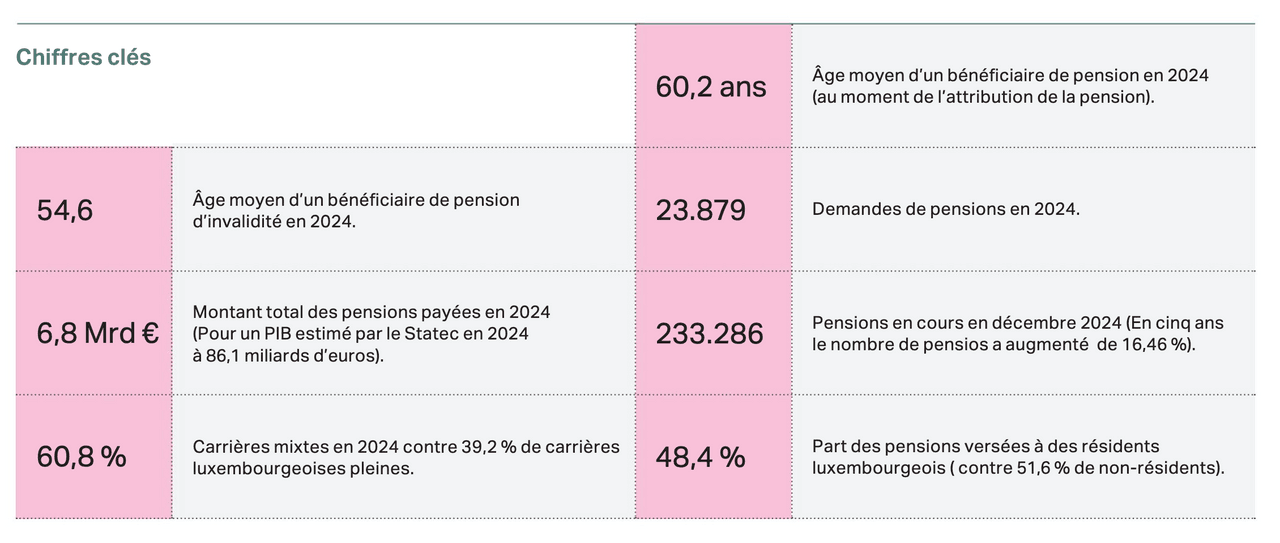
(Source: IGSS)
2045
The year in which, if things remain as they are the pension fund reserves would be exhausted according to IGSS projections.
3. The government's pension reform plan: glass half full or glass half empty?
A game of chase for the government
The government has decided. Painfully. Compared to the outline of the reform project sketched out during the State of the Nation address on 13 May, the government has backtracked on the methods envisaged to bring the effective retirement age as close as possible to the statutory retirement age, which remains unchanged at 65. The increase in contribution periods to qualify for early retirement is being gradually increased to eight months by 2030 instead of the five years envisaged.
People who are already entitled to an old-age pension will be able to remain active until the legal retirement age and in return will benefit from a tax allowance of 9,000 euros per year, capped at 750 euros per month on taxable income. Despite opposition from employers, the rate of contributions has been raised from 24% to 25.5%. The trade unions wanted an increase to 27%. This request was rejected, as was that of removing the ceiling on contributions and increasing taxes to finance the system. The end-of-year allowance - which theoretically should have disappeared with the increase in contributions, as provided for in the 2012 reform - has been maintained. But for how long?
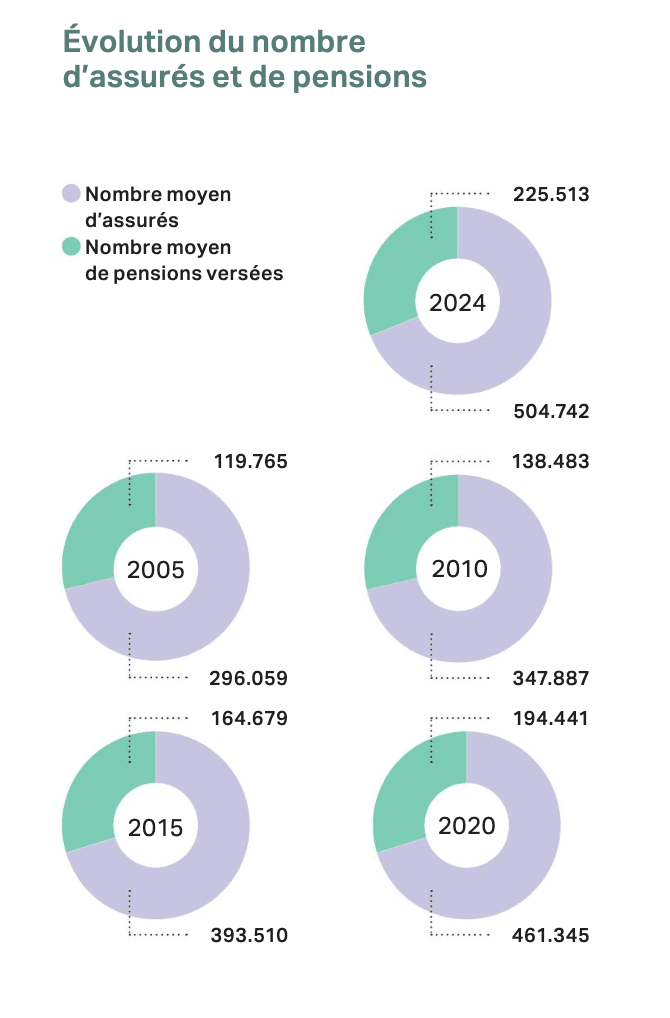
(Source: CNAP 2024 annual report)
It will be maintained as an exceptional derogation. The minimum pension will not be revalued, but the government is planning social assistance for people receiving an old-age or survivor's pension on a modest income. The details of this assistance remain unknown to date. The arrangements for adjusting pensions in line with changes in real wages have been maintained. On the question of additional periods - years of study and baby years - the government is keeping them. It even provides for flexible inclusion of periods of study throughout the insured person's career. Finally, the government is increasing the tax deduction for pension insurance from €3,200 to €4,500. The government wanted a pension system that would ensure funding over the medium term - at least 15 years. If passed, the reform will have to be reviewed in 2030. A semi-failure.
Evolution of pensions
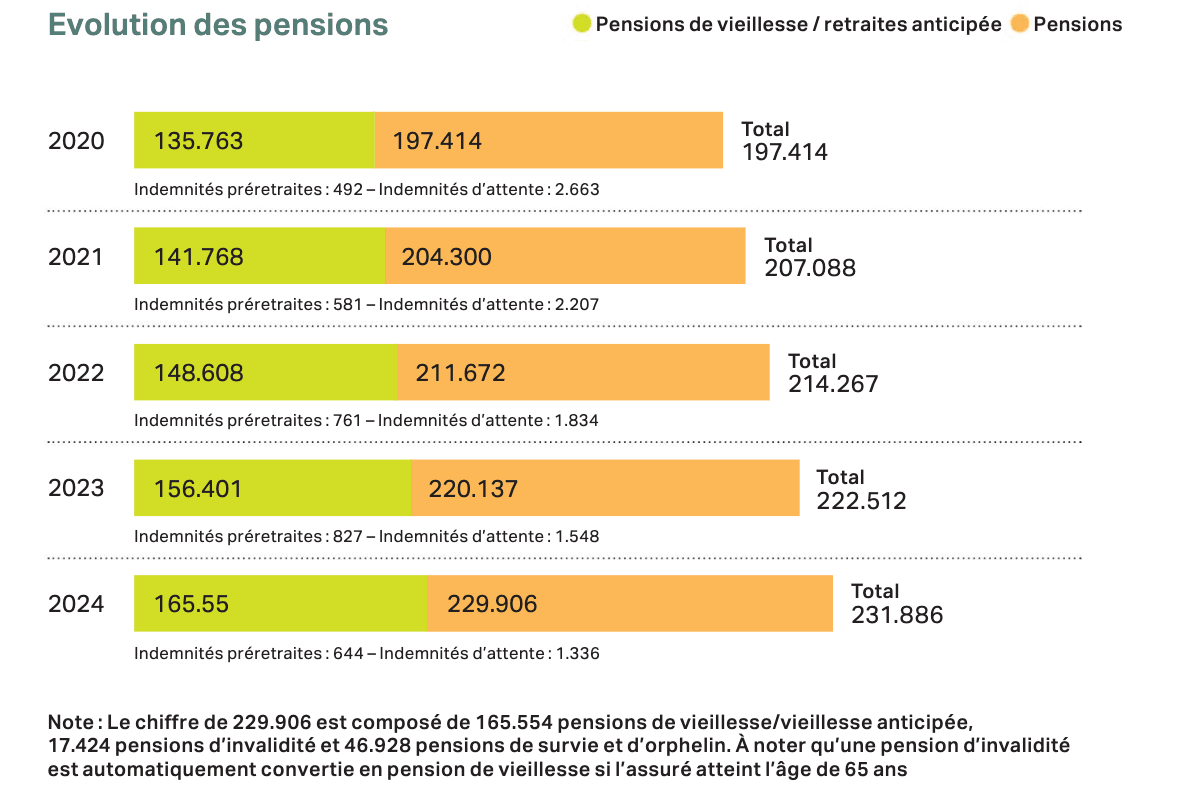
(Source: CNAP Annual Report 2024)
4. While pensions are the focus of attention, where do the health insurance accounts stand?
Deteriorating NHA figures: patches before reform
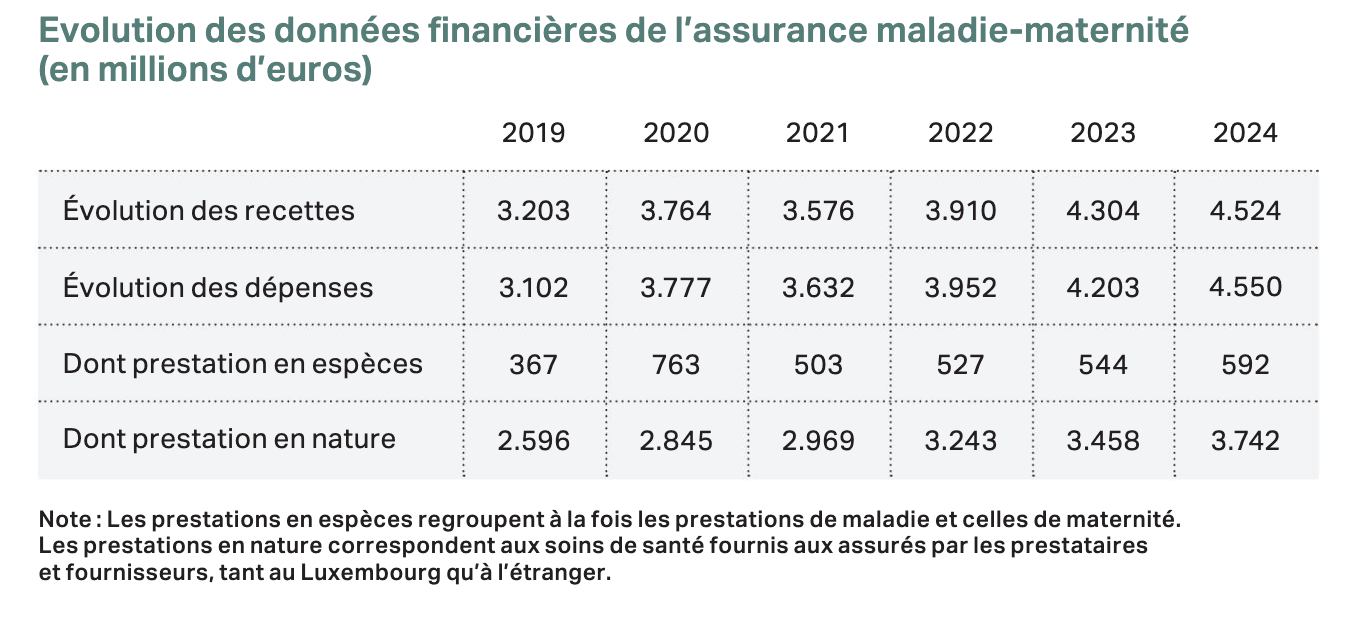
The Quadripartite Committee - an institution bringing together government, trade unions, employers and representatives of the medical sector - met on 13 October against a backdrop of slipping deficits: 25.8 million in 2024, 118.6 million in 2025 and 209.7 million forecast for 2026. Despite the tensions arising from the pensions issue, the partners agreed on the need for action. In line with the coalition agreement, the government will gradually take over the costs of maternity and the depreciation of hospital infrastructure.
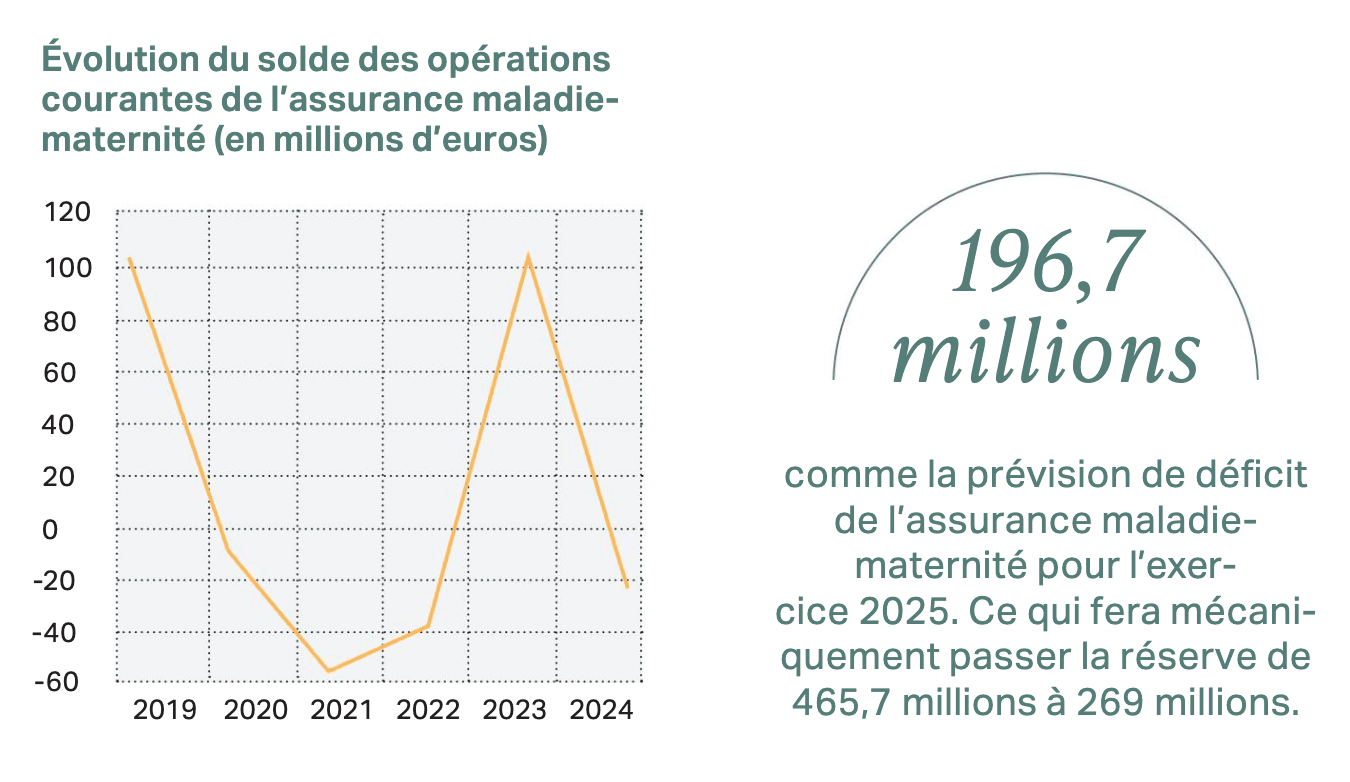
Cost? 59 million a year over the next two years. There is no question of touching the level of contributions or reimbursements for the time being. The social partners will concentrate on controlling expenditure. A strategic committee will be looking at their efficiency. The Social Security Minister insists that monitoring is not synonymous with delisting. She added, however, that "in view of the structural ageing of the population, we will have to rediscuss the volume of contributions, as we did with pension insurance". The warning is clear.
This article was written for Paperjam magazine for the month of November 2025, published on 22 October. The content is produced exclusively for the magazine. It is published on the site to contribute to Paperjam's comprehensive archive.
Click on this link to subscribe to the magazine.
Is your company a member of Club Paperjam? You can request a subscription in your name. Let us know via club@paperjam.lu


