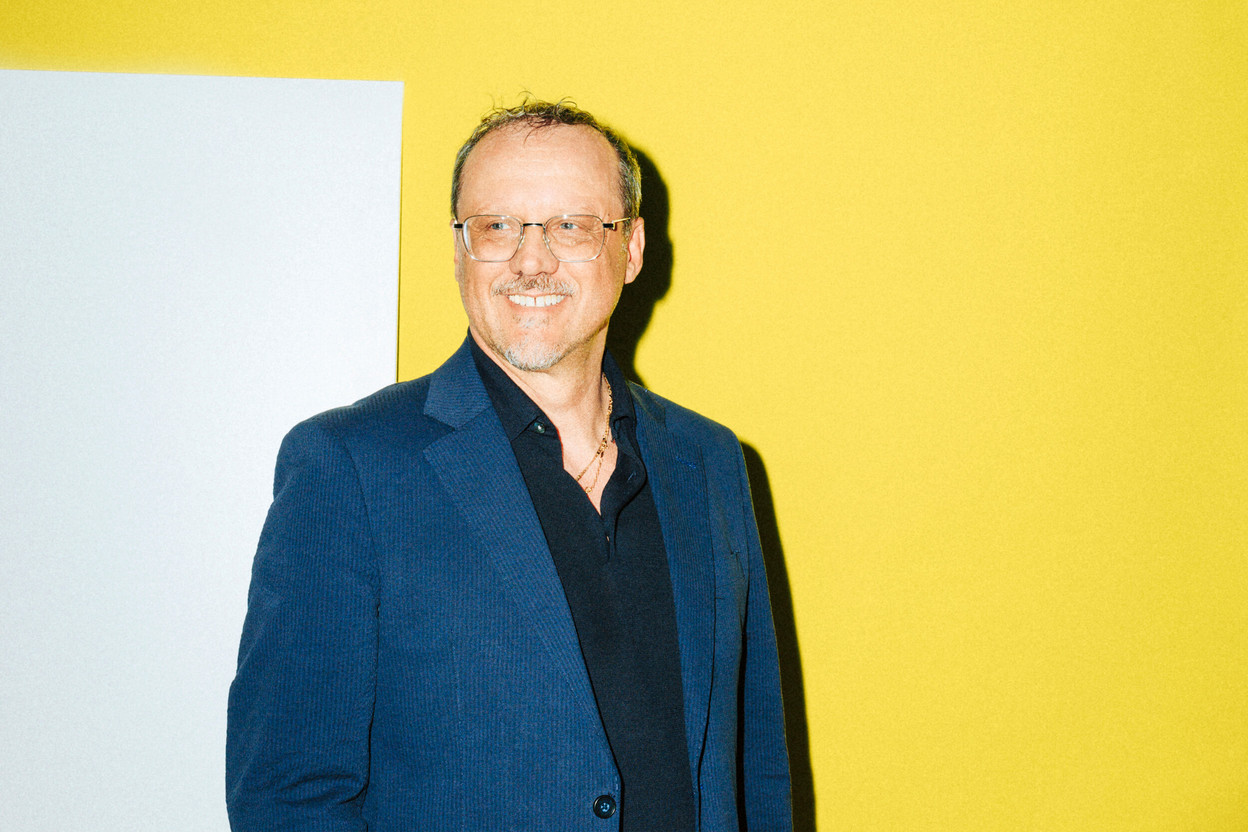
You spot him at every Paperjam 10x6 event, standing in the shadows behind the speakers. A former banker turned public-speaking coach, 
We always see you at every 10x6 or Paperjam event, giving advice to the speakers. So, who are you, really, and what do you do?
Pedro Castilho. – “I was born in Portugal in 1970; I am a humanist and a staunch European, convinced of humanity’s ability to find a way out of seemingly intractable situations. Professionally, I spent nearly 24 years in the financial sector, at a bank that was first called BGL, then Fortis, and finally BGL BNP Paribas. But I’ve always wanted to run my own business, to create something.”
The opportunity presented itself: in 2011, 
What made you decide to leave banking and set up your own business?
“It’s very simple. I have no regrets about having worked in the financial sector, nor do I have any regrets regarding the institution that employed me during those years. I had a manager – the last one I had – for eight years, who understood how a mind like mine works. Together, we built up the bank’s public sector division, and then, as I was getting bored, the NGO division. In April 2016, he told me he was taking early retirement. You don’t come across a manager like that very often. I told him, ‘If you go, I’m going too.’ We’re still in touch; he still brings me mirabelle plums and walnuts from his garden.
We often see this in literature: the difference between someone who has ideas and an entrepreneur is that the latter takes action.

Before I set out, I had perhaps thirty or so different ideas. And as we often see in literature: the difference between someone who has ideas and an entrepreneur is taking action. If you don’t take action, nothing happens. You can spend years refining ideas, but at some point you’ve got to go for it.
How would you describe your day-to-day work?
“Sometimes it’s like being a firefighter: there’s a fire, and you have to put it out. Running a small organisation involves a wide range of skills. At the bank, when a computer wasn’t working, we’d dial an internal number and someone with the right expertise would sort the problem out in a matter of minutes. Nowadays, I’m the IT guy, and I’m the one who calls Microsoft. I handle the post as well. Above all, I’m self-employed, and a self-employed person doesn’t start at 9 a.m. and finish at 5 p.m. I often wake up around 5 a.m., and by 5.30 a.m. I’m already at the office, which is in the block of flats where I live: no traffic. Being self-employed is great when you love what you do. Otherwise, it can be quite a traumatic experience, and it’s not for everyone.
You object to the word “coach”. Why?
“The term has been overused: these days, you can be a coach for anything and everything. I prefer ‘facilitator’. The message isn’t mine; it’s the speaker’s – it’s their lives, their experiences. As for me, I’m a sort of catalyst: I make sure that what they want to say fits into the six minutes of the 10x6 and that the audience takes something away from it.”
The first quality, then, is listening. Over the course of an hour, the people I work with easily talk for 40 minutes. Some ask me, ‘Don’t you have anything to say?’ It’s a behind-the-scenes role, but also one that exerts influence, and it’s rewarding to hear a senior executive or a minister use the words we’ve crafted during our sessions. It’s a bit like a sports coach: they’re not the ones who step onto the podium. The star is the speaker.
I was born under a dictatorship, and when I was about five, I used to give political speeches from the window on the seventh floor of our block of flats.
Where does this passion for public speaking come from?
“I’ve always found the adrenaline rush you get when performing in front of an audience thrilling. Some people seek it out through bungee jumping or speed; for me, that connection is an incredible source of energy. My first time on stage – I was barely four years old – was in a church at Christmas, reciting a poem; my mum still tells me about it. I was born under the dictatorship, which ended in 1974, and, at around the age of five, I used to give political speeches from the window on the seventh floor of our block of flats.
My father would comment on the news in the evening, and I’d re-enact the speeches the next day, to the point that the neighbours had to tell my mum. She let me get on with it. I used a funnel as a loudspeaker, and it worked a treat. If you look at my company’s logo, you can see someone holding what looks like a loudspeaker. To me, it’s the funnel. It goes way back.
Tell us about a time when you had to step in as a firefighter.
“It was a 10x6 event at the Tramsschapp. A speaker turned up with 27 index cards, stood on a waist-high platform, and couldn’t manage to finish his speech during the rehearsal. He was ready to give up. I took him aside, we spread the notes out, and I started taking them out until there were about ten left. I added a few connecting words, he went on stage and delivered his 10x6 in six minutes. It went well. That was one of the most stressful times I’ve ever had, because that’s when you have to prove you know what you’re doing.
My only regret is that I didn’t start sooner.
Expertise isn’t something you learn in training courses: it’s what you do when someone’s in a crisis. That’s how Pitch Ambulance came about – a service I came up with whilst on a beach in Portugal, thinking back on all those moments. An ambulance is all about urgency: a process for analysing a pitch and polishing it up, quickly. I’ve used it to turn start-ups around at the last minute, the day before a competition or a meeting with investors.
Is it a passion?
“Yes. Being able to do this every day is the greatest gift I could have received after my son. At 10x6 alone, I meet passionate people every year who share a part of their lives with me. A bit like you do with journalism. For me, it’s like a masterclass every single time: I get 80 of them a year thanks to 10x6. My only regret is that I didn’t start sooner. It’s nothing to do with banking, but I should have taken the plunge much earlier.”
This article was written for the October 2026 issue of Paperjam magazine, published on 16 September. The content is produced exclusively for the magazine. It is published on the site to contribute to Paperjam’s comprehensive archive. Click on this link to subscribe to the magazine.
Is your company a member of the Paperjam Club? You can request a subscription in your name. Please let us know via club@paperjam.lu.