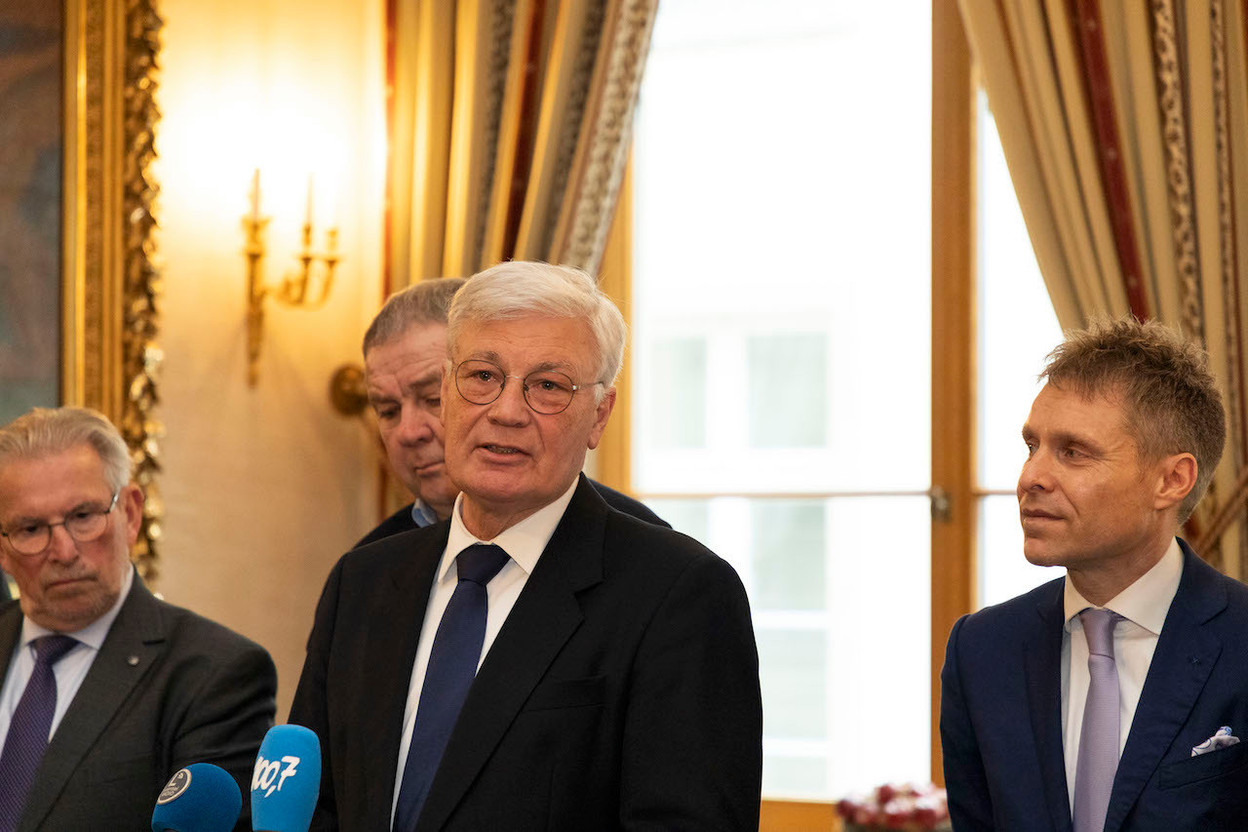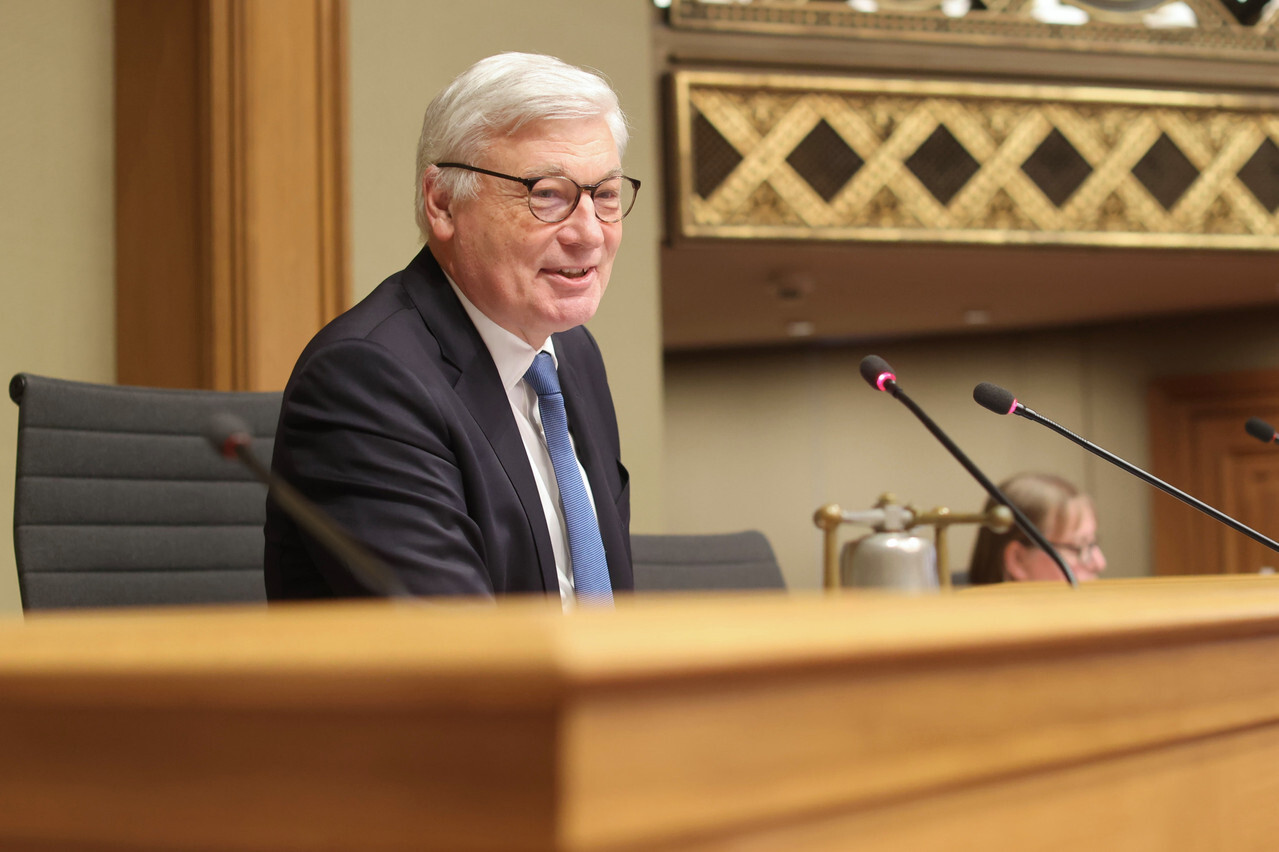
Parliament’s president, Claude Wiseler, called on MPs on 1 October to examine newly published research into how Luxembourg’s institutions would withstand an authoritarian attempt to undermine democracy. Presenting the findings at the annual parliamentary rentrée press conference, he said political groups now needed to discuss whether further safeguards were necessary. The exercise remains a basis for discussion, rather than an agreed programme of changes.
The research covers institutional checks and balances, elections, legislative procedures, opposition rights and political-party financing. They form the latest stage of the democratic “stress test” commissioned by parliament in March 2025. The practical concern is whether protections for political competition and individual freedoms would hold if those exercising power sought to weaken them.
“If you want to respond and do political work, you first have to establish the facts,” Wiseler said, answering a question about whether the studies could provide a playbook for autocrats. Parliament’s strong position within Luxembourg’s institutional checks and balances was itself a subject for reflection, he argued. That strength helps protect democracy when MPs act to defend it, but raises different questions if a parliamentary majority has other intentions.
“I hope the result is that we can make our democracy, which functions well, even more secure should such developments occur,” he said. Wiseler stressed that he did not see an authoritarian threat emerging in Luxembourg at present. Further research will cover the executive, the judiciary, the press and civil society, with more than 10 papers in preparation, according to the presentation. The aim is to finish the study before the end of the legislative term, allowing time for possible changes.
Easier to follow
Parliament is also preparing to widen access to proceedings, although several decisions remain outstanding. Wiseler said an automatic subtitle system was almost ready, with parliament considering a 30-second broadcast delay to allow significant errors to be corrected. MPs vary in how clearly they speak, and mistakes in captions can carry political consequences, he explained.
“It means, of course, that people who cannot hear can follow parliament, but it also means that you can watch parliament on your screen without having the sound on,” he said. Tests have been conducted, but a decision is still needed on whether their results are satisfactory and what level of error parliament is prepared to accept. Wiseler expected that decision soon, while declining to give a precise launch date.
The Luxembourgish transcription could subsequently support translations, making debates easier to follow for residents who do not understand the language. French, English, Portuguese and German were mentioned as possibilities, with the selection still unsettled. The presentation also recorded the expansion of live broadcasts from five committees during the test phase to 18 since September 2025; translation would add another form of access, but has no confirmed timetable.
Digital dependence
Behind those public-facing projects, parliament has introduced a platform combining 11 previously separate applications and processes. It brings together parliamentary work and access for MPs, staff and political groups. The wider digital overhaul represents an investment of approximately €6m over five years, with work 80% complete, according to the presentation.
The system brings meetings, pending approvals and other tasks into one place, while automating the passage of work between users, Wiseler explained. “I never thought I would go paperless, but that now seems to be happening, at least in this area,” he said. He argued that consolidation would reduce maintenance costs, although the presentation supplied no quantified savings.
The technology overhaul is accompanied by an examination of dependence on suppliers. “We mainly run on American systems, and increasingly on European systems,” said Laurent Scheeck, parliament’s secretary-general. Wiseler said a detailed assessment of parliament’s systems and equipment, prompted by a resolution from LSAP MP Ben Polidori, had recently been presented to the bureau. A complete move to European alternatives was not currently feasible, he said, because suitable replacements were not available for everything parliament needed.
Protecting the network remains a separate challenge, with staff being recruited specifically to strengthen IT security. The presentation listed nine attacks intended to overwhelm internet connections in 2026, two compromised passwords and an April incident involving a compromised server and intrusion into parliament’s network. Wiseler said the April attack had already been reported around Easter.
The server was shut down immediately, with MPs experiencing email difficulties during the return to normal service, he said. Wiseler credited the rapid response with preventing data leaks. “Our administration puts a great deal of work into this and really does the best it can, and so far we have been able to avoid major failures or leaks,” he said.
Accounts opened up
Parliament’s 2025 accounts are the first to undergo examination by the Court of Accounts for the legality and regularity of spending. Wiseler said they had been approved before the summer break and passed to the court, which was examining them. “Of course, the Court of Accounts’ report will also be public,” he said.
Parliamentary groups and smaller political groupings will also face a first check on the application of financial-management rules to their 2026 accounts. The presentation distinguished that scrutiny from the Court of Accounts’ examination of parliament’s own spending.
A more visible addition is planned for late 2027: a visitor centre in the Gilly building, at the corner of rue du Marché-aux-Herbes and rue de la Boucherie. Parliament acquired the building for €12.7m; it already accommodates parliamentary staff and the Green political group.
The centre will offer interactive displays and educational workshops, alongside visits to the Chamber itself. “The visitor centre will enable people to come, receive explanations about how parliament works and about democracy, and then visit parliament itself from there,” Wiseler said.