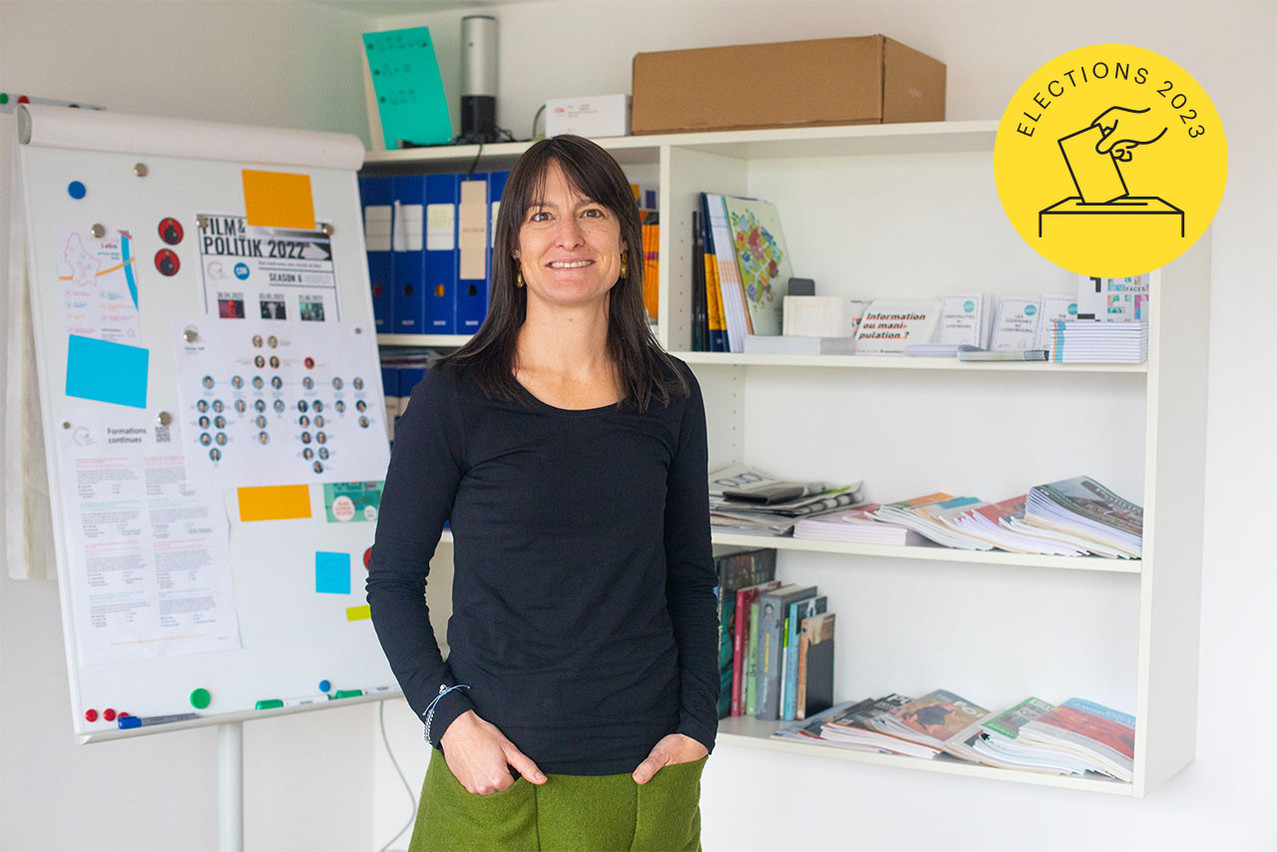
Lydia Linna: Voting in Luxembourg’s legislative elections is mandatory for all citizens. But that doesn’t mean everybody is interested in learning about candidates and issues. How do you encourage people, particularly young people, to be well-informed and engaged in politics?
Michèle Schilt: This is something we do in the long term, not just when elections are coming up. We talk to teachers and educators and create materials and videos that they can use to launch discussions. This starts from a very young age--and doesn’t just target people who are eligible to vote--so that they are aware of what is happening. This is important for everyone--that you realise that you are a part of politics. It’s key to talk to people and engage them in a discussion around politics and their place in society. We don’t only focus on elections, but on civic life in general.
In January, we will have a ‘Super-Wal-Kirmes,’ or a super election fun fair. Sometimes elections, and politics in general, are seen as being very serious. So we’re making politics more playful--there will be a wheel of change with questions about elections, duck fishing where you can fish for ideas for your municipality, or popcorn buckets with links to more information.
47% of Luxembourg’s population are foreigners. Europeans who aren’t citizens of Luxembourg can’t vote in legislative elections, but they can vote in communal and European elections. Do you think this should be changed?
I think we should have a debate about this. As the centre for citizenship education, we’re not here to take a side and say that this is the right way to do things. Our aim is to launch a discussion around democracy. Luxembourg has quite a young population, and we could, as well, talk about giving 16-year-olds the right to vote. We want to encourage people to think about these questions.
Social media has become an increasingly important source of news over the past years, from Facebook to Twitter to TikTok. But it also allows misinformation to spread, and to spread quickly. Do you have any thoughts on the role of social media in politics and democracy?
Now that social media has become a public space, that’s another topic that we have to address. Many young people today don’t read traditional media; they get news from social media. Media literacy is something that is really targeted in Luxembourg--there are many initiatives, such as courses on algorithms and hate speech.
We want to make sure that people understand the messages that they’re reading, to help them decide whether this is true or false. Our propaganda guide is a way to see if the message you’re getting is trying to influence you in some way.
ZPB organises Den DemokratieLabo, an interactive traveling exhibition that allows visitors to reflect on their ideas and experiences with democracy. Most recently, it was at the Lycée classique de Diekirch. How did students react to the exhibition?
Students reacted quite well. It’s something that’s very playful, and you don’t need to know anything before going in the exhibition. You get to decide what to do with this experience. It encourages discussion on controversial topics without being polarising, promotes dialogue and helps you reflect on where your opinions come from.
The exhibition is for all ages, from 12-99. Next spring, it will be in the theatre in Esch-sur-Alzette, where we will be able to engage more with adults and the general public.
We’ve seen a surge of young people get involved in campaigning for climate action and getting involved in politics. Do you see a lot of young people in Luxembourg who are interested in activism or running for public office?
Many municipalities have youth councils; young people can join student councils at school, or participate in the youth parliament. But although they often don’t like to get involved in classic ways, like joining the youth sections of political parties, young people can be highly motivated when there are topics that speak to them.
We also have service learning in schools, which links teaching and engagement. It allows students to see that they can do something to give back to society, and they are more likely to get involved in civil society afterwards.
What are some activities that ZPB is planning to boost interest in elections and civic life next year?
We have videos--made by kids, for kids--that explain a variety of topics, such as how municipalities work. We’ll also work on updating election information, including guides on why to vote and how to mark your ballot in multiple languages, and will conduct a social media campaign on voting early next year.
An alternate version of this article first appeared in the December 2022 issue of Delano magazine.

