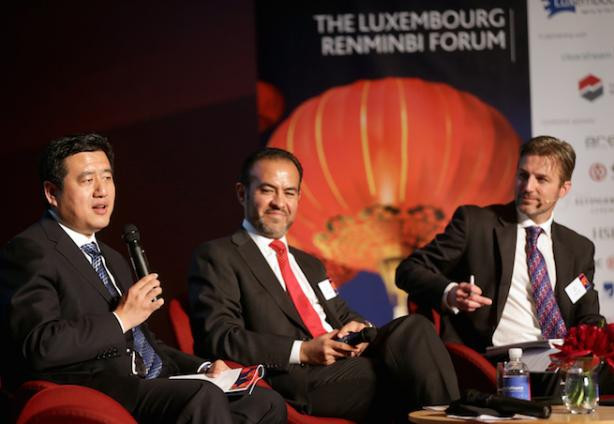

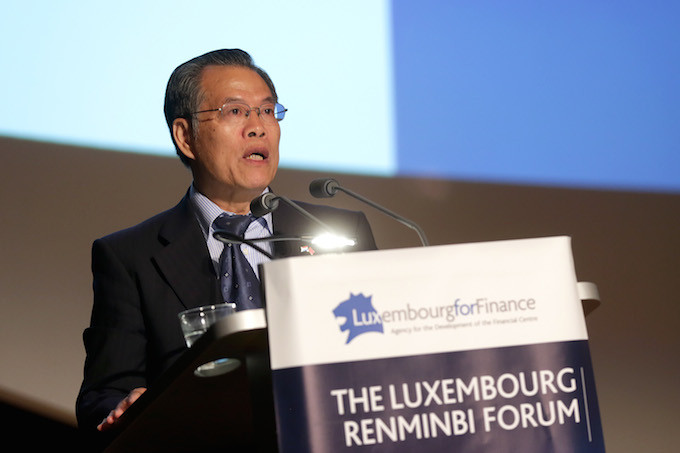

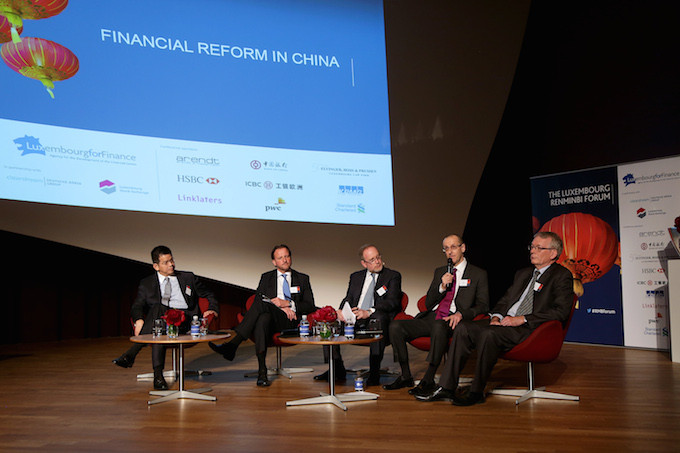
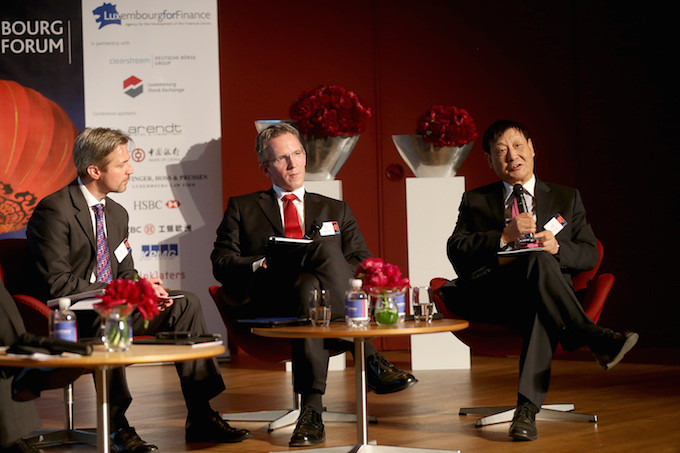













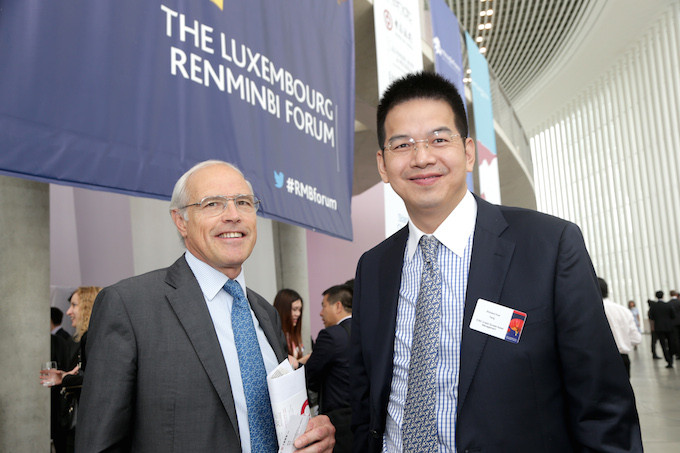

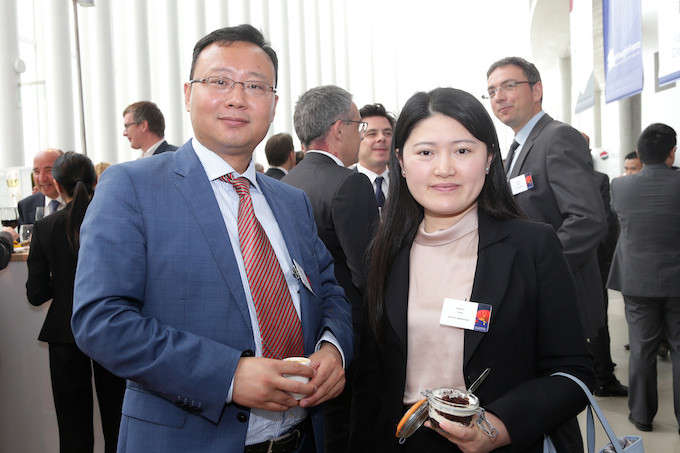









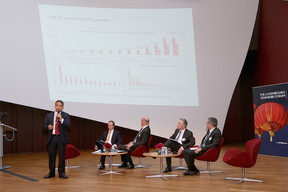















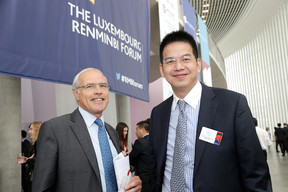






Is another Chinese bank about to open here? “[Luxembourg] is to be the official founding member of the AIIB [Asian International Investment Bank] and we hope the bank will set up its European headquarters in Luxembourg. We are working on this,” Zeng Xianqui, the Chinese ambassador to the Grand Duchy told the RMB Forum conference held on the Kirchberg on Wednesday.
Could the home of the EU’s European Investment Bank be about to welcome the European headquarters of the bank some see as the Chinese equivalent?
These are still early days, but maybe there is some significance in Luxembourg having been selected in April by China to be the first non-Asian member (see “Closer to China”). Clearly decision-makers in the People’s Republic like the Grand Duchy’s style. “Luxembourg has an important position thanks to its political stability, good economic conditions and smooth relations with China,” Zeng added.
The bank is somewhat controversial as it is opposed by the US government. There are fears that it could be used as an extension of Chinese foreign policy, or that the AIIB will not have the same stringent conditions on social and governance matters as do the World Bank, the IMF and the EIB. However, most European countries appear to have taken the view that it is better to engage with this institution than to boycott.
Diplomatic spat
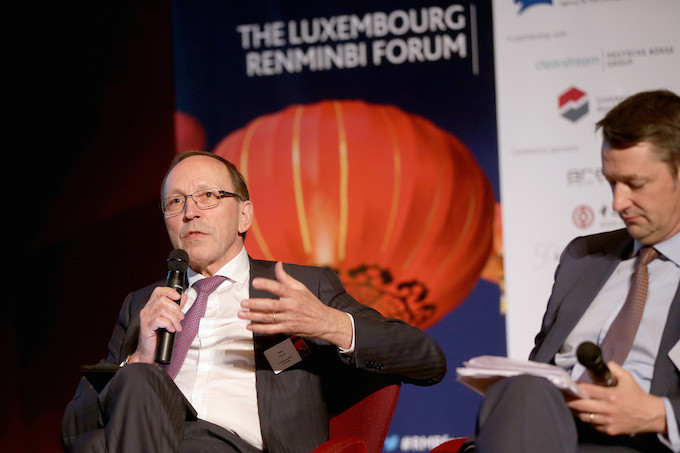
“America really threw their toys out of the pram on this one,” commented David Marsh, of the Official Monetary and Financial Institutions Forum, a London-based think tank. Speaking in a panel discussion he argued that the US had over-reacted and had ended up losing diplomatically on this question. Dozens of countries around the world have now stated they will join the AIIB, including strong American allies such as Australia and the UK. Even the Japanese are wavering.
What about the internationalisation of the renminbi? Broad consensus of the panels at the RMB Forum suggested that the patchwork of schemes is confusing, but they demonstrate China’s clear willingness to have a relatively free, managed convertible currency. Many predicted that when the right formula is found, things will move quickly.
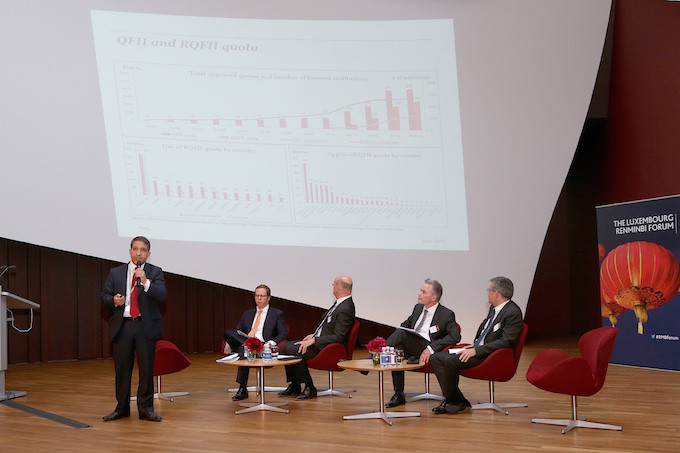
For instance, there was broad agreement that take-up of the Renminbi Qualified Foreign Institutional Investor scheme has not been as strong as had been expected. The programme was extended beyond Hong Kong in March 2013, enabling asset managers around the world to invest directly into the People’s Republic in RMB. However, the quotas allocated to many countries (including the UK, Singapore and Canada) remain undersubscribed. Investor fears about the state of the market and the legal and regulatory environment were cited as barriers.
Luxembourg RMB Quota
So should Luxembourg have been so excited about receiving a quota in May? Probably yes. As well as the public relations boost, this country’s cross-border fund model could be well placed. “Things will be different for Luxembourg which has an international rather than domestic market,” said Joost Lobler of Standard Chartered Bank, Hong Kong. “70% of the funds distributed in Asia are UCITS and there is demand for Chinese investments is in that region.” He argued that when a few final regulatory questions are solved this market would take off.