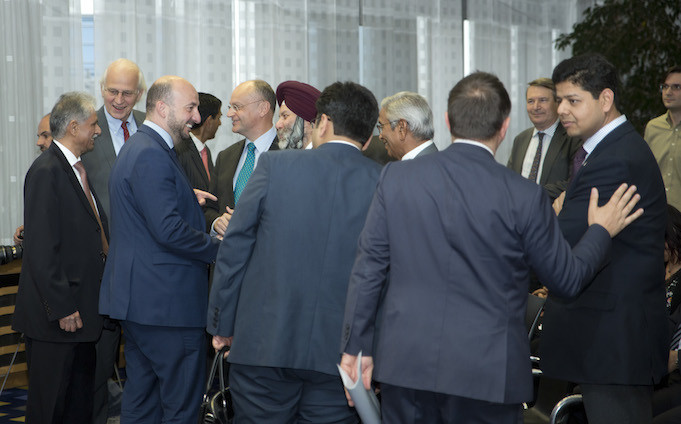
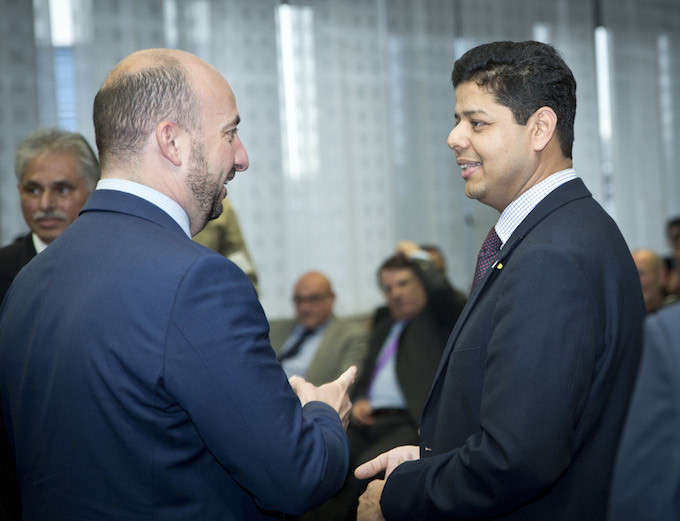








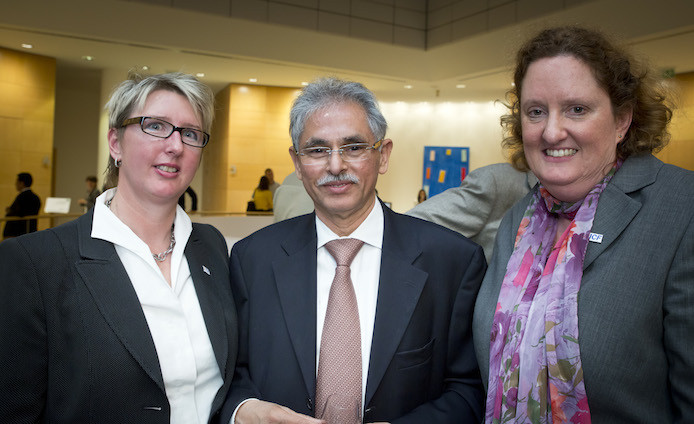

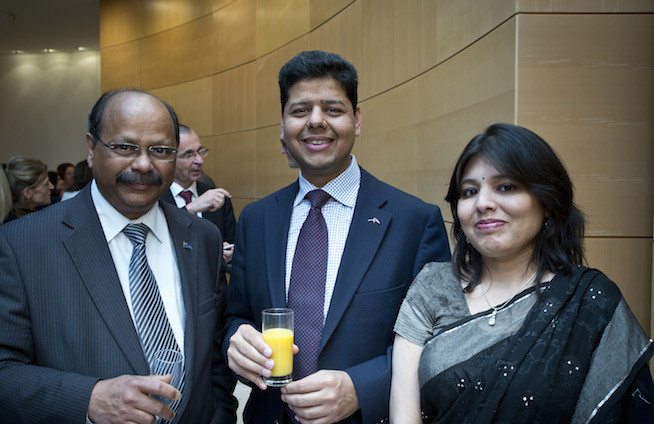








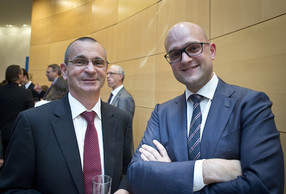
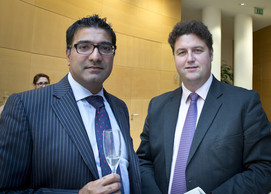

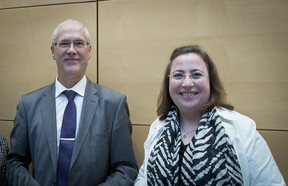

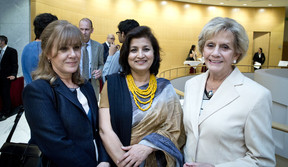




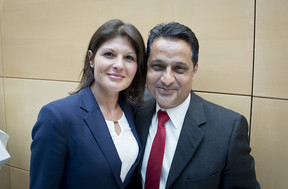
A business group marked a milestone by hearing a promise from Luxembourg’s deputy prime minister that his cabinet will retain the country’s economically friendly policies to remain attractive to foreign investors from countries like India, despite the Grand Duchy’s recent austerity budget cutbacks and growing government debt.
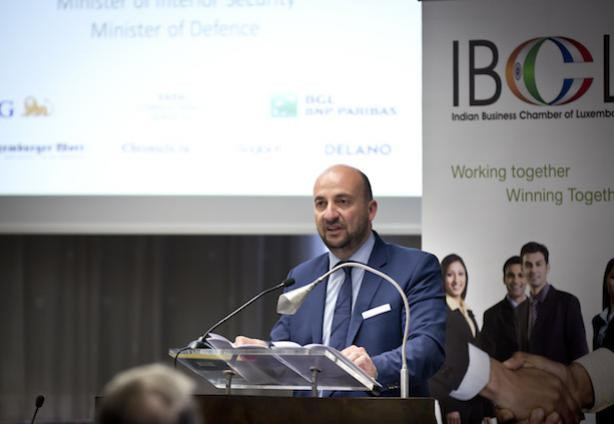
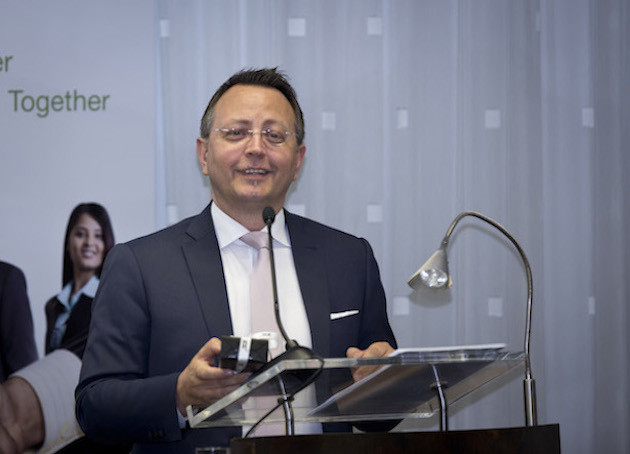
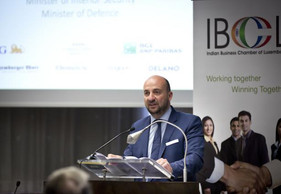
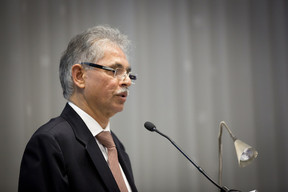
Companies need “predictability”, Etienne Schneider said Monday evening during the Indian Business Chamber of Luxembourg’s fifth anniversary celebration. “People have to know what to expect from the government.”
“I’ll tell you right now: no business unfriendly decisions will be taken by this government,” he told members of the IBCL, which officially launched in 2009.
The LSAP politician was addressing fears within Luxembourg’s business community, and notably among financial institutions, that the Grand Duchy’s growing budget deficits will be balanced with increased taxes.
Schneider, who is also economy minister, added that the government was working on finalising “something close to” the proposed “111 company” bill, which business leaders have been championing for months, and that he hoped a planned official trade mission to India would take place before the end of the year.
For more than a century, the Grand Duchy has welcomed thousands of immigrants and these days that includes “increasing numbers of young entrepreneurs from India.”
Other speakers at the conference spoke of long ties between India and Luxembourg, which they expected to continue growing.
“On the same page”
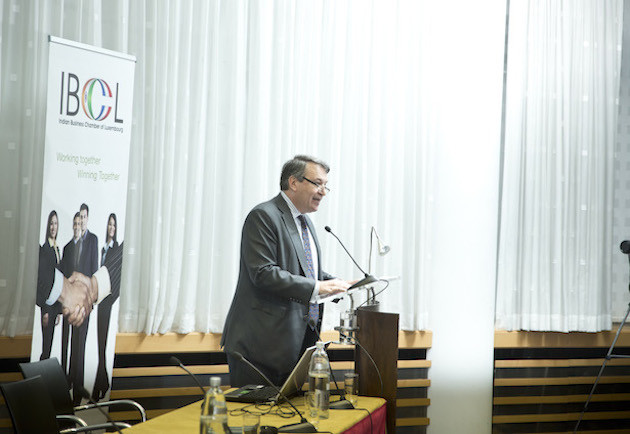
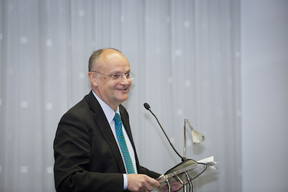
“Putting size aside” the countries have much in common, said Luc Henrard, chief risk officer of BGL BNP Paribas. India is one of the world’s largest democracies in the world, while Luxembourg is “probably one of the smallest” but one that plays a strong role within the EU.
Henrard said his bank, which hosted the anniversary event at its Kirchberg headquarters, was the “second oldest foreign bank on Indian soil” and was a “proud sponsor” of the IBCL.
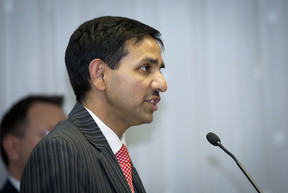
Opportunities for Grand Duchy businesses will only continue to grow, noted IBCL chief Sudhir Kohli. A free trade agreement between India and the EU is “expected to be signed soon” that should include the opening up of services, government procurement and investment markets to Luxembourg firms, he said.
Acknowledging that the south Asian nation sometimes has a difficult business climate, Kohli encouraged entrepreneurs to make the effort to develop links, as the “hurdles are nothing compared to the profits you will generate in India”.
“I am a great friend of Luxembourg,” declared Manjeev Singh Puri, India’s current ambassador to the EU and its former ambassador to the UN. He recalled how the two countries have “supported each other on major global issues… in the last few years” and that “India and Luxembourg invariably found themselves on the same page.”
Large investment links
He called the Grand Duchy “small but powerful” and that Luxembourg “hit above [its] weight” in the global economy.
Singh Puri observed that roughly 170 Indian firms are listed via global depositary receipts on the Luxembourg Stock Exchange, which represent around one-quarter of the bourse’s overall value.
According to the ambassador, Luxembourg is the 18th largest source of foreign direct investment into India, and ninth largest from Europe.
Gaston Stronck, the Grand Duchy’s ambassador to New Delhi, followed Singh Puri’s comments by noting that Luxembourg is the fourth largest source of FDI into India when institutional investment fund flows are included.
“Opportunities for Luxembourg companies are unlimited,” he reckoned. With a growing middle class and infrastructure needs that are “tremendous”, “we can be part of it.”
Luxembourg blast furnace maker Paul Wurth is a “very prominent brand in the Indian steel industry”, Stronck said. However, the Grand Duchy needed to promote much more assertively promote the fact that it is home to assets like Skype and Schengen, which is widely known in India for the common EU visa, but not as a place in Luxembourg.
Nidhish Mehrotra, an attorney with ANM Global Solicitors in New Delhi, warned India was a “big counterfeit market” particularly in the luxury, consumer goods and pharmaceutical sectors. He reported that foreign multinationals had experienced “brand dilution” because of fake products, and encouraged local registration of intellectual property as part of the solution.
The IBCL hosts its next conference, on fostering family business, the evening of May 22.