




















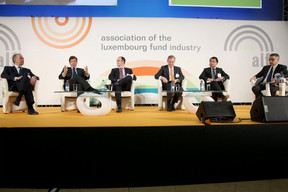

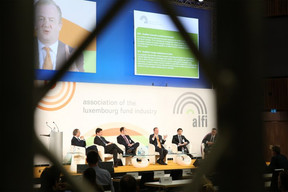
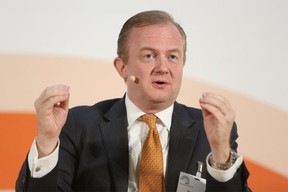
























Enthusiasm by China to open its economy has never been stronger, revealed a panel at the ALFI spring conference on Wednesday. In fact, the new government in Beijing has signalled its desire to make the currency fully convertible and open the way further for investment in and out of the country. It is taking a range of steps to make this happen, moving carefully as it is does so.
The hottest news came from Li Bing, head of asset management at the Industrial and Commercial Bank of China Europe. He pointed out how the authorities were pleased with the way the Shanghai-Hong Kong China Connect system is working, allowing easier trading between the stock exchanges in these cities.
Launched only last November, it is already helping investors outside China benefit from the country’s economic miracle, adding to the possibilities offered by the “QFII” and “RQFII” schemes. “I think the Chinese regulator will open the door fully in time,” Li remarked.
What about access for Luxembourg funds?
Already nine Luxembourg-based UCITS funds are using the China Connect facility, with many others in the pipeline. Luxembourg funds have been left out from the RQFII scheme so far by not having been granted a quota to allow investment into the Chinese mainland market. Nine other jurisdictions have been given this opportunity.
Nicolas Mackel of the Luxembourg for Finance trade promotion body suggested he was quietly confident that a quota would be given at some stage. Until then Luxembourg funds would continue to piggy-back on quotas from other countries. However, it may be that this is less important that it would seem, as Li suggested the QFII, RQFII and China Connect programmes could merge over time.
Given the success of Shanghai-Hong Kong China Connect, the Chinese prime minister announced in early March that Hong Kong-Shenzhen Stock Connect is to be launched in the second half of this year. “Unlike the existing stock connect programme, the focus in this scheme will be on investments in small and mid-cap businesses, particularly in the real estate, IT and manufacturing sectors,” Li noted.
The rules will be similar, which is good news for Luxembourg-based funds, which have recently received regulatory approval for this work. “There will not be a short term surge in business, but long term we will see increased liquidity and trade leading to the creation of something substantial,” he predicted.
Developments for funds and wealth managers
Helping Chinese firms and people invest abroad is also part of the package of measures. Chinese institutions will have new access to international markets with the “QDII” scheme, as will Shanghai-based high-net-worth-individuals through the “QDI 2” programme.
Li added that an “infrastructure investment belt” will also be encouraged with central Asia and Africa through what is called the “Silk Road” initiative. Then he pointed to the recent government decision to start the process of increasing the convertibility of the renminbi capital account this year. All good signs for those looking to benefit from China’s still thriving economy.