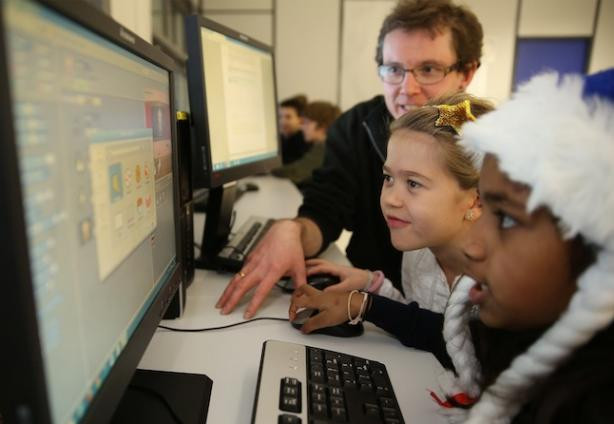
As soon as the bell has rung the end of the school day, they come flooding in, throwing their bags in a corner and each rushing to one of the screens in the computer room. The Grand Duchy’s first code club has been running at the International School of Luxembourg since the school year started and has become so popular that there’s a waiting list to be a part of it.
The club’s fourth to sixth graders learn to program by making their own games and animations. “Technology is such a big part of our society today, programming touches every industry,” says Zak Lawrence, ICT specialist at ISL and one of Code Club Luxembourg’s volunteers. “Code literacy is increasingly important, also to stay safe. We need to teach kids a better way of using the interactive world and to give them the tools to create instead of just consume.”
Bringing the concept of after-school coding clubs to the Grand Duchy was Patrick Welfringer’s idea. A programmer himself, but also a father of three, he was initially looking for something to do with his own and some of his friends’ children. “Our kids today are ‘digital natives’ and yet they are only learning to use computers passively. We should instead show them they can make computers do what they want and not the other way around.”
The club is entirely run by volunteers.
They teach youngsters the basics of programming using Scratch, before going on to the basics of HTML and CSS, Python and so on. For the onlooker, however, it frankly just seems like they’re playing in front of the computer. Proof that programming--especially if you’re making your own game or animation--can be captivating.
“We focus on gaming to get them interested,” explains Lawrence. “The goal is that they have fun with technology; that they learn to produce something. Some go crazy. They are blown away by what they can do.”
“It’s really great to see the children’s creativity kick in,” says Steve Clement, an information security analyst and Code Club volunteer.
“We also try and challenge them. Very quickly they start asking questions about how things work and get excited about what they can accomplish and how far they can go. Without them even knowing it, coding teaches them problem-solving and logical thinking, howto work with frustration and build discipline. But most of all, like with food, what’s important is creating your own stuff instead of consuming something readymade.”
Pilot club
The pilot club at ISL will be joined by new clubs next school year. “What we’d really like is to see a code club in every single primary school in Luxembourg,” says Welfringer.
And getting children to join won’t be a problem. The “Coding goûter” workshops organised by the club each month for children and accompanying adults are immensely successful.
“It’s a great place to start but once the kids get really interested, they need a regular code club. The best way that parents can makethat happen at their children’s school is to ask around and find us a volunteer with some programming experience. Volunteer time is our scarcest resource!”