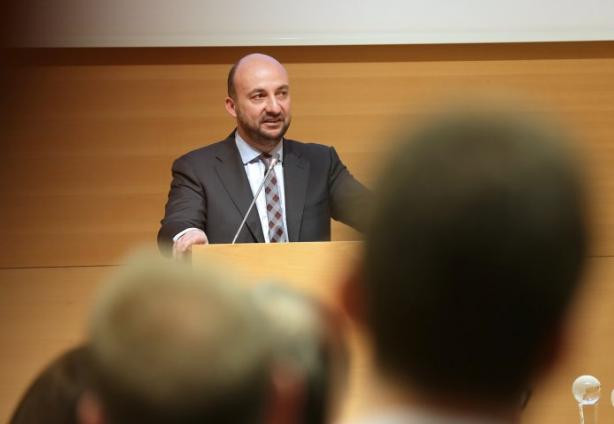
More Middle Kingdom financial institutions are coming to the Grand Duchy, attendees of a business networking event marking Chinese new year have heard.
Luxembourg’s deputy prime minister, Etienne Schneider, announced during an event organised by China-Luxembourg Chamber of Commerce, or Chinalux, that three more major Chinese banks will open operations in the Grand Duchy. The chamber hosted its official inauguration with a celebration of the Year of the Horse on Tuesday.
Agricultural Bank of China, one of the country’s “big four” state-owned commercial banks, is due to launch in Luxembourg later this year, following a meeting earlier this year with Luxembourg’s finance minister, Pierre Gramegna.
It will join the three other big four in the Grand Duchy: Bank of China set up shop in Luxembourg in 1979, Industrial and Commercial Bank of China, which is both China’s and the world’s largest bank, arrived more than two years ago, and China Construction Bank, which inaugurated its EU hub on boulevard Royal last October.
Schneider said the big four will also be joined by Shanghai Pudong Development Bank, one of China’s top ten banks, and by China Merchants Bank, the world’s 60th largest bank, according to industry publication The Banker.
Renminbi ambitions
The moves further enhance the Luxembourg government’s effort to make the Grand Duchy Europe’s leading offshore trading centre for China’s currency, the renminbi.
In the December-January print edition of Delano, Chinalux president Dirk Dewitte said mainland China residents will have much greater scope to move money internationally in 2014, and “I would say that in 2015 we would certainly have a renminbi where we would have much more opportunities as an investment currency than for the moment”.
Dewitte, who is also a tax partner at Deloitte in Luxembourg and heads the consultancy’s Europe-wide Chinese services desk, also sees the yuan as an international reserve currency potentially by 2020.
Not only “big banks”
Yet the chamber chief also stressed that links between the Middle Kingdom and Grand Duchy are not limited to “big banks”. At the small and medium sized enterprise level, “there is enormous interest” in learning about the culture and how business deals get done.
That is why Dewitte called Chinalux a “matching point” with other groups such as Luxembourg for Finance, and why the Chinese chamber has begun working with the finance and economy ministries, the Luxembourg Chamber of Commerce and LFF on the country’s “nation branding” campaign in the Middle Kingdom. It is important “to come up with one face and one voice towards China”, Dewitte told Delano.
More than 450 people attended this week’s reception, one of the largest events held at the Chamber of Commerce building in the past decade.
A China-Luxembourg chamber was originally founded more than a decade ago, but the new Chinalux--formed last spring--represents a fresh management and structure. China’s ambassador to Luxembourg, Zeng Xianqi, is now honorary president.
Although the Year of the Horse soirée was the relaunched chamber’s official inauguration, Chinalux hosted a conference on the internationalisation of the renminbi in November.
Later this year, the chamber will organise conferences on Chinese investment in Luxembourg, Luxembourg investments in China, cultural understanding, and a follow-on to last year’s event on the internationalisation of China’s currency.
The word for “China” in Chinese translates as “Middle Kingdom”.