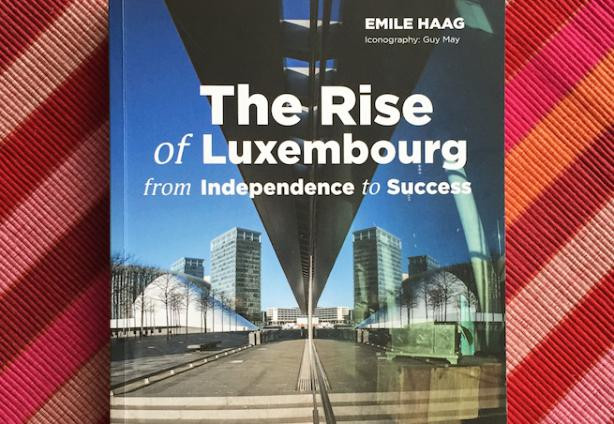
Author, historian and professor Émile Haag is probably one of the most knowledgeable people that you will meet in the Grand Duchy. His latest book “The Rise of Luxembourg from Independence to Success” (Éditions Saint-Paul, 2015) is the first of its kind to be written in English.
From fun facts about how the Schueberfouer started to the success of Robert Schuman, the Luxembourger who became the prime minister of France, the book is an encyclopaedia for expats living here. He explains: “You do not have to begin at the beginning, nor do you have to read the whole book. You can open the book on the chapters that you are interested in. At one point you might want to know what happened during the Santer-Juncker era and at another you might want to understand what happened after World War II.”
When asked what his motivation behind writing such a book in English was, he bashfully answers that actually he could have simply translated the history book, “Une réussite originale” (A unique success), he has written from French into English, but he felt it was important to be writing the tome directly in English for Anglophones.
“The growing English-speaking communities as well as the Luxembourgish descendants in the US want to know more [about] Luxembourg”. With a strong desire to defend the reputation that Luxembourg is nothing more than a small tax-evading fiscal centre, Haag--who has been a lecturer at Miami University since 1969--has managed to create a history book that makes the reader proud to have anything to do with Luxembourg.
Like many other history books, “The Rise of Luxembourg”--which is dedicated to his wife Karin--is written in chronological order, but what gives the book its sentiment is Haag’s theory of history. Professor Haag reckons that it is the personalities in history that lead a country to success.
Unspoken, unbroken principle
He explains that in Luxembourg politics, the successor never breaks the achievements and ideals of the predecessor. There is an unspoken open-mindedness and respect for the person who was in power before, he says. Haag--formerly the principal of the Athénée de Luxembourg and president of the civil servants union--believes that principal to be at the core of the success of Luxembourg as a country and Luxembourgers as a nation.
When asked about the future of the Grand Duchy he responds earnestly: “I don’t have a crystal ball, but I believe that if we continue to be alert, adjust quickly and foster innovations, we will continue to be a successful nation. There is a Luxembourgish shoe company which uses the slogan, ‘Be always a step ahead’. If we team this attitude with our asset of open mindedness and social peace, we will adjust and flourish no matter what obstacles we come to face in the future. As the poets and writers in Luxembourgish history used to say, ‘we are proud that we are what we are, we are Luxembourgers’.”