On October 23, six Luxembourg financial institutions were placed on the European Central Bank’s list of 130 large banks subject to a “comprehensive assessment”.
The ECB will conduct a special risk assessment, asset quality review and stress test of these financial institutions, which are seen as vital to the health of the European banking system.
In the Grand Duchy, the central bank identified BCEE, Clearstream, Precision Capital (which owns BIL and KBL), RBC Investor Services, State Street and UBS.
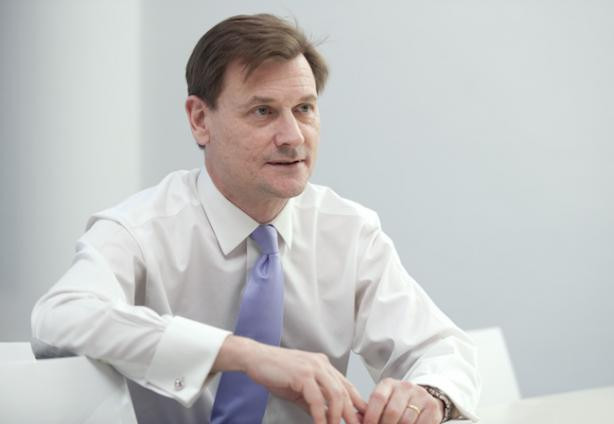
Delano asked Mark Gem, head of business management and strategy and member of the executive board at Clearstream, about the designation and what it means for his organisation.
AG: Is it a blessing or a curse to be named to the ECB’s top 130 banks list?
MG: “Clearstream is committed to helping to make the banking sector and wider financial services industry more robust, secure and transparent. We are playing our part in minimising any systemic risk of another financial economic crisis, both in the way Clearstream conducts its business as a bank itself, and in the services we offer other banks who are our customers, such as collateral management services which help make their operations more secure.
“As such, we welcome the main goals of this comprehensive assessment initiative, namely to raise transparency of the conditions of banks; identify and implement any necessary corrective actions and to help build confidence to assure all stakeholders that banks are fundamentally sound and trustworthy.
“We are very happy to cooperate with the ECB and other relevant stakeholders to undertake and complete the ECB’s comprehensive assessment exercise for Clearstream. We are subject to this assessment formally because the ratio of our total assets exceeds 20% of Luxembourg’s GDP, and also given our systemic importance to the banking sector.
“We welcome the overall exercise as a vehicle to help the ECB gather the required information needed to provide more clarity on banks in Europe, arming it with information it will need to effectively and efficiently take on its new supervisory tasks in November next year, as part of the new system of financial supervision.”
AG: What does this change about your business?
MG: “While we welcome this initiative as part of the agenda to improve the transparency of banks in Europe and to further de-risk them where necessary, we currently anticipate that this exercise itself will fit into our business as usual when it comes to submitting information about our business.
“More widely for Clearstream, this exercise plays into our business as usual--as a ‘bank for banks’ and key part of the trading financial market infrastructure, we already play a significant role in meeting objectives of increasing transparency and de-risking the financial markets.
“Our core business of settlement and custody of trades between other banks and financial institutions who are our customers has rightly shot us directly into the spotlight since the 2008 financial crisis because of the very reason that we facilitate the banking industry’s transactions.
“We contribute to this shared agenda of the industry, regulators, politicians and wider public to make banking safer both in our ability and willingness to share information about our own performance and business model as a bank, and by taking a lead in developing collateral management solutions for financial institutions so they can better manage their collateral, liquidity and capital. “There are technical systems we provide too like securities lending, which help reduce transaction failures between parties.”
AG: How are you preparing for the risk assessment, asset quality review and stress test?
MG: “We look forward to meeting with ECB representatives as part of this exercise, in the coming weeks. It will then be a case of following the exercise through, step by step. We will be putting resources into this to offer a comprehensive and valuable contribution--an activity that will be steered by our risk management team.”