Luxembourg’s film industry has rarely been in ruder health. It is 18 months since the country claimed its first Oscar statuette (the best short animated film for “Mr Hublot”), and local companies have been forging ahead with productions that have raised the quality of Luxembourg’s film output to new levels.
Early October sees the release in local cinemas of Christophe Wagner’s eagerly anticipated “Eng Nei Zäit”, written by Viviane Thill and produced by Samsa Film. The director’s second feature film, his follow up to award-winning debut “Doudege Wénkel”, created plenty of buzz on social media throughout last year’s shoot.
Noir feel
Shot in familiar locations such as neimënster and the corniche, “Eng Nei Zäit” is set in the immediate aftermath of the second world war and based on a real event--the murder of five people, including three Germans, at a farm near Ettelbruck. Like “Doudege Wénkel” the film seems to have a very noir feel, and the stars of that first feature, André Jung and Jules Werner, also appear alongside Luc Schiltz as protagonist Jules.
The other major feature film to watch this autumn is by acclaimed English director Terence Davies, whose trilogy of autobiographical films set in 1940s and 1950s Liverpool won him accolades from the likes of Jean-Luc Godard (who called the first film, “Distant Voices, Still Lives”, a “masterpiece”).
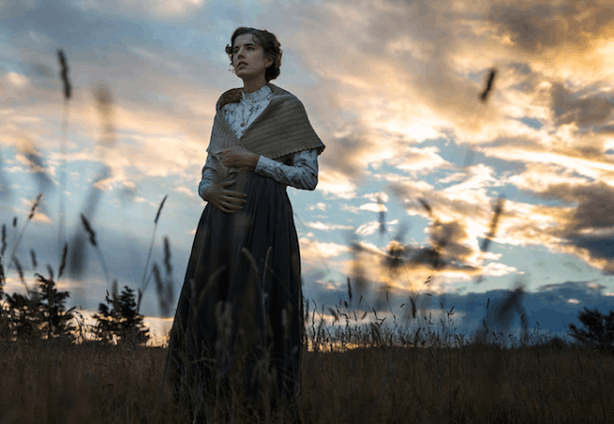
Davies’ latest film is an adaptation of Lewis Grassic Gibbon’s classic novel “Sunset Song”, about the trials and tribulations of a rural Scottish family at the start of the 20th century. Co-produced by Iris Productions, “Sunset Song” was partially shot in Luxembourg (at the Fonds-de-Gras industrial heritage site).
It stars Agyness Deyn and Peter Mullan, while one-time Luxembourg resident Julian Nest also gets an acting credit and local crew include costume designer Uli Simon and production manager Solveig Harper. The film has already screened to positive reviews at the Toronto International Film Festival and the San Sebastian Film Festival--Henry Barnes in The Guardian said it is “packed with emotional bombast, almost relentless in its lushness” and that Davies had “made a prize of beauty and found peace in the past.” “Sunset Song” will be in competition at the BFI London Film Festival in mid-October.
Oscar submission
Meanwhile, Luxembourg has chosen Donato Rotunno’s “Baby(a)lone” as its long list entry for the best foreign language film at the 2016 Academy Awards. Each country is allowed to submit one film to the Academy, which then chooses a short list of five nominations for the final prize. A tough coming of age story, “Baby(a)lone” has had its share of success since being released earlier this year, screening at numerous festivals around Europe and had critics such as Belgium’s Charles de Clercq comparing Rotunno to Larry Clark, praising the “sublime” actors and the film’s pedagogical ambitions.
But Luxembourg is represented by another film in the same category--Belgium has plumped for Jaco van Dormael’s black comedy “Le Tout Nouveau Testament” (The Brand New Testament) as its candidate. The film, co-produced by Juliette Films, stars Benoît Poelvoorde as a grumpy God, who lives in a Brussels apartment with his family.
It was screened to critical acclaim at the Directors’ Fortnight section at the 2015 Cannes Film Festival where Deborah Young in The Hollywood Reporter called it “irresistibly laugh-out-loud and feel-good.” Luxembourg actor Marco Lorenzini has a significant role in the film and other local actors and crew, including Gabriel Boisante and stills photographer Fabrizio Maltese also contributed. The film is currently on general release in Luxembourg.
Whether either of these films makes it on to the final Oscars short list remains to be seen. But one thing is sure; the members of the Luxembourg Film Academy are going to have their work cut out to pick prizes at next March’s Lëtzebuerger Filmpräis.