Enacting a “Tobin Tax”--named after Nobel Prize winning economist James Tobin--in the EU could raise more than 50 billion euro annually, according to European Commission estimates. The tax is a small levy on all stock, bond and derivative trades.
The German and Austrian governments--supported by France, Italy and Spain--have said the proceeds should be used to support Europe’s financial bailout bodies, the temporary EFSF and permanent ESM, which are both based in Luxembourg.
The Tobin Tax is opposed by countries such as the Netherlands, Sweden--which ditched its own financial transaction tax in the early 1990s--and the UK, home to more than two-thirds of Europe’s financial sector.
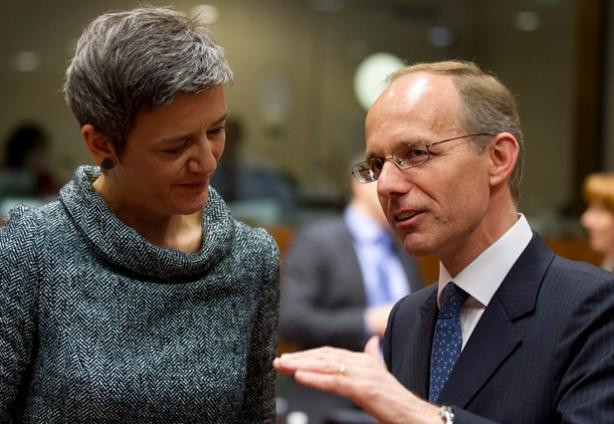
During last week’s council meeting of European economy and finance ministers, held in Kirchberg, EU governments agreed to disagree. Margrethe Vestager (photo, left), the Danish economy minister who chaired the meeting, conceded that it was impossible to bridge the divisions on the issue.
Under EU rules for so-called “enhanced cooperation” nine member states can proceed with new rules together. Germany’s finance minister, Wolfgang Schaeuble, said ten countries were ready to sign-on to the plan.
The Grand Duchy, with its large investment fund sector, is not one of them. “At this stage I can’t take part,” Luc Frieden (photo, right), Luxembourg’s finance minister, was quoted by Bloomberg News as saying. There are “too many open questions” about how the tax would proceed.
The parliaments of several EU member states have yet to approve the ESM, which is meant to begin operations next month, and introducing the financial transaction tax could be part of domestic political deals needed to gain a positive vote in countries such as Germany.
The tax could be implemented in participating states starting in 2014.
European heads of government will meet this week in Brussels to discuss the economic crisis.