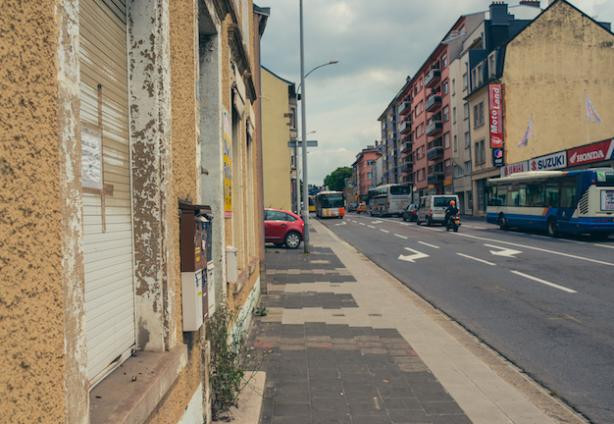
Are cracks starting to show in this country’s enviable record on social equality?
Unemployment has risen steadily (2.3% in 2000 vs. 7%+ this year) and lower earners risk being excluded from the housing market as prices boom. A recent government-commissioned report by the CEPS Instead research institute called Territorial cohesion: what’s at stake? looked at this issue commune by commune.
Jobs
Even though unemployment is still relatively low nationally, pockets of joblessness seem to have appeared, particularly since the 2008 crisis. The report looked at figures from December 2011 and found several communes with more than double the national rate for joblessness.
Wiltz and Vianden in the north, Echternach and Reisdorf in the northeast and Differdange and Esch in the south all had unemployment rates of 10%-13%. These figures are similar to those seen in many localities in neighbouring areas of France and Belgium with particular economic difficulties, and compares to Luxembourg’s national figure of 5.8% at that time.
This country’s economic black spots also tend to be areas with a high share of non-Luxembourgers in the population. Most of these areas have witnessed a decline in manufacturing industry, with a resultant increase in unemployment of at least two percentage points since 2006.
Unemployment was lowest (below 4%) in Niederanven, Junglinster, Schuttrange and Contern to the east of the capital, and Kehlen, Tuntange and Garnich to the north and west: all areas favoured by higher earning immigrants. The capital had an unemployment figure just above the national average. While it has many wealthy neighbourhoods, there are several less favoured areas.
Housing
House prices are on the other side of the inequality question, with lower earners less able to access homes near the capital. This also implies exclusion from the wider range of social amenities available there.
Using prices for the fourth quarter of 2012 calculated by the government’s Housing Observatory, the average house cost was in excess of €750,000 at about a 20 minute drive from Luxembourg City: from Frisange on the French border, to Mamer/Kehlen in the west to Niederanven in the east.
Cheaper homes (under €450,000) were in Pétange and Rumelange in the south, on the northwestern Belgian border, and Reisdorf and Beaufort in the northeast.
However, places with the highest unemployment (such as Esch, Echternach and Vianden) did not always have the lowest house prices. The average house price nationally in the fourth quarter of 2012 was close to €600,000, a figure which had risen by 12% a year later.
Nationally, apartment prices averaged €370,000 at the end of 2012, rising 8% last year. Although the report raises interesting questions, for the moment this country (with its population featuring 43% non-Luxembourgers) remains highly socially cohesive.
Evidence of widening inequality can be a concern, but it is not the only worry. For example, most of the country’s less well off areas also tend to have the least income inequality. Conversely, areas of higher average are less equal.