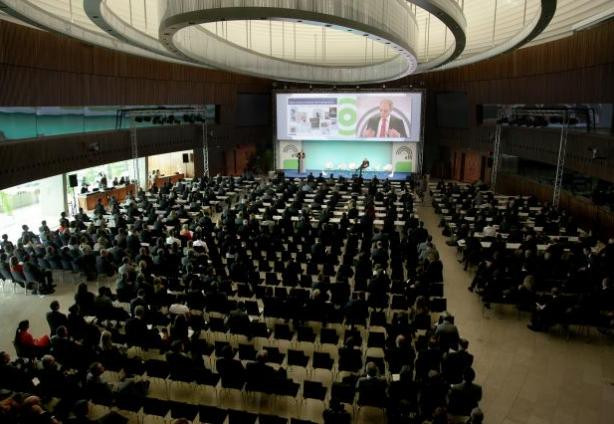
“European politicians deserve much more credit than the market seems to give them,” Frank Velling, chief strategist at the Danish fund manager BankInvest, said during his speech Tuesday morning at the ALFI Global Distribution Conference. Saying fear grows out of fear, he believes many have simply been afraid to “be the last person to exit [the room] when someone yells ‘fire’.”
While many “criticise European policy makers for lack of leadership,” he believes Angela Merkel, the German chancellor, and Nicolas Sarkozy, the French president, did an excellent job over the summer with proposals for more aligned and automatic budget rules across Europe.
The upside to such a plan, dubbed the “Merkozy pact,” is that it will “remove political risk” and consequently boost confidence within the financial markets. In any event, he says there will be “more economic and political integration, not less. There’s no going back.”
“People in the euro zone don’t want political and economic union of Europe, but they’ll get it anyway.” In his view, “people forget the euro zone and the EU are not only an economic project but also a political project in a region where many countries have been at war with each other.”
Europe’s institutions
Frequent outbursts of market volatility and the need to stimulate the economy will require a change in the European Central Bank’s mandate, Velling said. He called for the ECB to adopt a further mission to its successful management of inflation, that being economic growth and employment targets.
While frequently mooted as a solution to the current sovereign debt crisis, Eurobonds--government debt backed by all euro member states--“are a few years away” but are definitely “needed to restore confidence and collective fiscal responsibility.”
He also advocates in favour of boosting Europe’s Luxembourg-based bailout authority, currently being debated by parliaments around the euro area. “An enhanced EFSF will function as an essential link for stabilising the euro zone and financial markets,” he said. Velling expects it will soon be able to intervene in both the primary and secondary bond markets and bank recapitalisation, despite current objections by fiscal hawks such as Germany, Finland and Slovakia.
That is why he believes the EFSF and its successor institution the ESF “will become one of the most important institutions in Europe in the years to come.”
Euro’s future
Striking an optimistic note on the future of Europe’s common currency, he said: “I have more confidence in European policy makers than the average market participant seems to have.”
Nevertheless, he admitted that “little wars among politicians”--that were “more suitable for closed door meetings than” being fought in the media--had disturbed the markets. However, Velling reckoned markets had greatly overreacted to such scuffles, noting that “politicians need to talk; it’s the name of the game.”
One of the biggest challenges European leaders to take on is explaining to the public and the markets that “the cost of saving Greece is lower than letting them leave the euro,” he said.
Related articles