It’s no secret that many successful IT people didn’t follow a traditional educational path. They learnt to solve problems using curiosity and imagination, built discipline through tryouts and frustration, and ended up inventing great things outside regular school frames and theory-based teachings.
This is probably why participatory and project-based learning that helps unleash creativity is naturally viewed as the best way to form the new generation of much-needed programmers, developers and analysts. And it’s never too early to start! Giving a child a computer and access to internet will make him or her a passive consumer.
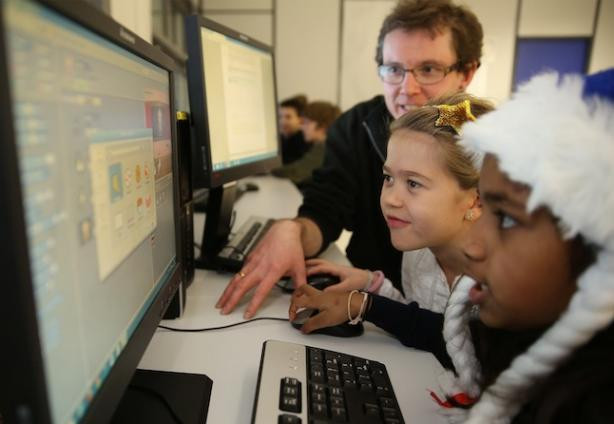
Teaching youngsters how to use technology actively is a whole other story. It shows them how they can make the computers do what they want and not the other way around.
In Luxembourg, there are several spaces where children and teenagers can explore technology, increase their code literacy and have fun. Many of these are also looking for volunteers to help pass on knowledge and passion. Such places include:
Code Club Luxembourg, “a network of free volunteer-led after-school coding clubs for children aged 9-11”.
CoderDojoLu(xembourg), which offers free coding classes to 9 to 18 year olds.
Hack4Kids, which encourages kids to improve their digital skills and knowledge.
The syn2cat hackerspace, a members-run association that puts on plenty of events (for grown-ups too).
Workshop4Me, which teaches coding to children aged 7 to 16.
Makerspace, a platform to give students “hands on” experience with technologies.
To read about on IT education inside the classroom, read “IT and schools: getting the equation right” in the June print edition of Delano, currently on newsstands.
Aaron Grunwald contributed to this report.