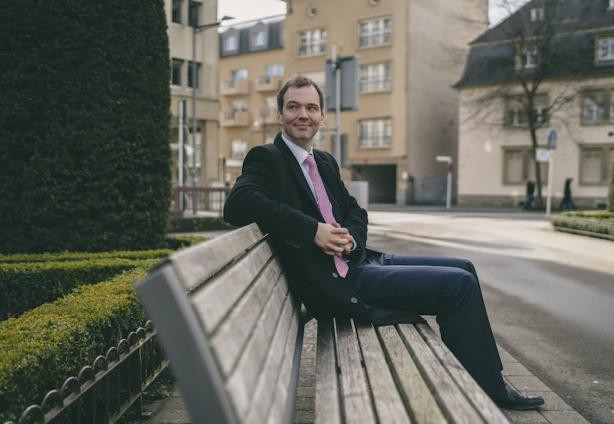
Despite the similarity in names, the Collectif Tax Justice Lëtzebuerg, which launched in January, is not formally affiliated with the Tax Justice Network, a global coalition of campaign groups lobbying against multinational corporate tax avoidance. “It’s rather a homegrown effort to encourage more discussion not only on the issues of tax justice but in the wider sense the usefulness, the raison d’être, the continued viability as well, of the financial and the economic model that we have in Luxembourg,” says Luc Dockendorf, a civil servant who is one of the collective’s co-founders.
“Luxembourg is highly dependent to a large extent on the financial sector. And we’re not saying, per se, that’s a bad thing,” he explains. “But we want to question the difficulties, both from the fact that the economy should be more diversified, but also from the inherent difficulties in certain types of financial services, especially the offshore variety.”
While many of the group’s members had been concerned by the Grand Duchy’s “tax haven” label for several years, it was the publication a year and a half ago of a leaked cache of “comfort letters” from Luxembourg’s tax office to clients of the consulting firm PwC that propelled the Collectif Tax Justice Lëtzebuerg project into being. (A trial over the theft of those papers starts on 26 April.)
“I think what the LuxLeaks revelations in November 2014 did was that they, and I’m speaking from my own personal point of view, really showed the size of this thing, the scope, the fact that this didn’t appear to be an exception,” Dockendorf told Delano during one of his lunchtime breaks. “But that multinationals were really using these tools, these tax rulings and company constructs, as a matter of policy. Doing it as a default rather than an exception. Just the volume of the money that was involved probably pushed a lot of people to realise, this isn’t sustainable at all.”
What kind of model?
“We need to have a fundamental rethink as to what economy we want but also what society we want. What is the societal model that you want to have. Are you ready to live in a society that makes part of its money in ways that are less than honest, if I may say so.”
Companies “profit a lot from the services that states offer, from an educated, healthy, safe population, from good infrastructure, from overall political stability, from security services, and so on and so forth, so they should be willing to pay their fare share into that,” argues Dockendorf.
The collective has 29 founding members, about three-quarters native Luxembourgers, plus another 200 or so people have signed its appeal for a public debate, which is not an official petition but rather an open call for a conversation about the Grand Duchy’s future.
Aside from one gentleman who, for a short time, thought the group were secret agents sent by the City of London, reaction so far has been mostly positive. “We’re really a diverse group of citizens coming together over a complex topic. So I think people were very happy to give us the benefit of the doubt.”
Collectif Tax Justice Lëtzebuerg started holding a series of public conferences in late January, with the events taking place (usually in French) every six weeks or so. But no direct advocacy is planned right now. Instead of coming out with a list of “red lined” demands, Dockendorf says, “we want to build this conversation.”