A nervous reaction has engulfed the entire region... today it is Cyprus, tomorrow whose turn it will be?
The linkage of economies in a broad sense in the EU has demonstrated a kind of dramatic event, which in medical science is called an enzyme cascade reaction: meaning a series of pre-set, interlinked reactions taking place only when a trigger is in place.
But the assessment of the outcome of all these mega-events is not necessarily the same for every nation involved. And understandably, the macro and micro measures to minimise the risks now and in future will also vary from nation to nation, whatever way we say they share a common currency.
On Monday I highlighted the point that “banking culture” differs in every nation, which gives them different perspectives in a given scenario and their policy-making abilities to counter such crises. Applying simple accounting data across the board to get to the root of the problem and devise accurate solution will be far from adequate.
Bail-in vs. bail-out
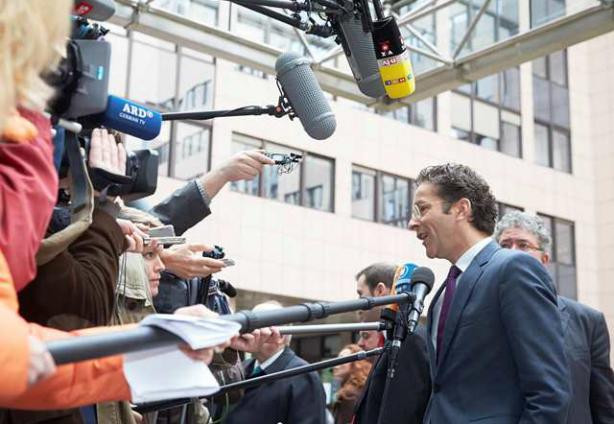
Let us examine the score that was composed by Jeroen Dijsselbloem (photo), chair of the Eurogroup and Dutch finance minister, on February 1, 2013. He nationalised financial institution SNS Reaal, preventing its bankruptcy. Shareholders and owners of subordinated debt were expropriated with no compensation and other banks in the country had to contribute up to one billion euro to the takeover. Albeit a difficult passage, there is a sense of harmony. The next stanza, however, barely achieved the sound of unkempt finger nails on a well-worn black board.
In March, Dijsselbloem took the lead in the negotiation, conclusion and subsequent public promotion of the “Cyprus bail-in”. He attracted criticism for the precedent of taking depositors’ balances as part of bank rescues but said, in a joint interview with the Financial Times and Reuters: “I’m pretty confident that the markets will see this as a sensible, very concentrated and direct approach instead of a more general approach… It will force all financial institutions, as well as investors, to think about the risks they are taking on because they will now have to realise that it may also hurt them.”
Oddly, Dijsselbloem left us all wondering how he plans to explain the harmony of his latest composition of banking regulation and default resolution. This is a new sound.
Out of tune
Somehow the audience--the depositors--can influence the conductor and the orchestra--the financial institutions’ risk-taking portfolio managers--to change their tune. This is a form of mid-production score change that is hard on the ears and will lead others to avoid the production all together.
The overall management--better termed “mismanagement”--of the Cyprus affair has undermined once more EU authorities’ credibility, who are now the subjects of profound distrust from their own citizens. They are now clearly observing how the euro zone--led by Germany, as their banking system was the major creditor of Cyprus--takes decisions towards the weaker countries, in an idiosyncratic way: based on circumstances and political opportunism, linked to national egotistic interests, having no clear, unique, and coordinated system. The sequence of wrong decisions, followed by bombastic imprecise declarations, was a triumph of bad improvisation and incompetence exposed.
Faced with the next crisis, what will the EU do?
A forced anticipation that can compromise the savers’ trust in a manner dangerous for the entire economy.
This author based this column on his earlier post to the Luxembourg for Finance blog.
Chitro Majumdar is chief science officer at R-square RiskLab, an independent strategic consultancy to financial services firms and departments. He prepared this article in collaboration with Maurizio Piglia, who is an advisor to R-square RiskLab and a director of independent funds management company Savings & Investments in New Zealand.
Feedback on this article would be music to our ears: news@delano.lu.